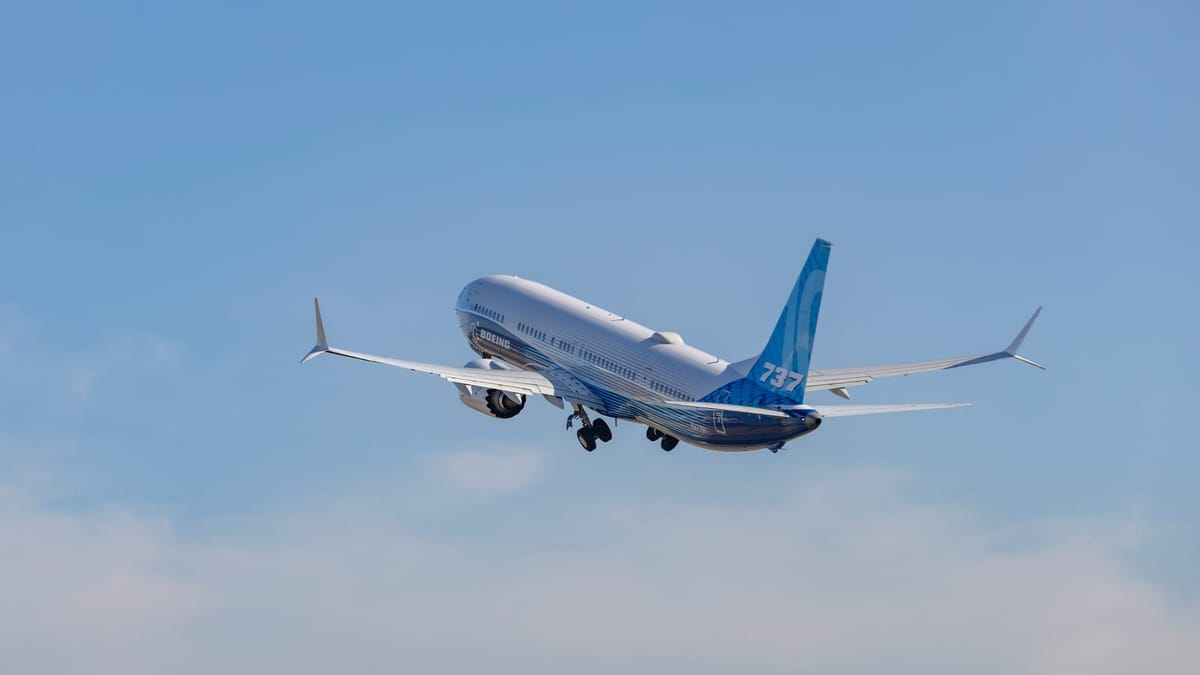


Speaking at his first investor conference since assuming his new role, Jay Malave, the Chief Financial Officer (CFO) of Boeing, detailed that new certification requirements have been a learning process for both the planemaker and the Federal Aviation Administration (FAA), resulting in the cascading delays that have pushed back the 777X’s entry-into-service (EIS) date to 2027.
Malave, who spoke during the UBS Global Industrials and Transportation Conference on December 2, 2025, shed more light on the 777X’s progress to certify at least one variant, the 777-9.
The company’s CFO said that Boeing had now received Type Inspection Authorization (TIA) phase 3 approval in November, which was “pretty much on schedule,” representing about “30% of the entire flight test program.”
“[…] so that was a pretty big approval that gives us kind of momentum to move forward,” Malave added, noting that some of the systems that are part of this phase include “avionics, environmental control systems, [and] the auxiliary power unit.”
“So, there are pretty substantive systems that will be tested as part of this flight test program.”
Malave continued that Boeing is already positioning itself for the TIA’s next phase, affirming that the company is “pretty well positioned for the schedule that we laid out in the earnings call” when it presented its Q3 results on October 29.

During the aforementioned call, Kelly Ortberg, the President and Chief Executive Officer (CEO) of Boeing, reiterated that there was nothing wrong with the aircraft or the engines, noting that, “we have more hours and the maturity of this airplane is probably higher than any other airplane we've been through the test program.”
“The issue is solely around getting the certification work completed. We had anticipated getting TIA approval.”
Ortberg admitted that Boeing had underestimated how much work it was going to take to get the FAA’s approval for phase 3, which the planemaker had anticipated to happen in Q3, and, now, had been pushed back to Q4.
 Rytis Beresnevicius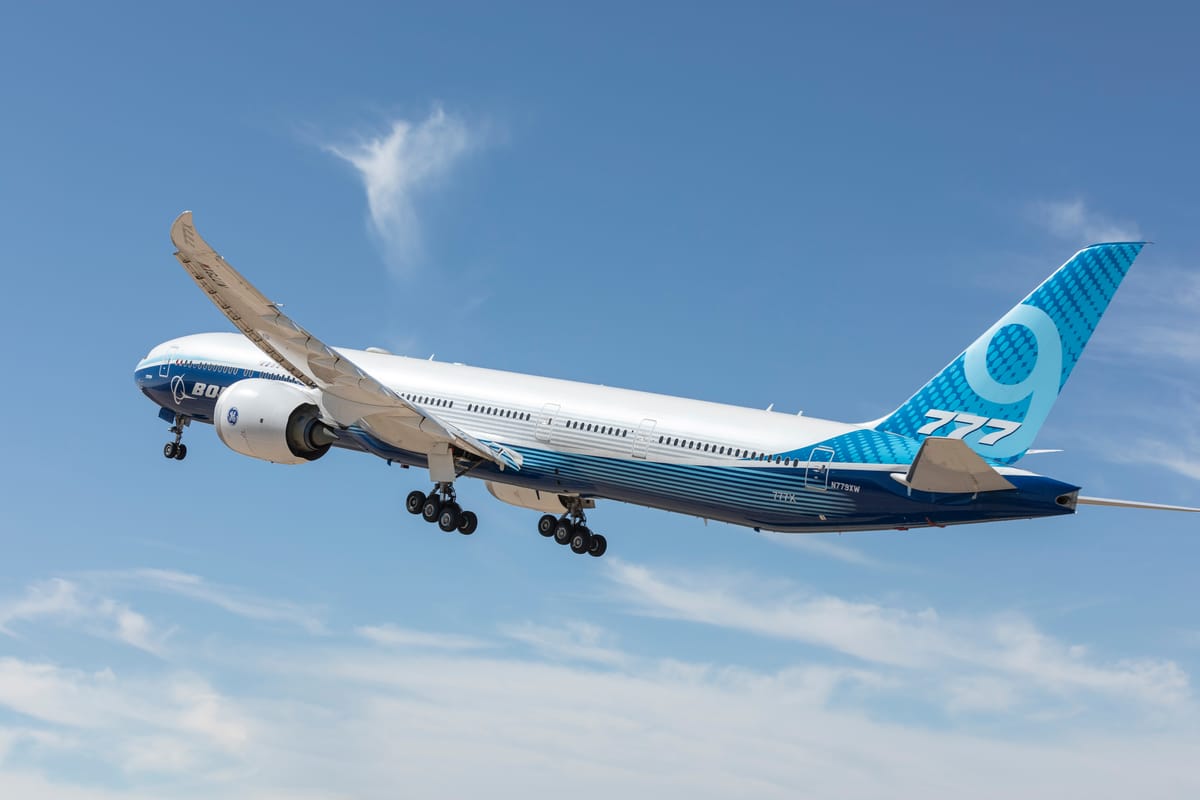
Nevertheless, Malave emphasized that the bottleneck has been the new certification requirements, which required learning from both Boeing and the FAA. “[…] as we learned what it took to comply, really on both sides, unfortunately, we had these delays in these TIA approvals because we just were not entirely clear on how to satisfy those requirements,” the CFO stated.
“We believe that we have a sort of much better understanding of what it takes going forward.”
Malave also explained that the $4.9 billion charge related to the latest 777X delay, which was booked by the company in Q3, will roll over into multiple years as Boeing delivers 777Xs, including the 777-9, through the end of the decade.
“So after we get through 2026, it is not a huge number in any given year. I do not kind of want to say pro rata, it is not necessarily pro rata, but it will carry out through the end of the decade and into the early 2030s as well.”
According to the FAA, TIA is “used to authorize official conformity, airworthiness inspections, and flight tests necessary to fulfill certain requirements” for the certification of aircraft and related products.
Both Boeing and the FAA have been dealing with new certification requirements in the wake of the two fatal 737 MAX accidents in Indonesia and Ethiopia in 2018 and 2019. In 2020, the United States Congress passed the Aircraft Certification Reform and Accountability Act.
Once it had reached the desk of Donald Trump, the then and current President of the US, in December 2020, Roger Wicker, the former chairman of the US Senate Committee on Commerce, Science, and Transportation, said that the bill was the direct result of information stemming from incident reports, recommendations from aviation experts, witnesses’ testimonies, and hearings following the two 737 MAX accidents.
“It also includes provisions to address findings from the Commerce Committee’s extensive investigation of aviation safety. The legislation will make critical reforms to the FAA’s oversight and certification process.”
The act, among other things, has mandated aircraft manufacturers to adopt safety management systems (SMS), an expert panel to review Boeing’s safety culture, safety assessments “for significant design changes of previously FAA-certificated aircraft that account for the airplane-level effects of failures and that assess risk based on realistic assumptions of pilot response time,” changes the way the FAA amends type certificates of older aircraft that have new derivatives, such as the 777X, which is a derivative of the 777, and extended protections for Organization Designation Authorization (ODA) unit members.
“A bipartisan bill, [it] makes significant reforms to the Federal Aviation Administration’s (FAA) aircraft certification process and ensures transparency, accountability, and integrity in FAA regulation of U.S. manufacturers of aircraft, parts, and components.”
 Rytis Beresnevicius