

Air Astana, which also owns the low-cost carrier FlyArystan, announced its 2025 results on March 13, 2026, saying that during the peak season last year, it had to ground up to 13 aircraft, which affected its profitability during the year.
Lower profits
Air Astana ended the year with a profit after tax (PAT) of $13.6 million, compared to $49.4 million in 2024. The airlines’ earnings before interest, taxes, depreciation, amortization, and restructuring or rent costs (EBITDAR) margin was 22.1%, 2.3 percentage points lower year-over-year (YoY), which includes FlyArystan's results.

Revenue improved by 11.4%, while the average load factor was 82.7%, 0.7 percentage points lower than in 2024.
Peter Foster, who has been the Chief Executive Officer (CEO) of Air Astana for more than 20 years, and is set to leave the company in a few weeks, said that despite the challenges, the Kazakhstan-based carrier showcased “resilience” as it made “significant progress in a number of areas, as we position both of our brands for long-term success.”
Foster highlighted the recent orders that were previously announced but approved by its shareholders only recently, including the order for up to 50 Airbus A320neo family aircraft.
“With this being my final set of results, I would like to end by expressing the huge confidence I have in Air Astana and its leadership.”
 Rytis Beresnevicius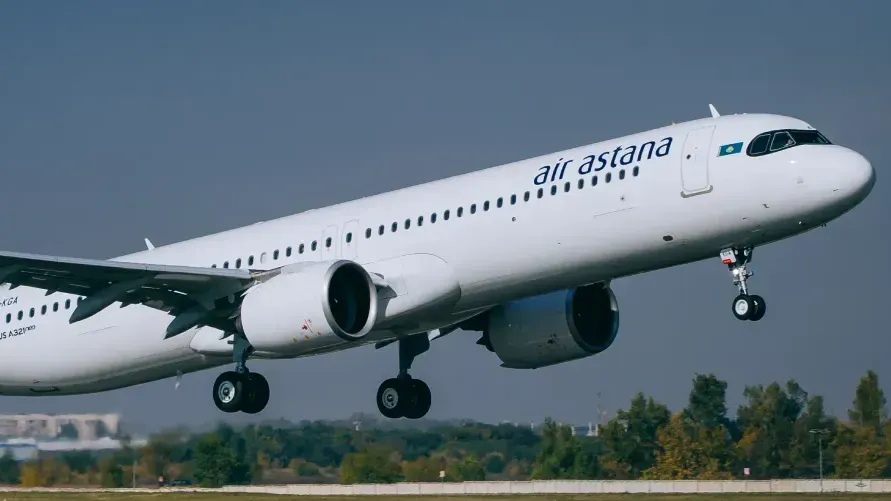
Pratt & Whitney PW1100G engine issues
Foster noted that while accelerated removals and inspections of Pratt & Whitney PW1100G engines, which are one of the two engine options for the A320neo aircraft family, are an industry-wide issue, the unscheduled engine removals (UERs) “have impacted profitability by limiting our growth opportunities and thereby increasing unit costs, driven primarily by lost capacity, compressing the margin between RASK and CASK across the year.”
According to Air Astana, in 2025, it had 22 UERs, resulting in the grounding of up to 13 aircraft during the peak season, reducing its capacity preserved for the peak travel period.
“Although the Group’s working assumption remains 18 months for the average off-wing time before unserviceable engines (including those affected by the powdered metal issue) are returned to service, we have seen some recent positive developments.”
Air Astana said it had a similar number of inductions booked in H1 2026 as it had during the entirety of 2025, that some of those shop visits will have a shorter turnaround time, and that it has secured four additional spare engines.
Per planespotters.net, Air Astana has 28 A320neo family aircraft in its fleet, while FlyArystan has another 13 A320neos, all of which are parked.
Expected RASK improvements in 2026
Air Astana detailed that its revenue per available seat kilometer (RASK) was 2.3% lower YoY. During the full-year, RASK fell, but in Q4 2025, it was up 9.8% YoY due to “domestic fare adjustments and reflecting focus on high margin international destinations.”
“The turnaround in RASK provides confidence that we will see margin improvement driven by production increases going forward, especially during the summer peak.”
Meanwhile, unit costs, or cost per ASK (CASK), were impacted by the Pratt & Whitney PW1100G UERs, with CASK increasing 17.3% in Q4 2025. During the full year, CASK was up only 1.6% compared to 2024.
CASK increased so much during the last quarter of the year because of “underutilisation of planned operational staff during the peak season as a result of UER-related aircraft groundings, and fixed maintenance costs being spread over a lower than expected ASK production base,” as well as foreign exchange rate movements.
ASKs, measuring capacity, grew by 14% YoY.
Air Astana will take delivery of its first Boeing 787-9 aircraft in 2026, with two additional deliveries in 2027. The airline also ordered up to 15 787-9s for delivery between 2032 and 2035.
The airline expects to grow in 2026, including an EBITDAR of mid-to-high 20s in the medium term. The total fleet is planned to expand to 86 aircraft by the end of 2030, it said, compared to the current fleet of 62 aircraft.
It will realign capacity “to ensure highest margin delivery and mitigate inflationary cost pressures, while retaining a load factor in the low-to-mid 80s.”
 Rytis Beresnevicius