


After Air New Zealand updated stakeholders on its planned capacity reduction, citing volatility in jet fuel prices due to hostilities in Iran, the airline has published its updated schedule, showcasing cuts to flights from Auckland Airport (AKL), Christchurch Airport (CHC), and Wellington International Airport (WLG).

In its latest schedule update on Cirium’s Diio Mi, Air New Zealand detailed that it will cut up to 109 weekly flights in April on routes departing AKL, CHC, and WLG. Overall, the reductions will result in 4.7% fewer weekly flights year-on-year (YoY). However, with Airbus A320neo and A321neo flying activity increasing compared to April 2024, weekly departing seats will actually be flat YoY.
Last week, Air New Zealand planned to operate 1,937 weekly frequencies, and with the latest update, that is now down to 1,828, a 5.6% reduction. Capacity, measured in available seat kilometers (ASKs), is down 2.7% this week.
On international flights, the routes that will see some capacity reductions include flights from AKL to three Australian destinations and Denpasar I Gusti Ngurah Rai International Airport (DPS), serving the island of Bali, Indonesia, and two Australia-bound routes from CHC.
These are displayed below:
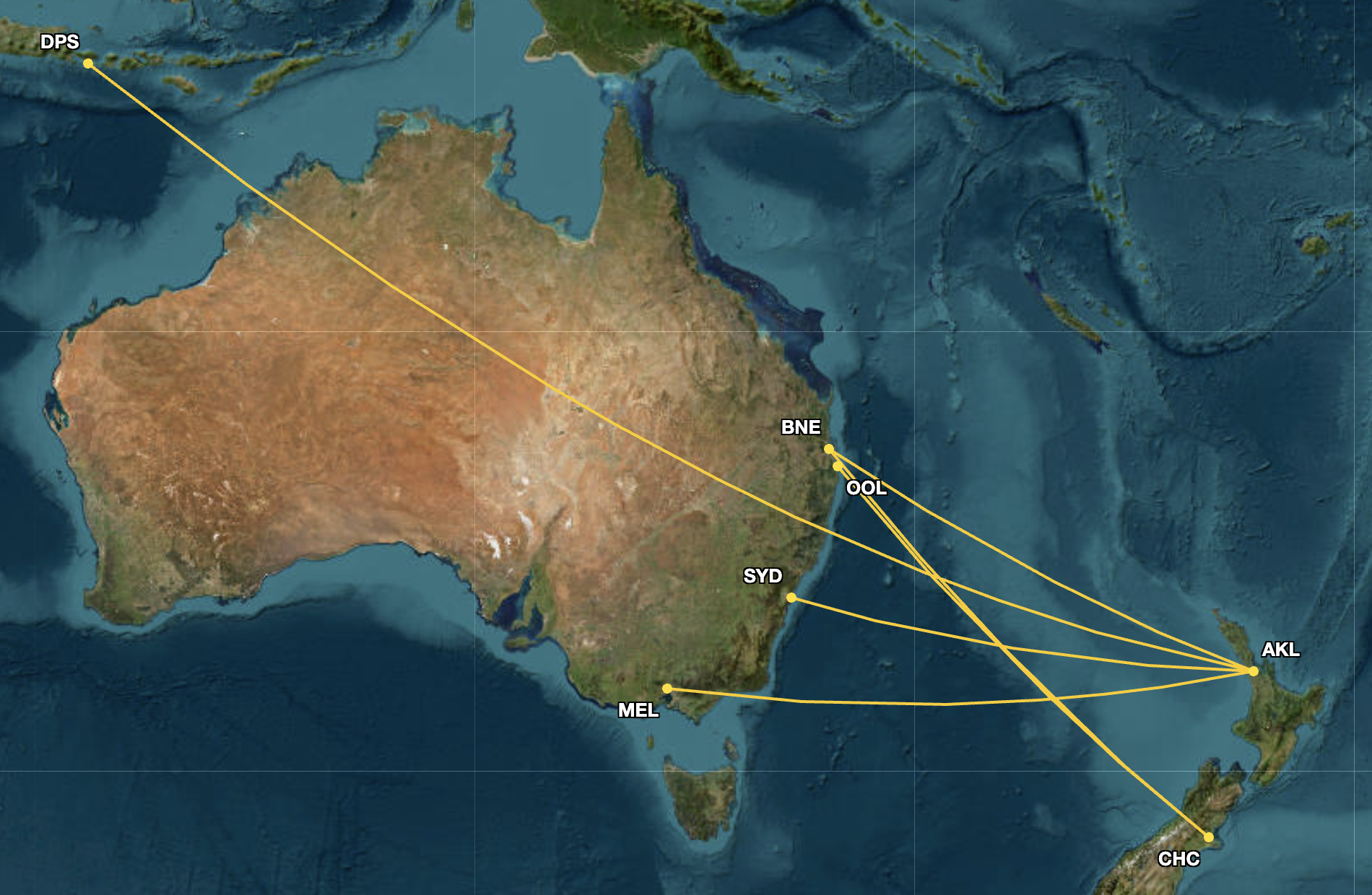
Week-on-week, Air New Zealand made the deepest cuts on flights from AKL to Brisbane Airport (BNE), Melbourne Airport (MEL), and Sydney Airport (SYD), cutting four, five, and six weekly flights, respectively.
On AKL-DPS, as well as CHC-BNE and CHC-Gold Coast Airport (OOL), the Kiwi carrier reduced weekly frequencies by one.
Meanwhile, on domestic routes, frequency reductions will be made on 21 routes, which are also displayed below:
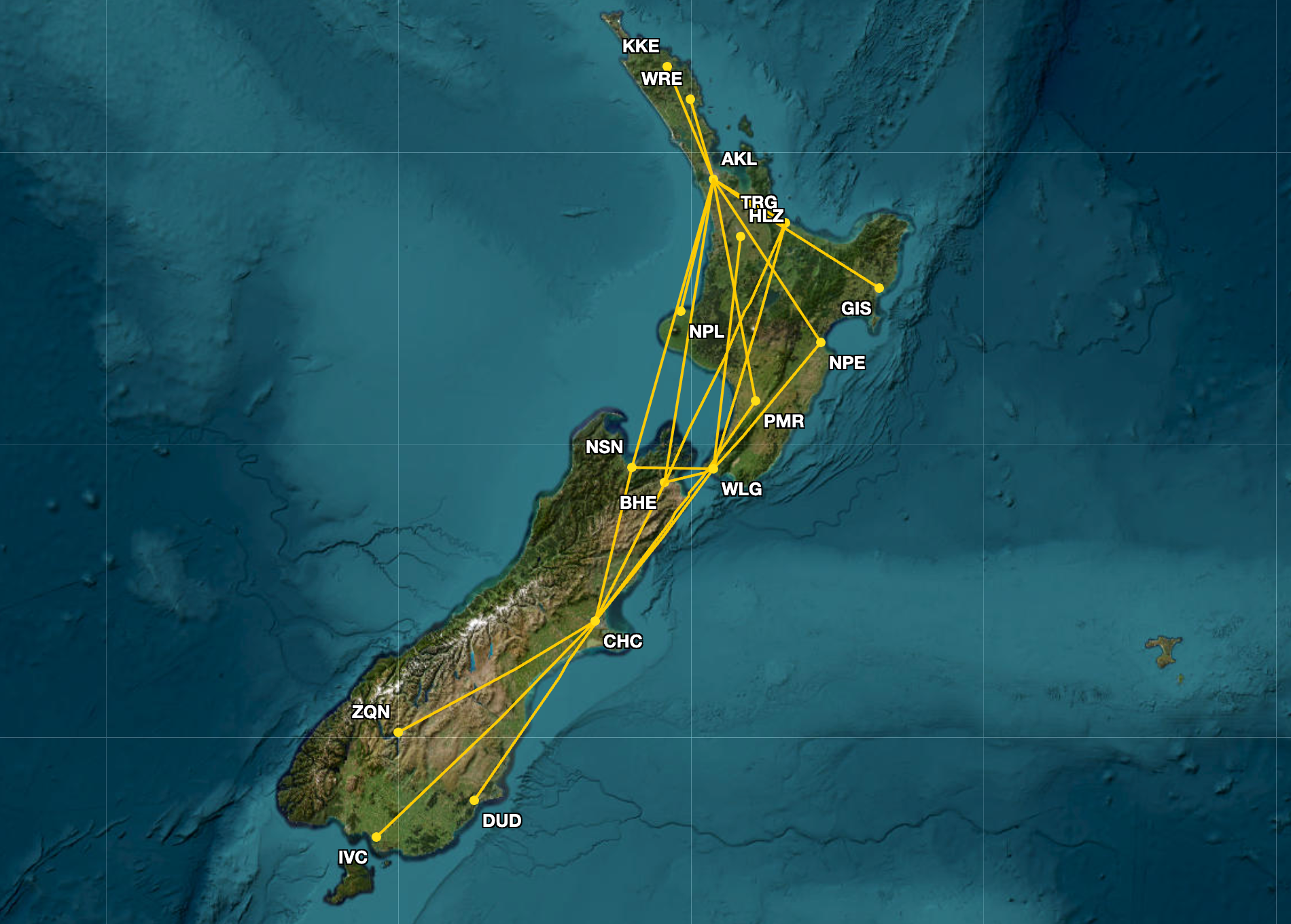
By airport, Air New Zealand will remove 44 weekly frequencies from AKL, 25 from CHC, and 22 from WLG, per Cirium’s Diio Mi.
The airline confirmed the cuts last week, saying in a statement that, similar to other carriers, it “regularly makes changes to our schedule depending on things like seasonality and demand.”
“With the unprecedented volatility in jet fuel prices due to the conflict in the Middle East, airlines around the world are adjusting fares and their schedules to help manage the impact of these significantly increased costs.”
Air New Zealand confirmed that it has “consolidated” a small number of flights, representing 5% of its total domestic and international schedule, focusing on low demand or off-peak periods. The changes will impact “just under” 44,000 passengers, it said.
“In making these schedule changes, we have tried to strike a balance between maintaining connectivity to all regions and our ability to reaccommodate passengers close to their original booking.”
According to the International Air Transport Association (IATA), the global average jet fuel price rose 11.2% during the week ending March 13, climbing to $1,3881 per ton. In the week ending on February 27, just a day before the conflict in Iran began, the price was $784.95 per ton.
 Rytis Beresnevicius