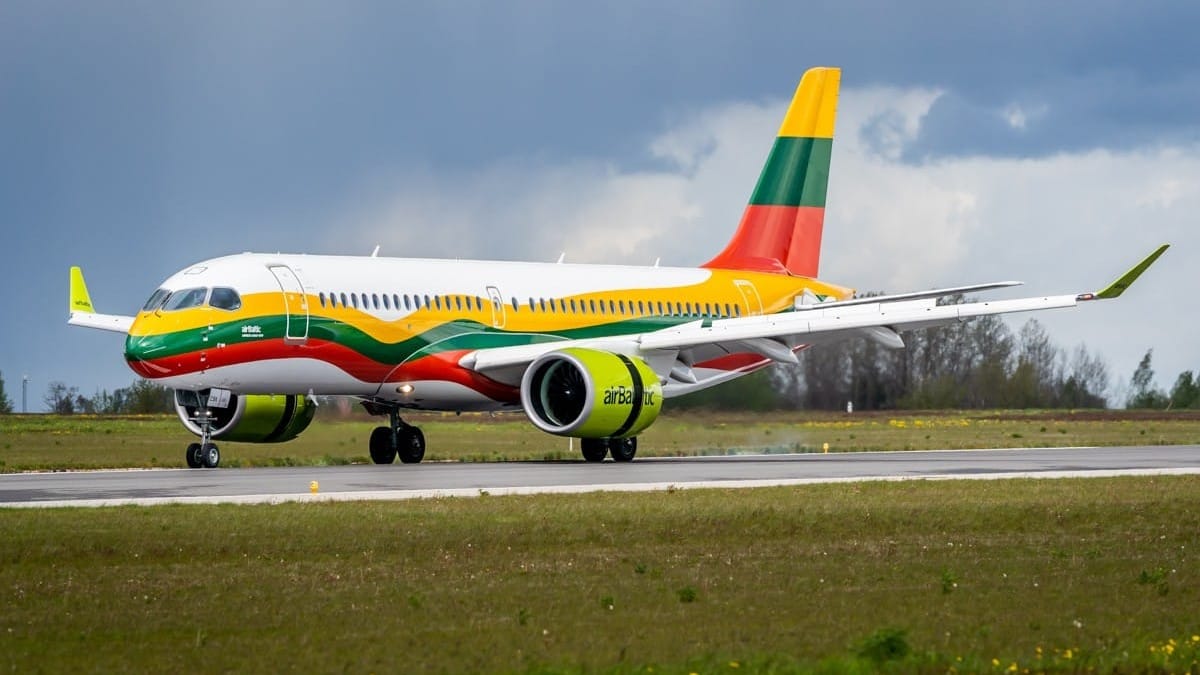


airBaltic, the all-Airbus A220-300 operator based in Latvia, has ended 2025 with another loss, with the airline struggling to achieve profitability since its full-year profit in 2023, and prior to 2020, in 2018.
Improving net result
airBaltic ended 2025 with a net loss of €44.3 million ($51 million), compared to a net loss of €118.1 million ($136.2 million) in 2024. However, last year, the Latvian airline delivered an operating profit of €6.1 million ($7 million), while in 2025, it swung to an operating loss of €6.5 million ($7.4 million).

Full-year revenue improved by 4%, including a 7% year-on-year (YoY) growth in aircraft, crew, maintenance, and insurance (ACMI) revenue.
The adjusted earnings before interest, taxes, depreciation, amortization, and restructuring or rent costs (EBITDAR) margin was 18.5%, or 6.2 percentage points lower than in 2024.
Erno Hildén, the Chairman and Chief Executive Officer (CEO) of airBaltic, who officially joined the airline on December 1, 2025, said that the year was underpinned by “resilience, discipline, and strategic transition.”
The carrier, which operated in a “constrained environment marked by fleet limitations and cost pressures,” showcased “adaptability and focus while continuing to position itself for sustainable long-term growth.”
“Nevertheless, performance improved steadily over the course of the year, with a clear recovery in yields and overall results during the second half.”
Slight improvement in unit revenues
airBaltic stated that while it had experienced a weaker start to the year, yields improved during the course of 2025, “driven by efficient capacity deployment, targeted pricing actions and improving demand conditions in core markets.”
As a result, its unit revenues, revenue per available seat kilometer (RASK), increased by 1% YoY, “supported primarily by higher ticket yields rather than volume-driven growth, contributing positively to overall revenue performance.”
Total unit costs, or cost per ASK (CASK), were up 6% YoY, while ex-fuel CASK surged by 6.1% YoY.
Capacity, measured in ASKs, increased by 6%, with 2% growth in own network capacity and an 18% increase in ACMI-out ASKs.
However, in 2025, airBaltic lost a single A220-300, registered as YL-AAO. The airline said that in June 2025, following maintenance and a mandated Auxiliary Power Unit (APU) ground run, “the aircraft sustained extreme heat damage in the fuselage and wing-root area from the ozone filter.”
Following an assessment in December 2025, Airbus concluded that “the aircraft was beyond economic repair,” and airBaltic recognized a full impairment of the right-of-use asset and associated capitalized expenditures.
 Rytis Beresnevicius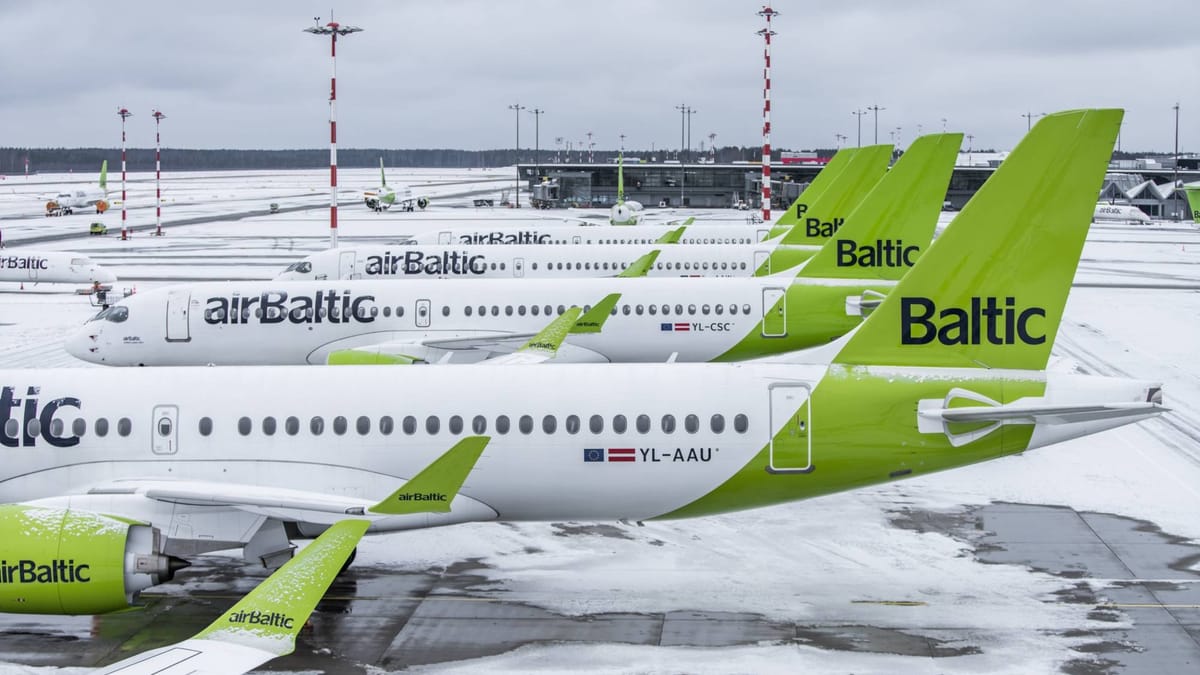
Clear priorities in 2026
Hildén concluded that airBaltic’s priorities in 2026 remain clear: restoring full capacity, strengthening its profitability, and advancing long-term development.
According to the CEO, the improving economic conditions in the Baltic States, additional aircraft, and a closer cooperation with the Lufthansa Group, which became a 10% shareholder in airBaltic in 2025, are “a supportive foundation to accelerate progress and deliver sustainable long-term value to shareholders, customers, and employees.”
In 2026, airBaltic plans to operate 134 routes, compared to 133 in 2025. At Vilnius Airport (VNO), the number of routes will remain the same – yet the network will see changes – while Riga Airport (RIX) and Tallinn Airport (TLL) will see some growth.
Non-hub or base routes will be reduced from four to two: Palanga Airport (PLQ) to Amsterdam Schiphol Airport (AMS) and Tampere–Pirkkala Airport (TMP) to Málaga-Costa del Sol Airport (AGP).
 Rytis Beresnevicius