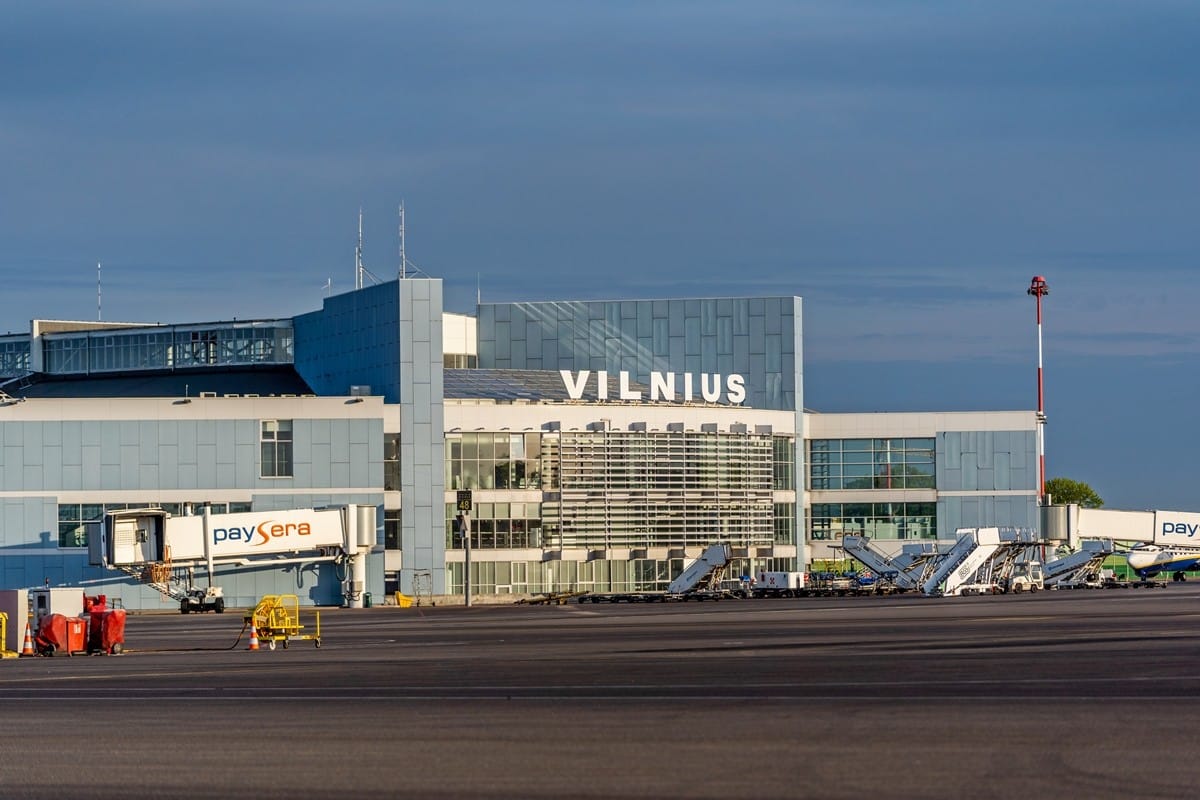


As Vilnius Airport (VNO) has continued to deal with more than a dozen contraband balloon-related flight disruptions in the past two months, in what the country’s government has finally recognized as a hybrid attack by Belarus, airBaltic has reaffirmed its commitment to VNO and Lithuania as a whole.
In a statement to The Engine Cowl, airBaltic, while did not disclose whether the balloon-caused flight disruptions have impacted forward-looking bookings, said that so far, 50 of its flights have been affected by the contraband balloons launched from Belarus.
“Irregularities occurring during night-time hours are particularly challenging, as available resources and alternative options become extremely limited,” the Latvian carrier’s spokesperson added, saying that it has done everything it could to ensure passengers still reach their destinations whenever there are flight disruptions at VNO.
“Despite these difficulties, airBaltic remains committed to maintaining reliable connectivity for Lithuania.”
According to Cirium’s Diio Mi, in December, airBaltic is scheduled to be the busiest airline at VNO in terms of weekly departures. When measuring weekly departing seats, the Latvian carrier, which will base three Airbus A220-300 aircraft at VNO during the upcoming summer season, ranks third behind Wizz Air and Ryanair.
airBaltic also flies from Palanga Airport (PLQ), and in March 2026, will begin flights between Kaunas Airport (KUN) and Riga Airport (RIX), feeding its hub in the Latvian capital for onward journeys.

Still, the Latvian carrier had to adjust some flight timings in light of the continuous flight disruptions at VNO, scheduling earlier arrivals on flights from Kraków John Paul II International Airport (KRK) and Munich Airport (MUC, only on Saturdays).
 Rytis Beresnevicius
In an internal letter to Lithuanian Airports (Lietuvos oro uostai, LTOU) employees that was later made public, Simonas Bartkus, the Chief Executive Officer (CEO) of LTOU, also affirmed that despite the flight disruptions, the airport company’s goals remain unchanged.
“All of our projects, investments, and route development are going ahead as planned,” Bartkus said, confirming that the only new development that LTOU has suspended is its branding update. According to the CEO, the contraband balloon-related flight disruptions cost the airport and its partners, including airlines, more than €750,000 ($874,360) in damages in October alone.
 Rytis Beresnevicius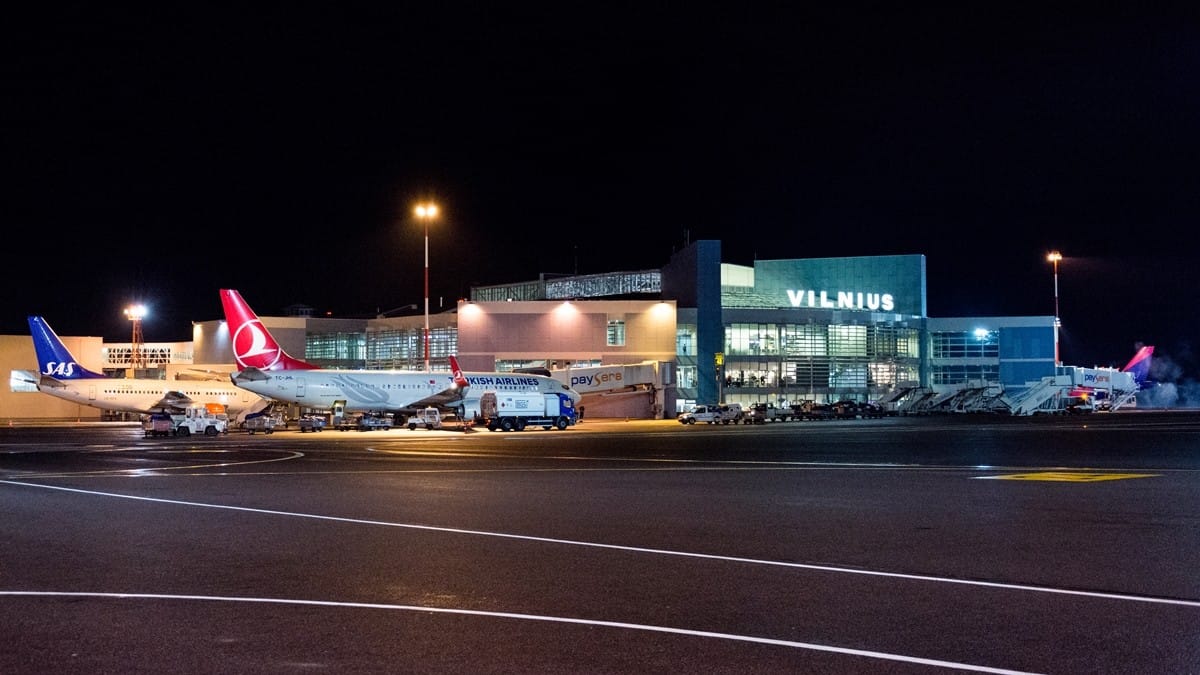
However, the government of Lithuania, including Inga Ruginienė, the Prime Minister of Lithuania, has not been able to offer much relief to the airport, passengers, or airlines flying from/to VNO. In a press conference following a meeting with the opposition, Ruginienė said that “balloons have been flying and will continue to fly, and we have been doing everything we can to ensure we have the right response to stop the balloons.”
Saulius Skvernelis, a leader of one of the opposition parties, refuted Ruginienė, saying that the meeting’s only conclusion was the government’s offer for airlines to move their night-time flights to KUN. Viktorija Čmilytė-Nielsen compared Ruginienė to a deer in the headlights – my words, though – recalling how the Prime Minister of Lithuania had initially failed to recognize that the balloons were part of a hybrid attack against Lithuania, even though Ruginienė was now saying that she had always stated that the balloons were part of Belarus’ hybrid warfare against its neighbor.
On December 1, the Lithuanian Ministry of Economy (Ekonomikos ir inovacijų ministerija, EIMIN) announced that it has selected three proposals from private enterprises to ensure the safety of Lithuania’s skies, including the threats posed by balloons carrying contraband cigarettes.
One of the winners was IT logika, which, together with Vilnius University, Integrated Optics, and Arx Polaris, would build the Airspace Safety System (Oro Erdvės Apsaugos Sistema (IOEAS), based on a multi-layered approach: fixed-wing drones that can fly at high altitudes, and fast, low-altitude drones, also combining radar systems, artificial intelligence (AI), and optical and laser-based sensors.
“Our goal is to improve the detection of small, hard-to-spot aerial objects and contribute to technologies that support their neutralization,” Integrated Optics said.
 Rytis Beresnevicius