


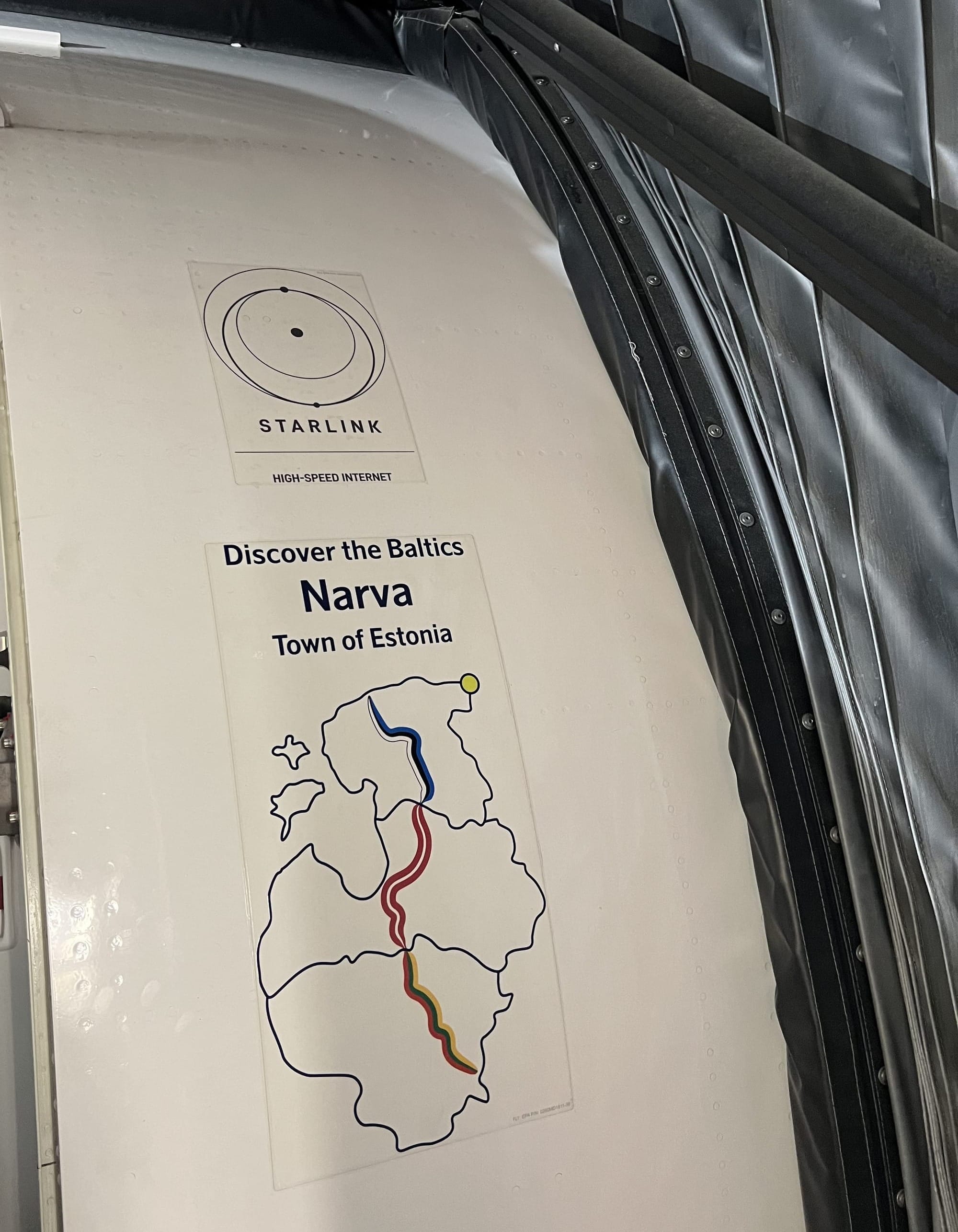
Up until this point in my career in aviation journalism, I had never written a flight review. I thought that the short, weekend-long trip to Krakow, Poland, would be the perfect opportunity to do so, especially since the gods above – or rather at airBaltic’s flight planning department in (I assume) Riga, Latvia – blessed me with an Airbus A220-300 fitted with Starlink.
That opportunity to try out Starlink came on a flight I took on December 18, 2025, when I flew from Vilnius Airport (VNO) to Krakow John Paul II International Airport (KRK), a short, around one-hour journey. The main goal, of course, was to explore the Polish city’s Christmas markets, of which we had managed to visit at least three, each with its different character and vibe.
A fun place to be in, Krakow. While it might be too late to visit the Polish city for its Christmas markets, I can wholeheartedly recommend visiting the place either this summer or next winter, as it has plenty of things to offer for visitors.
However, this is not a Christmas market and/or city review, but rather a flight evaluation. I seldom read them, but I am, at times, surprised how much content people can squeeze out of what is – when you strip it down to the bare bones – a few hours of sitting inside a metal tube to get from one point to the other.
At the same time, companies offering such services – so, airlines – can go to vast lengths to make that experience much more bearable, even enjoyable. One of those ways to do so is to offer in-flight entertainment (IFE), or in airBaltic’s case, in-flight connectivity (IFC) so that passengers could consume their preferred IFE.

Will that be the future of IFE? Subjectively, it could be. Though I imagine that airlines will not be too happy about the fact that their millions of investments into seat-back screens and software to make them work will be replaced by a phone that now has access to the internet, no matter where the aircraft goes, whether it would be Starlink or any other IFC provider.
While I will refrain from commenting on the fascist egomaniac founder of SpaceX, which supplies the Starlink internet solution, I have to admit that it is amazing. Over the years, traveling on low-cost carriers’ flights from Lithuania, I could have never imagined that I could actively scroll the interwebs, message my friends, or even work on articles while flying.
Genuinely work, not to write up an outline of an article that would have to be corrected at a desk on the ground. I was amazed; the solution is excellent.
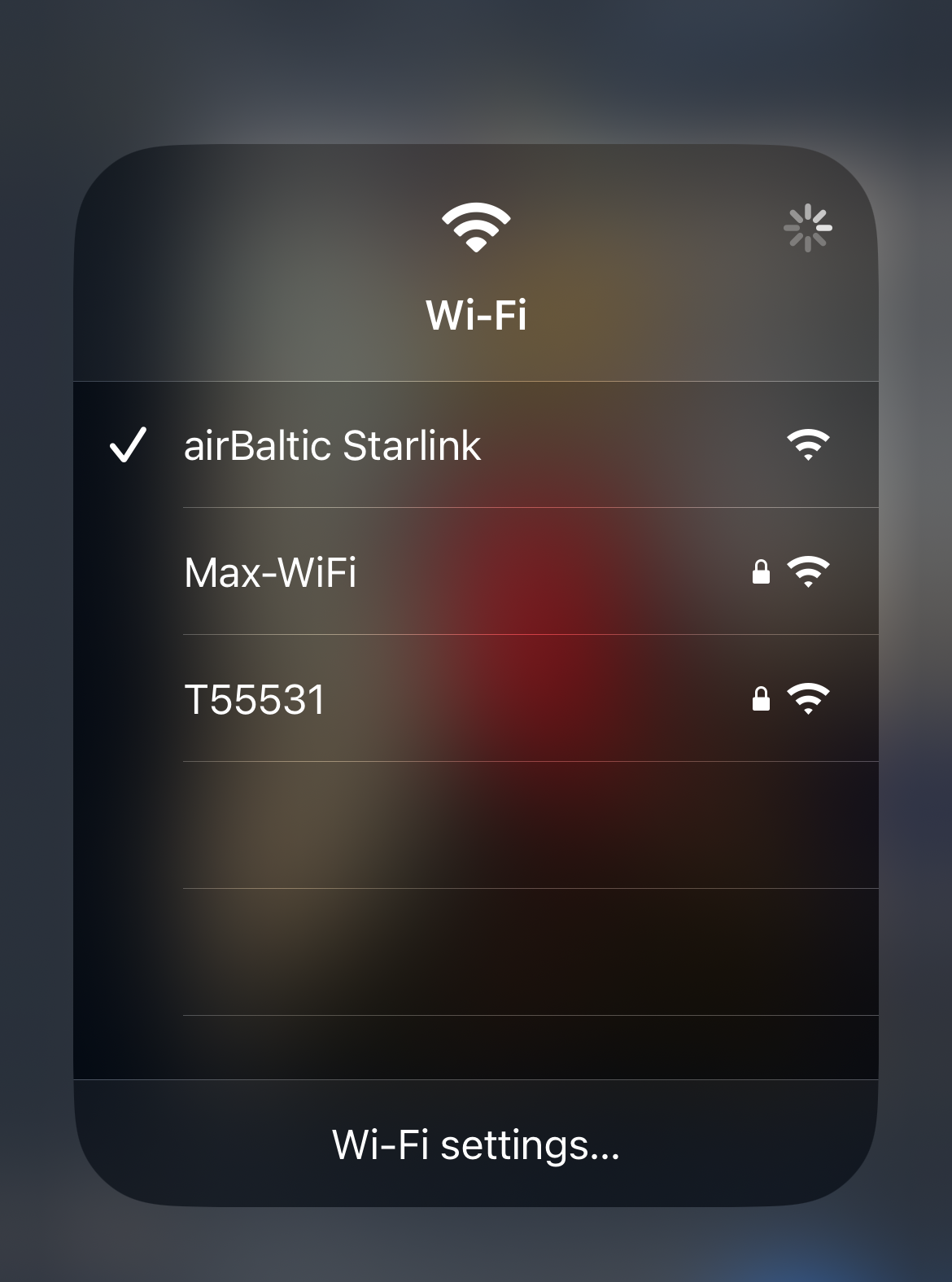
There was no hassle, no mandatory logging in, just looking up the WiFi network on my phone and computer, and that was it. I was online while cruising at 28,000 feet (8,534 meters), remaining connected to the rest of the world that was on the ground.
Again, the fact that Lithuania’s direct connectivity is largely facilitated by low-cost carriers, such as Norwegian, Ryanair, or Wizz Air, or airBaltic, which I consider to be a hybrid airline that leans more to the no-frills side, yet still offers a European business class product, really makes you appreciate the IFC solution that much more.
In general, airBaltic’s passenger experience on short-haul flights within Europe is great. The A220-300, for all of its flaws, mostly related to the engines and their maintenance-related delays, is a very comfortable aircraft, with the Latvian carrier’s cabins offering plenty of pitch and space in the overhead bins to store carry-on luggage. Like a true hybrid airline, airBaltic lets all passengers bring one small cabin item and a carry-on bag, which again sets it apart from its competitors. At least in Lithuania, that is.
But the experience is not perfect. Miles better than Ryanair or Wizz Air’s, which I cannot blame them for, since they serve a different role in the market, but airBaltic’s passenger experience does have flaws.
For one, on my return flight to VNO, I was disappointed to see that the airframe does not have the antenna to keep all of us passengers connected while in the air. I do understand that the Latvian carrier would choose not to inform travelers ahead of time whether the aircraft, operating their flight, will not have Starlink, but I do not understand why passengers would not be informed that their A220-300 will have Starlink in the email containing their boarding pass, for example, which happened on the flight to KRK.
However, there will come a time when each and every A220-300 of airBaltic’s fleet will have IFC, which would render the need to inform passengers whether their flight will or will not have Starlink obsolete.
airBaltic has a bigger problem, though. The cabins themselves.
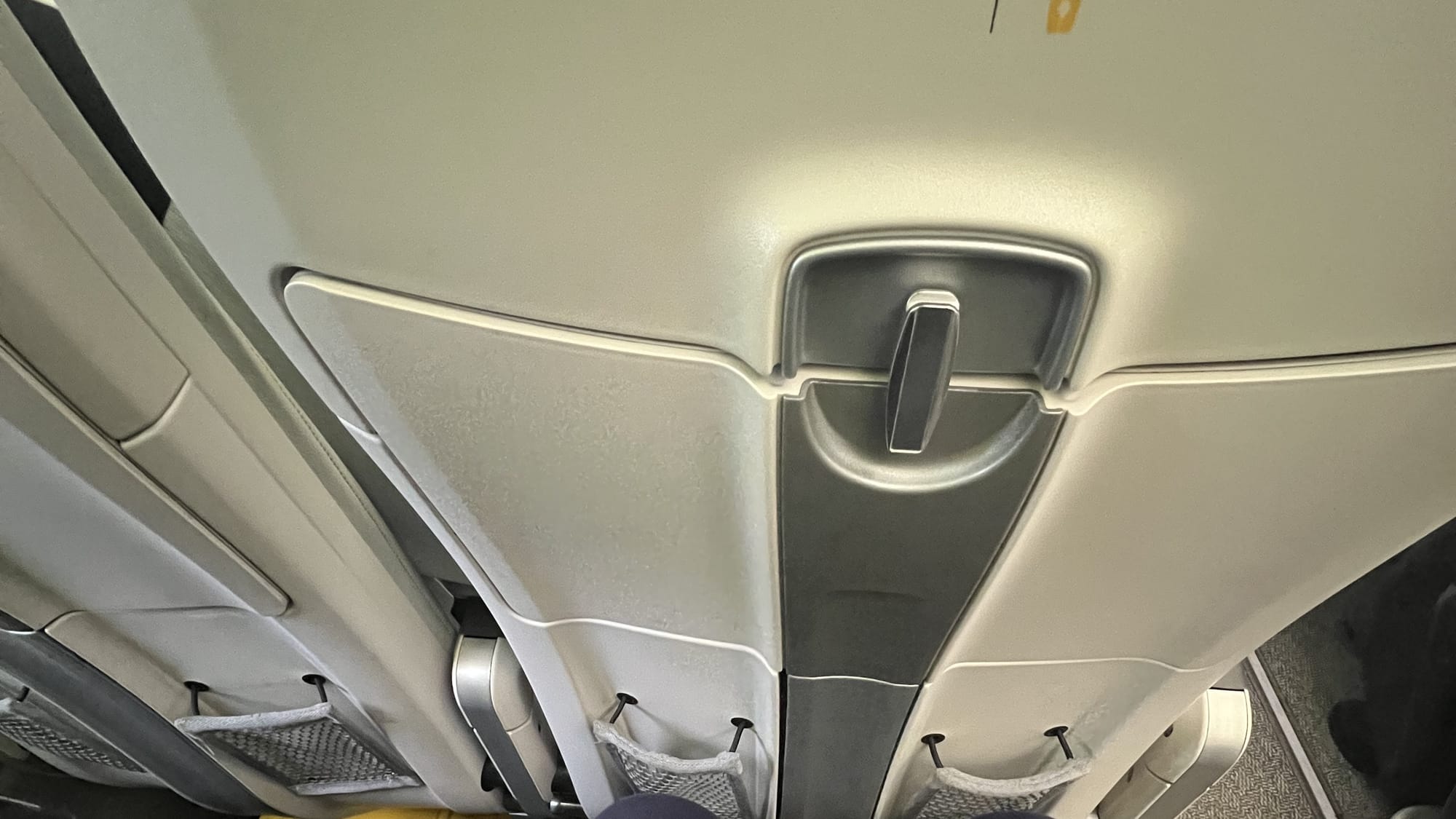
They are comfortable, no doubt about it, but they are starting to show their age. My biggest pet peeve is the fact that passengers have nowhere to charge their devices, and with airlines themselves tightening power bank rules, that can become an issue, especially on longer flights, like Riga Airport (RIX) to Barcelona El Prat Airport (BCN), or any of the Gran Canaria-bound routes from mainland Europe.
In May, the European Union Aviation Safety Agency (EASA) issued a Safety Information Bulletin (SIB), which, among other things, recommended that airlines prohibit the use of “power banks to charge electronic devices during the flight.”
I would like to charge my device while flying, and seeing many carriers – mostly in the United States, though – adopt a more premium cabin experience on narrowbodies with new cabins, and charging ports at every seat, I now know what I want from my flights.
 Rytis Beresnevicius
Look, I know that while I mostly fly economy – who am I kidding, I only fly economy – you expect certain things from airlines that, in terms of the passenger experience, position themselves above low-cost carriers.
Flying with the latter, the travel experience might be mediocre, at best, but you know what to expect. Not much, that is, but it still gets you to your destination.
But when I am flying on airBaltic, and usually have to pay a premium compared to the two European low-cost carriers, there are certain expectations that I have. And it is not a matter of service, Michelin Guide-like food, or any other novelties.
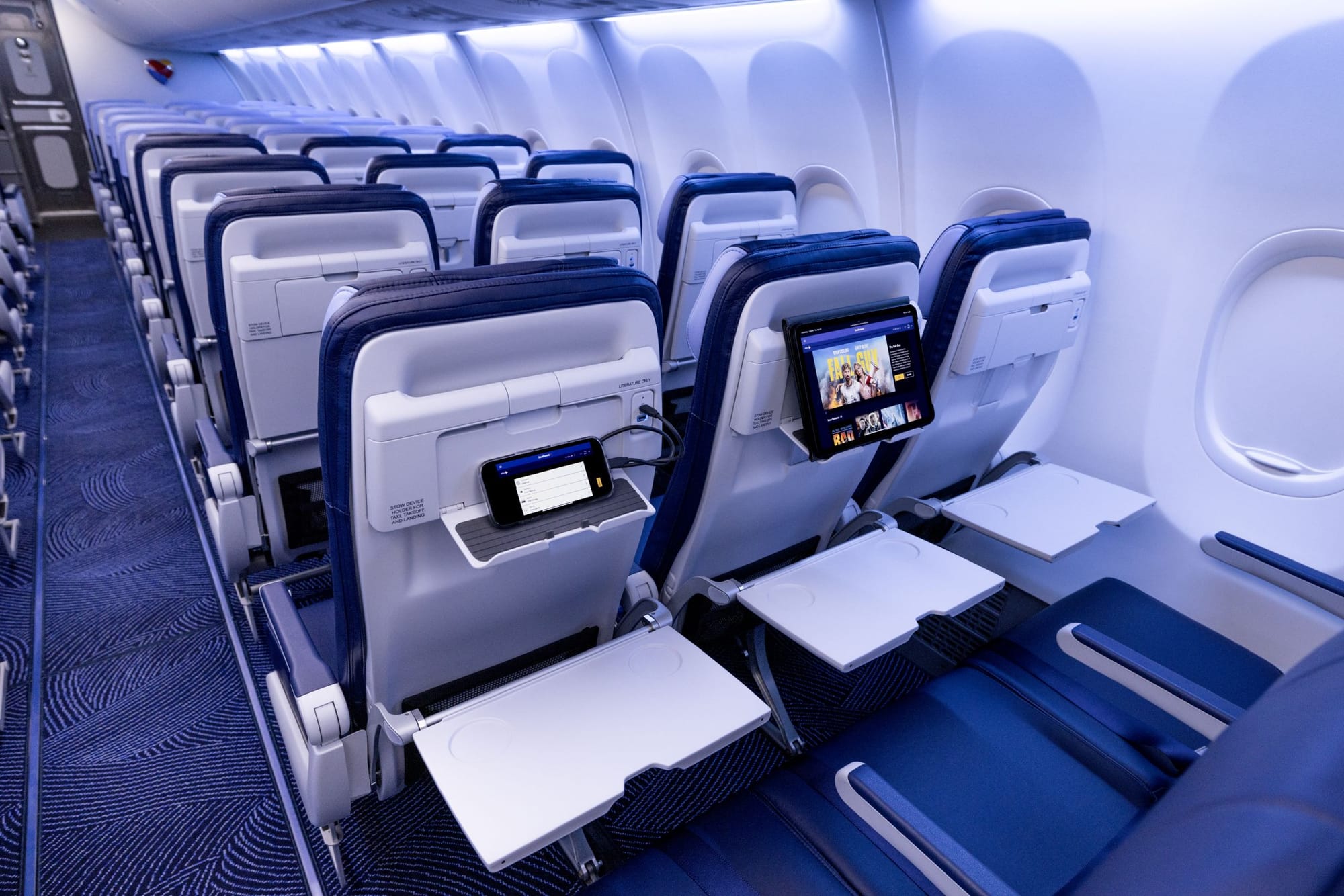
It is convenience I desire. Starlink is just one part of the equation, but in my mind, the other two parts are first, charging ports, and second, redesigned seatbacks that would at least have a phone holder. See, for example, Southwest Airlines’ newest cabins (image below).
 Rytis Beresnevicius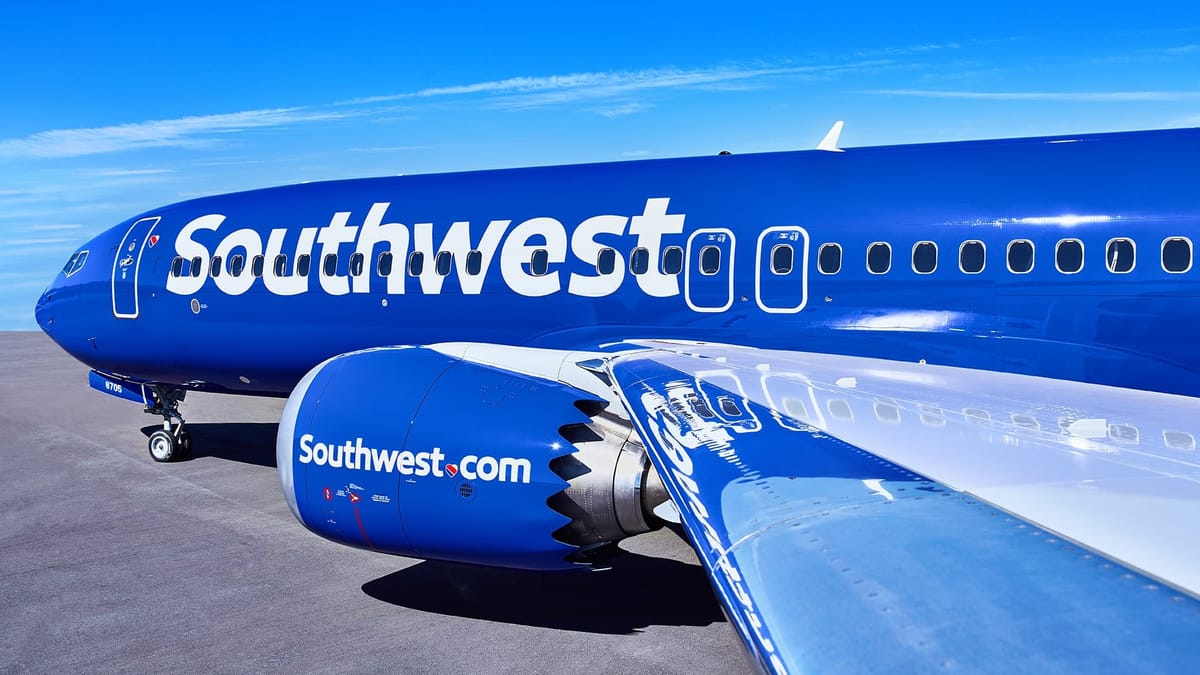
Still, subjectively, and if the price is right, I will always opt to fly airBaltic from my base airport, VNO. No matter the issues with these cabins, the passenger experience, especially if it is a direct route, is vastly superior compared to Ryanair or Wizz Air.
If it is not a direct flight, and I am forced to fly through a hub, then it is a whole different ballgame.
I realize that this flight review reads more like the ramblings of a madman, but those are my two cents about airBaltic, Starlink, and the passenger experience while I am literally in the air, flying back home from KRK.
Without said IFC. So, bored since I forgot to bring a book. Boredom apparently inspires such ramblings.


