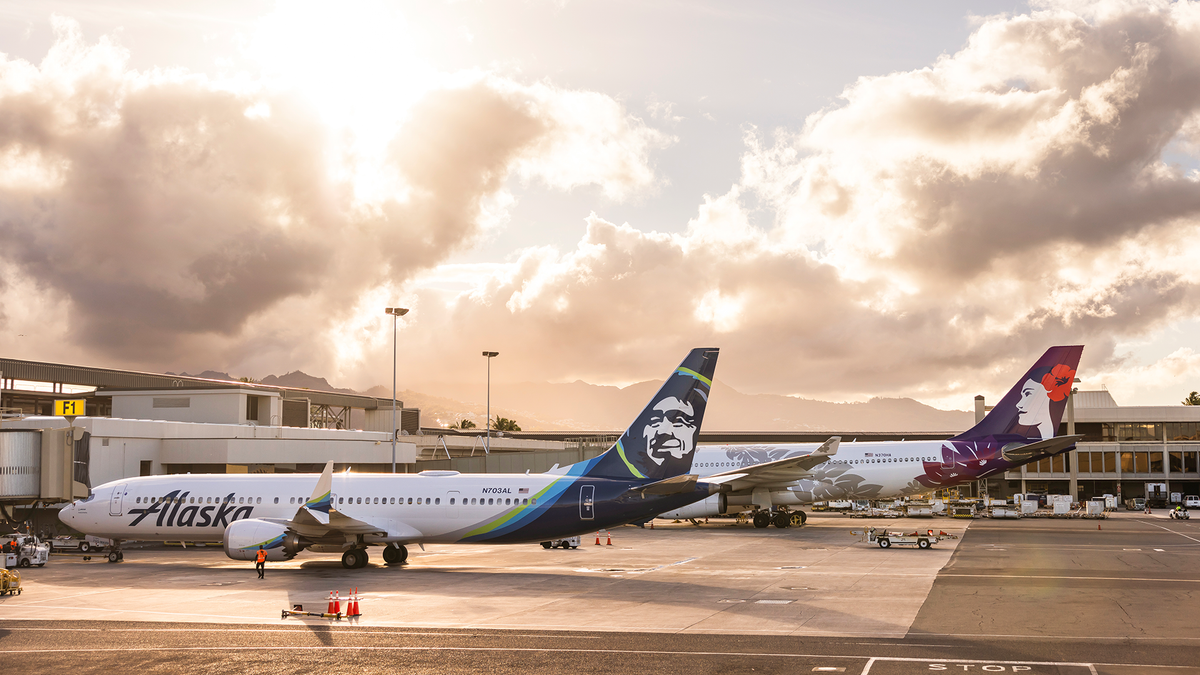


Alaska Airlines has had to update its quarterly guidance because, while demand has remained strong, several external events, including unrest in Mexico and severe weather in Hawaii, as well as the rising fuel prices, will result in worse-than-expected per-share losses in Q1 2026.

On March 30, 2026, Alaska Airlines updated its Q1 2026 outlook, saying that while demand “has shown continued strength throughout our network, with unit revenue tracking in line with prior expectations and capacity toward the high end of the previously guided range,” several external events have affected the group’s financial position during the quarter.
First, the unrest in Puerto Vallarta resulted in a “demand pullback,” while in Hawaii, where “severe rainstorms and historic flooding” have affected the airline’s operations in both March and April, which includes the peak spring break travel periods.
“With respect to Hawai’i, we do not believe there will be a longer-term structural impact and expect demand to fully recover,” the carrier said.
Second, fuel costs have surged in recent weeks due to the conflict in Iran. Alaska Airlines, which includes Hawaiian Airlines, detailed that refining margins have surged around 400% since early February, from an average of $0.45 per gallon to around $2.25 per gallon in Singapore, where the group typically sources its lowest-cost fuel, or 20% of its total fuel supply.
In the US, refining costs are up around 140% during the same period, and as a result, the average fuel cost is expected to be between $2.90 and $3.00 per gallon. In 2025, Alaska Airlines’ average fuel cost per gallon was $2.52, down 8% year-on-year (YoY).
The increase in jet fuel prices will represent an incremental earnings per share (EPS) headwind of at least -$0.70, with Alaska Airlines now estimating an EPS of -$2 to $1.50 in Q1 2026. The company’s previous guidance anticipated an EPS of -$1.5 to -$0.50.
“Absent impacts from fuel, Puerto Vallarta, and Hawaiʻi storms, Alaska Air Group’s results would have exceeded the midpoint of original guidance,” it pointed out. “Revenue trends across the rest of the network heading into Q2 2026 are encouraging.”
“Managed corporate demand remains a standout, with forward bookings over the next 90 days up more than 25% year over year. Held second quarter yields and load factors are also up year over year with significant strength in May and June.”
Alaska Airlines concluded that, with 55% of Q2 2026’s revenue still to come, it is “well positioned for peak travel periods during our seasonally strongest quarter.”
 Rytis Beresnevicius