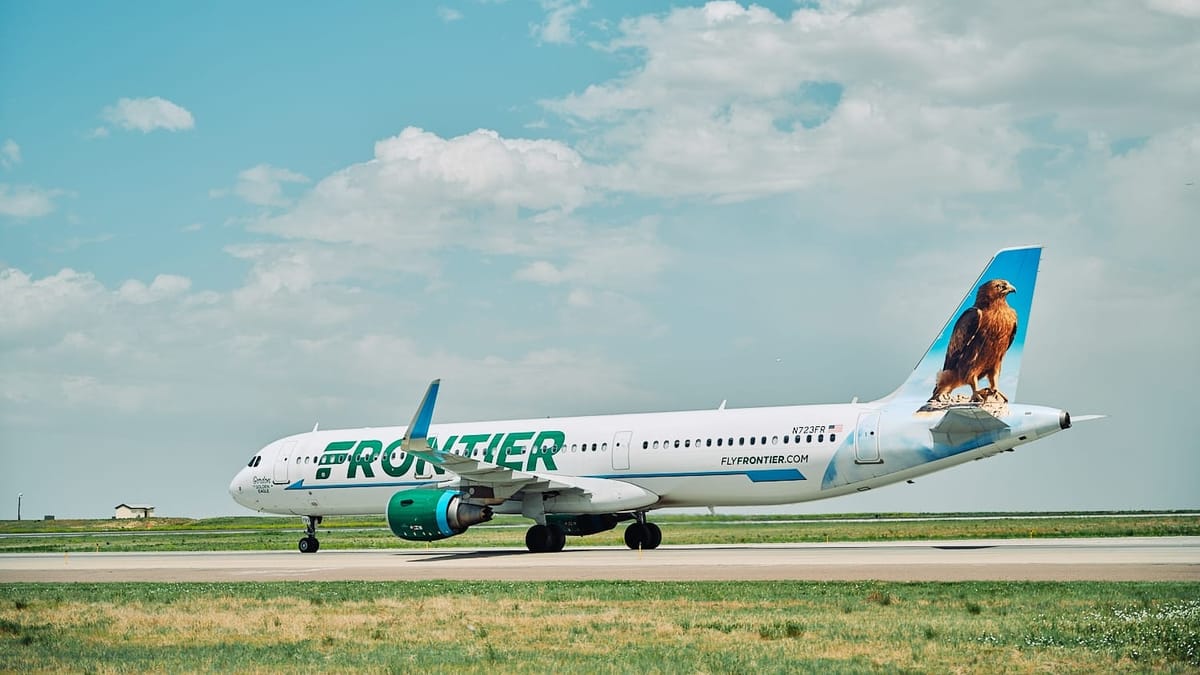


Barry Biffle, who has been the Chief Executive Officer (CEO) of Frontier Airlines for almost a decade, is moving on from the airline just before the start of the new year. The low-cost carrier reiterated that there has not been any disagreement between Biffle and the airline’s management, yet the announcement was sudden and unexpected.
As such, with Spirit Airlines’ debtholders attaching conditions to its debtor-in-possession (DIP) financing tranches, which include potential progress on a “strategic transaction,” The Engine Cowl has revisited Spirit Airlines’ first bankruptcy proceedings, when Frontier Airlines submitted two bids to acquire the former. Both were rejected by the once again bankrupt Spirit Airlines.
On December 15, 2025, effective immediately, Frontier Airlines replaced Biffle with James Dempsey, its current President, as interim CEO. Biffle will continue as an advisor to the airline’s management until December 31, the carrier said, with Bill Franke, the Chairman of Frontier Airlines, thanking Biffle for his “leadership and dedicated service to Frontier over the past 11 years.”
Biffle served as the airline’s President between July 2014 and October 2023, and as the CEO between March 2016 and December 15, 2025. Biffle was also Spirit Airlines’ Chief Marketing Officer (CMO) between February 2005 and July 2013.
“Mr. Biffle’s expected departure as a director of the Company is not the result of any disagreement with the Company on any matter relating to the Company’s operations, policies, or practices.”

However, on the other side of the United States, Spirit Airlines is undergoing its second Chapter 11 bankruptcy in a year, having exited its previous court-protected reorganization in March, and entered the new process on August 29.
During the first Chapter 11 case, Frontier Airlines made two separate bids for its counterpart low-cost carrier, both of which were rejected.
Spirit Airlines’ then-management described the first one as falling “far short of what our stakeholders would support,” while the second, “despite the clear guidance we and others have provided for three weeks as to the [first bid’s] many deficiencies,” addressed none of the first bid’s flaws.
The two proposals were made in addition to another merger offer in October 2024, made weeks before Spirit Airlines asked the court to protect it against its creditors on November 18, 2024.
“The proposal in your letter of January 7 represents an extremely material reduction in value compared to our 2024 agreement in principle,” Spirit Airlines’ response to the first bid read, adding that the “$580 million in take-back debt has been reduced to $400 million in debt, the 26.5% of equity to 19%, and notwithstanding those reductions in consideration for Spirit stakeholders, your proposal further assumes our creditors will make an incremental $350 million equity investment, effectively requiring them to fund their own debt position in the combined company.”
From Frontier Airlines’ point of view, the airline saw the merger not only as a better alternative to Spirit Airlines’ post-bankruptcy plan for its creditors, but also as an opportunity for the combined companies to have “long-term viability as a more effective competitor in our existing and new markets.”
“Our Proposal represents a compelling opportunity for your creditors and stockholders to receive a significant premium for their investment in Spirit, with greater value than the proposed transaction as described in the [standalone] plan,” concluded the proposal letter, signed by Biffle and Bill Franke, the Chairman of Frontier Airlines.
On January 24, four days before Frontier Airlines presented its second acquisition proposal for Spirit Airlines, Biffle detailed why the former would not be interested in a merger with the latter following its exit from Chapter 11 bankruptcy.
“First, under the current standalone plan, you will emerge highly leveraged, losing money at the operating level, and this would not be a transaction we would pursue,” an email from Biffle read. Second, Spirit Airlines, under its then-current standalone plan, would be so weak and highly leveraged that it would “attract predatory competitive attacks, and we worry that Spirit Airlines could be quickly weakened to the point that a merger is not a prudent risk.” Lastly, without knowing who will take over Spirit Airlines’ C-suite, there is a risk that new management could “struggle to find the right commercial fixes the company needs, exacerbating what could be a tough re-entry.”
“The sooner we can take control of the combined companies, the sooner we can stabilize Spirit. If you pursue the current standalone plan, it will be some time before we could contemplate reengaging, if at all.”
Spirit Airlines eventually exited its first Chapter 11 bankruptcy proceedings on March 12. On April 17, the low-cost carrier’s restructured board appointed Dave Davis, the ex-President and Chief Financial Officer (CFO) of Sun Country Airlines, as the President and CEO.
During the next five months, Frontier Airlines did not make any publicly known approaches to acquire Spirit Airlines. Then, on August 29, the latter once again filed for court-protected restructuring, after the aircraft lessor AerCap had deemed that Spirit Airlines defaulted on leases of its current and to-be-delivered Airbus A320 family aircraft.
As Spirit Airlines continued to progress with its restructuring, which, unlike the first Chapter 11 bankruptcy, now focused on its balance sheet and rejection of excess assets, including aircraft and airport infrastructure leases, its debtholders agreed to provide it with $475 million of DIP financing on October 10, which was approved by the court.
The financing, split into four tranches, with the first $200 million becoming available immediately, had some conditions attached to it. The third and fourth draws would depend on Spirit Airlines either drawing interest with respect to a “strategic transaction” or having entered “into definitive documentation with respect to a strategic transaction that is acceptable to the required DIP lenders in their sole discretion,” respectively.
Alternatively, Spirit Airlines would have to come up with a satisfactory plan of reorganization as a standalone company.
On December 15, Spirit Airlines’ debtholders agreed to amend the DIP financing agreement and make $50 million of additional liquidity available to the airline immediately, seemingly saving the airline from a potential cash crunch that would have resulted in the low-cost carrier ceasing operations with immediate effect. On December 12, The Air Current reported that some of its US rivals had been monitoring Spirit Airlines’ situation and its potential sudden collapse.
 Rytis Beresnevicius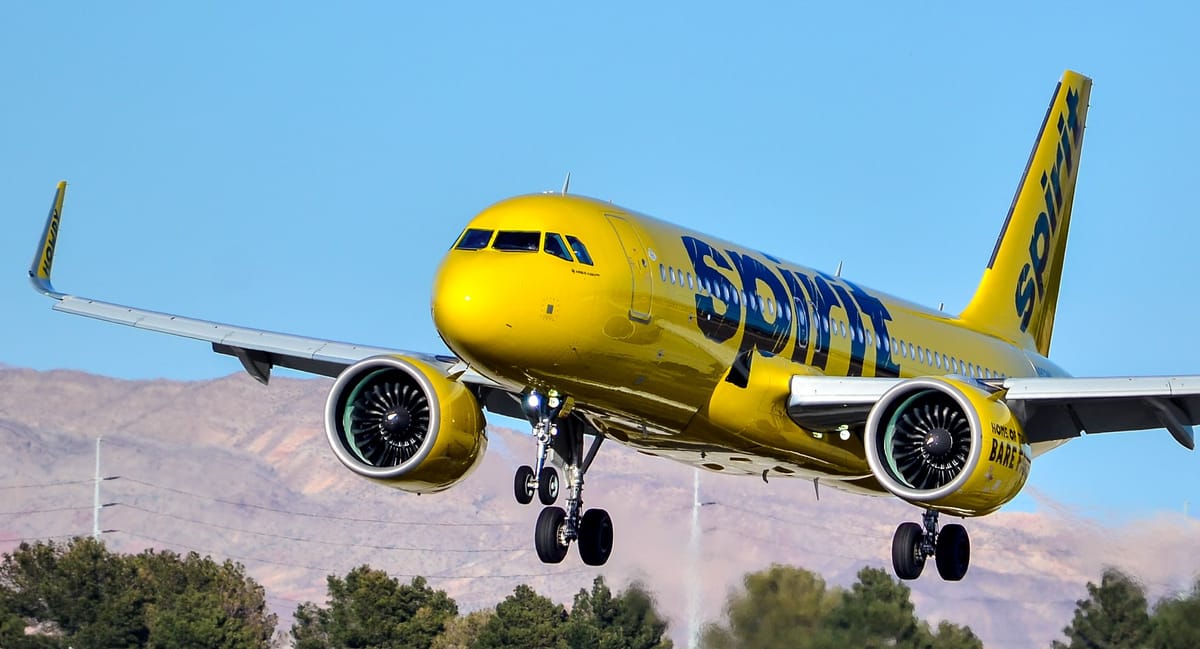
Still, it has to be emphasized that Frontier Airlines’ statement firmly said that its management had no disagreements with Biffle. This could also mean that the two sides saw eye-to-eye when it came to a potential acquisition of Spirit Airlines, namely that they wanted nothing to do with it.
At the same time, Frontier Airlines had not been performing well recently. During the first nine months of 2025, its cash reserves decreased by $174 million, while total revenues of $2.7 billion did not offset the operating expenses of $2.9 billion, resulting in an operating loss of $198 million.
The period’s net loss was $190 million.
Together with its Q3 results, the airline said that in Q4, its adjusted diluted earnings per share (EPS) should be between $0.04 and $0.20, while capacity growth should be flat year-on-year (YoY). When it announced Biffle’s departure, the low-cost carrier reiterated its guidance, expecting Q4 performance “to be in line with the guidance previously announced on November 5,” when it published its latest quarterly results.
 Rytis Beresnevicius