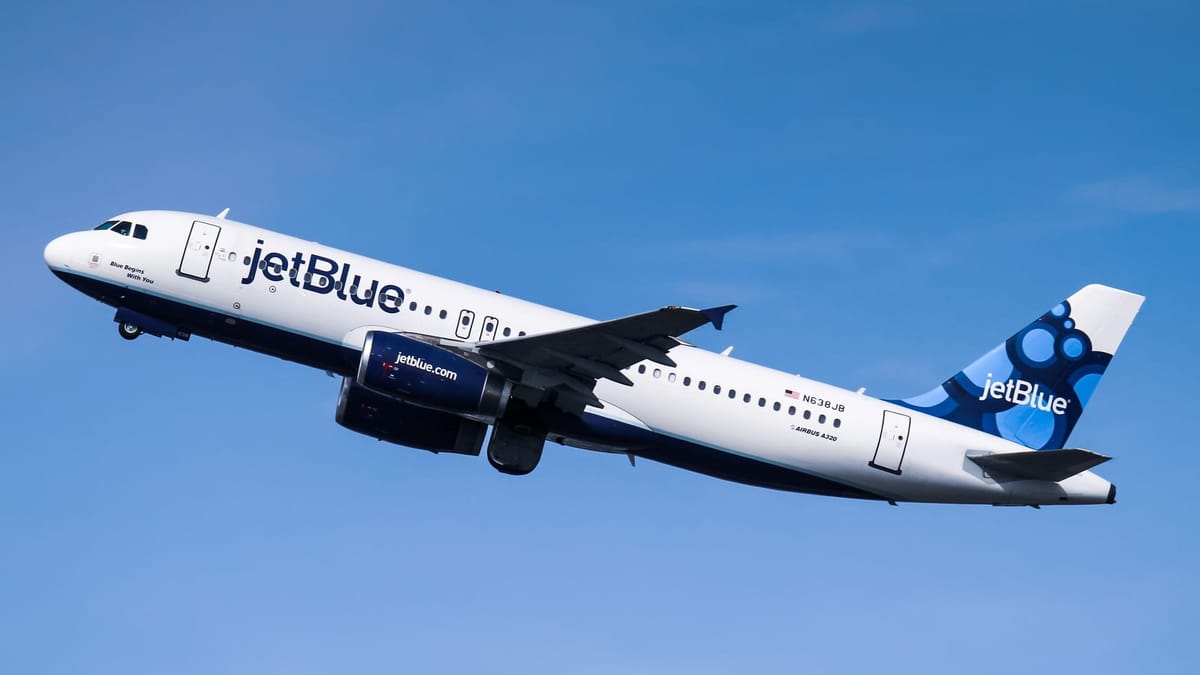


The Department of Transportation (DOT) has provided guidance for its consumer protection office, saying that in case of emergency airworthiness directives (EAD), which result in unscheduled maintenance events, airlines are not obligated to rebook or provide meals or hotels to passengers affected by the associated flight disruption since it is out of the carriers’ control.
Following an inquiry from its own Office of Aviation Consumer Protection (OACP), after the “significant impact” of an EAD on United States-based airlines’ fleets, the DOT provided guidance that is non-binding to airlines.
According to the Department, the largest airlines in the US have “generally committed to provide free rebooking, hotel, and meals to mitigate passenger inconveniences when the cause of a cancellation or significant delay was due to circumstances within the airline’s control.”
The DOT also displays airlines’ customer service commitments on its Airline Cancellation and Delay Dashboard, aligning its ‘controllable’ standard with the Air Carrier casual category used by airlines when reporting cancellations and delays to the Department's Bureau of Transportation Statistics (BTS), it pointed out.
However, the BTS is “currently engaged in rulemaking to update the causal categories for reportable delays and cancellations,” including the removal of specific actions from the Air Carrier category, as mandated by the Federal Aviation Administration’s (FAA) Reauthorization Act of 2024.
This includes “unscheduled maintenance,” the DOT’s guidance read.

According to the same FAA Reauthorization Act, unscheduled maintenance, including EADs, which are outside of the scheduled maintenance program, should not be included in the Air Carrier reporting category.
The recent EAD, which triggered inspections and software and/or hardware replacements for around 6,000 A320 family aircraft, A320ceo and A320neos alike, was an unscheduled maintenance event that could not be deferred due to its specific requirements, the DOT stated.
“Therefore, as a matter of enforcement policy, OACP will not take action against airlines that do not provide services, amenities, or compensation promised in their customer service plans to mitigate passenger inconvenience from controllable flight disruptions in instances when flights are delayed or cancelled due to unscheduled maintenance in response to an airworthiness directive that cannot be deferred or must be addressed before flight such as was the case with [the EAD].”
The DOT noted that OACP, in its considerations whether a flight was affected by unscheduled maintenance prompted by an EAD, “would consider whether the delay or cancellation would have occurred but for the actions taken to comply with the EAD.”
The EAD, first published by the European Union Aviation Safety Agency (EASA) on November 28, outlined that after a – JetBlue – A320 “experienced an uncommanded and limited pitch down event,” Airbus’ preliminary assessment identified a software issue that could potentially affect the type's elevator aileron computer (ELAC).
The directive, which had an effective date before midnight on November 29 UTC, required operators to “replace or modify each affected ELAC with a serviceable ELAC” according to Airbus instructions, before the next flight after the effective date of the EAD.
EASA allowed airlines to conduct ferry flights of up to three flight cycles (FCs) without passengers per aircraft to reposition them to a maintenance location.
In an update on December 1, Airbus disclosed that out of “around 6,000” aircraft that were potentially affected by the EAD, which was based on its Alert Operators Transmission (AOT), fewer than 100 aircraft had to undergo modifications to safely return to service.
 Rytis Beresnevicius