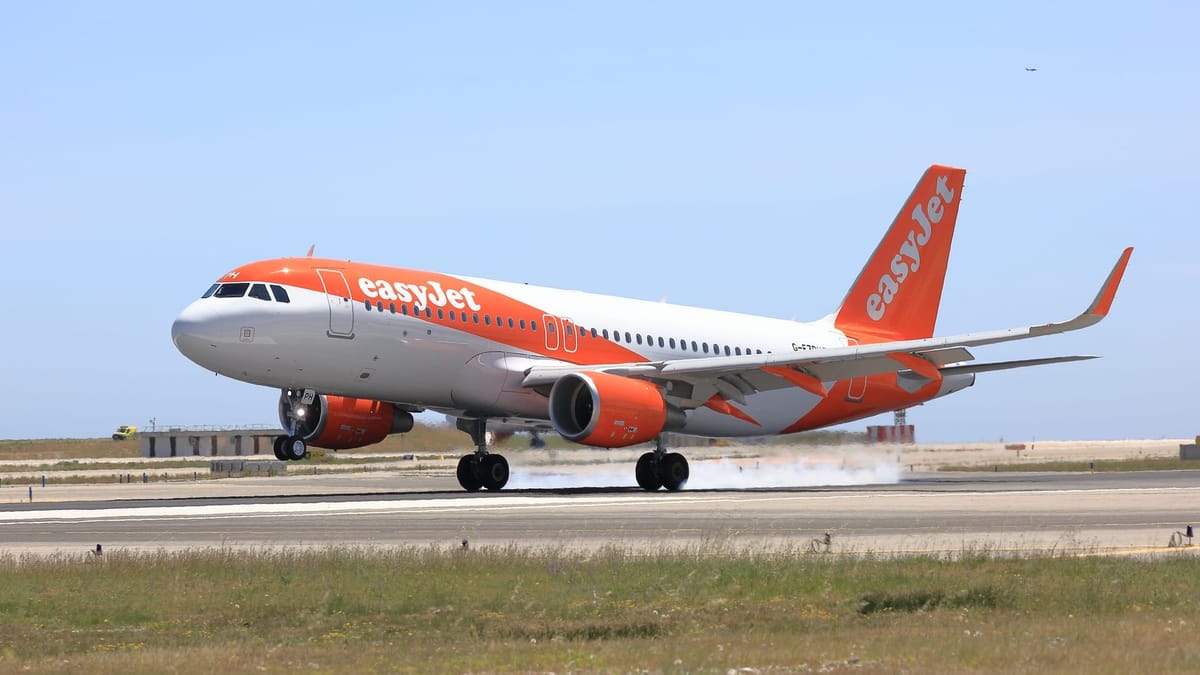


easyJet has announced that it plans to retrofit all of its remaining Airbus A320ceo aircraft with Sharklets, which are more efficient wingtip devices than the original wingtip fences that have been on the wings of earlier A320ceo family and other Airbus aircraft, including the A380.
On January 9, 2026, easyJet detailed that the retrofit program, which has already been on the way, will result in the replacement of the wingtip devices of seven A320s by summer 2026. Six A320ceos still have wingtip fences that will be replaced with Sharklets, with the program having begun in October 2025 with the retrofit of the first single-aisle jet.
Not only do they increase the fuel efficiency of the aircraft “by increasing the effective wingspan and minimising lift-induced drag by up to 4%,” but Sharklets will also allow easyJet to fit six more seats, enhancing their efficiency, the airline said.
“Once completed, the upgrade to these remaining aircraft will offer an additional combined fuel saving of 2,156 tonnes across easyJet’s fleet, an equivalent reduction of almost 7,000 tonnes of CO2 per annum.”
David Morgan, the Chief Operating Officer (COO) of easyJet, detailed that the retrofit was “another small but important step in our mission to operate as efficiently as possible.” The upgrades will deliver immediate fuel burn improvements while also lowering emissions, Morgan added.
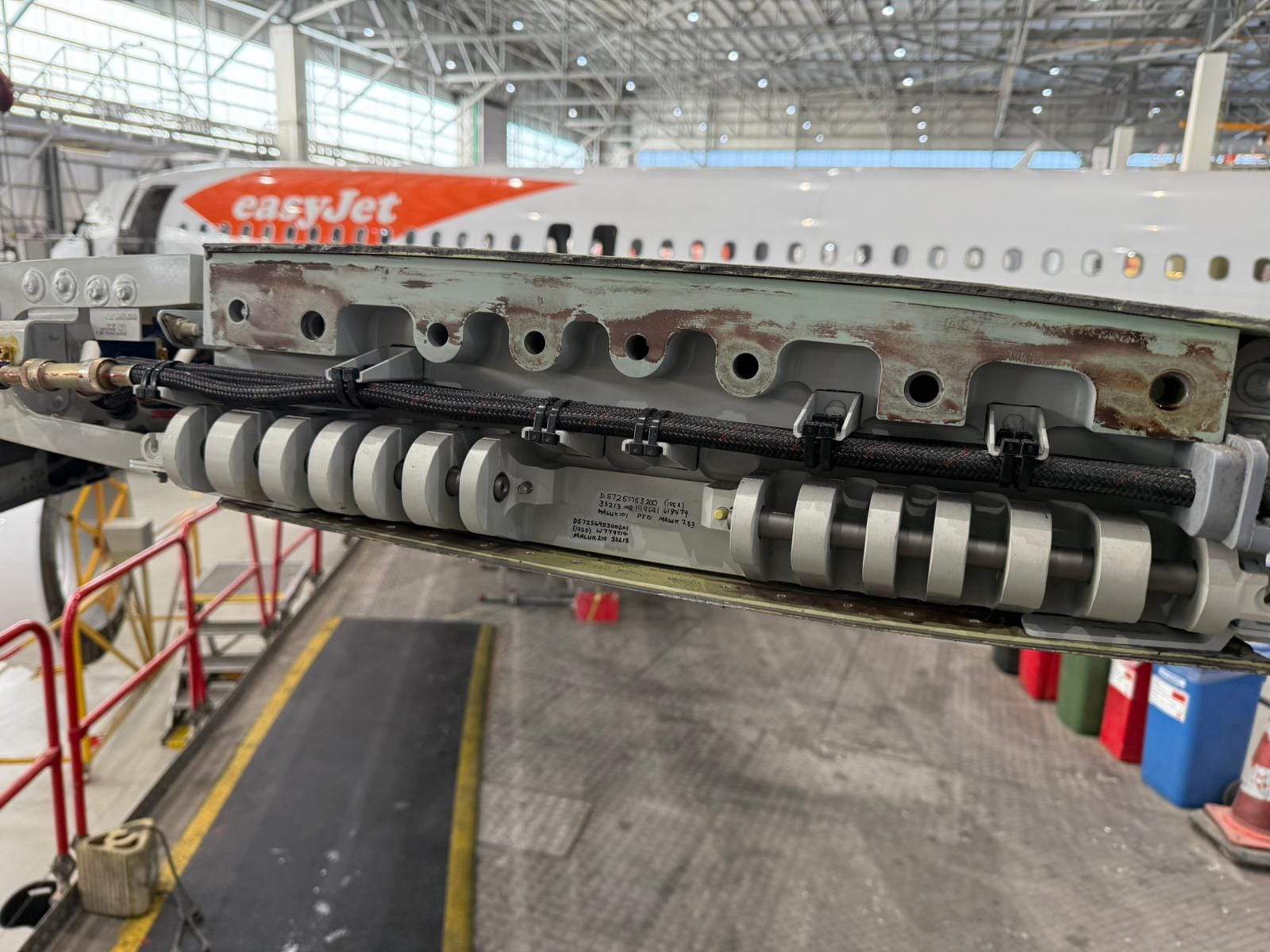
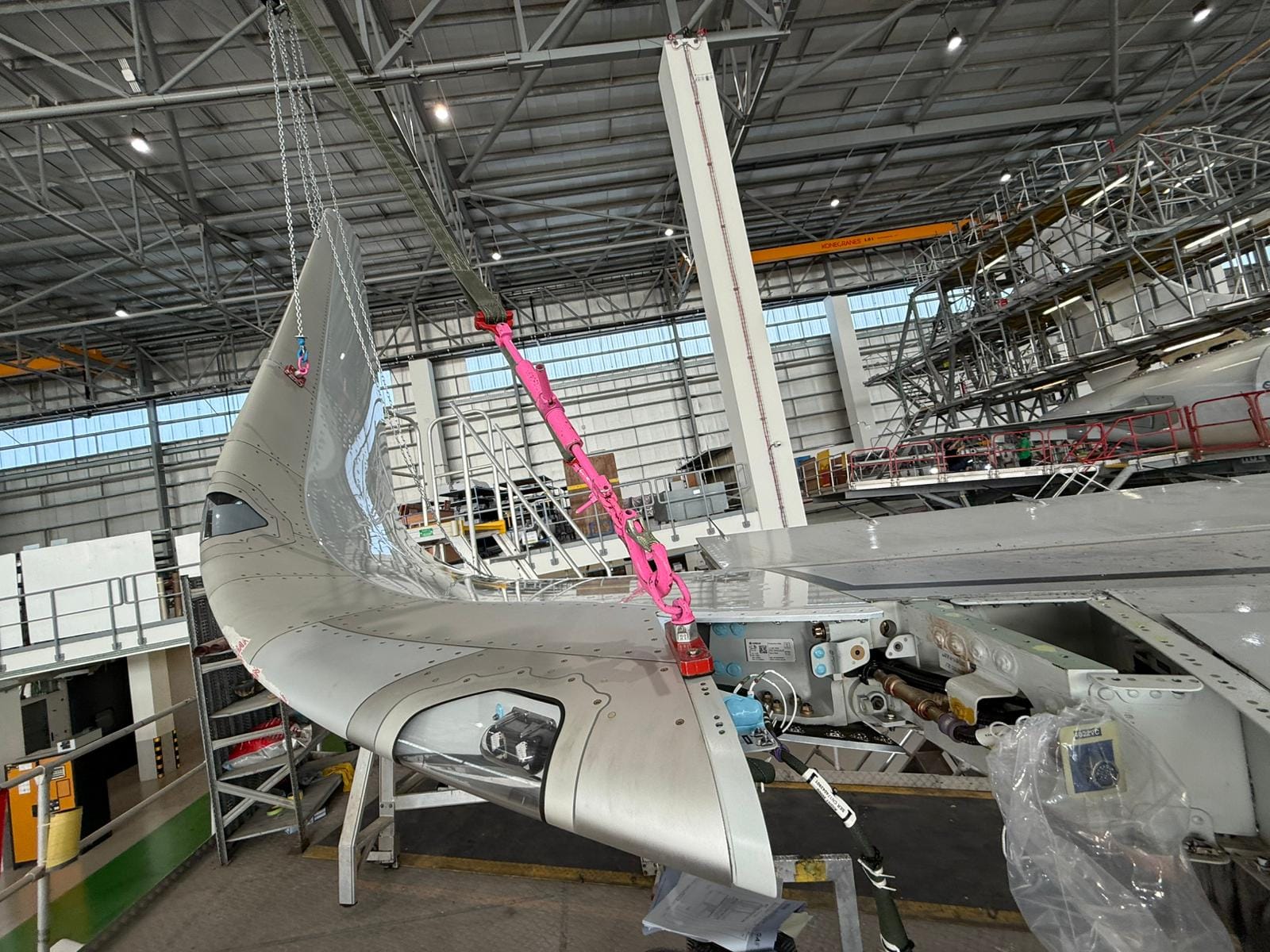
Photo: easyJet
The airline explained that Sharklets are better than wingtip fences because they weaken wingtip vortices by redirecting airflow upward and outward, reducing the energy lost in the swirl. The wingtip devices also increase the wing’s aspect ratio without expanding the wingspan too much, keeping the A320ceo within the same International Civil Aviation Organization (ICAO) Aerodrome Reference Code.
According to Airbus, the wingspan of an A320ceo equipped with Sharklets is 35.8 meters (117.4 feet), which is still within the limits of ICAO’s C aerodrome reference code. Aircraft with a wingspan of up to but not including 36 m (118.11 ft) have a 'C' reference code.
easyJet also highlighted that the Sharklets’ shape was “more aerodynamically efficient than the older, flat wingtip fences or simple winglets, creating smoother airflow with less induced drag.”
Planespotters.net data showed that easyJet, which includes its subsidiaries in Austria and Switzerland, has 180 A320ceo aircraft. 25 of them seat up to 180 passengers, while the remaining 155 jets can welcome up to 186 travelers.

Airbus announced the Sharklets’ retrofit program for the in-service A320ceo family aircraft fleet in October 2013, saying that the option would be available starting in 2015. Operators of A320ceo family aircraft with wingtip fences “will thus be able to benefit from the significant cost savings and performance improvements which the Sharklets are already delivering on new-build aircraft.”
“This retrofit includes reinforcing the wing structure and adding the Sharklet wingtip device. As part of the upgrade, the retrofit will lengthen the aircraft’s service life and thus maximise the operators’ return on investment for the Sharklet retrofit.”
At the time, Airbus estimated that Sharklets reduced fuel consumption by around 4% and increased the mission range of an A320ceo family aircraft by 100 nautical miles (185.2 kilometers). The planemaker stated that it has been fitting Sharklets on newly built A320ceo family aircraft since December 2012.
When easyJet presented its FY2025 results on November 25, 2025, the low-cost carrier detailed that in the next three fiscal years, it plans to retire a total of 51 older-generation and less efficient aircraft.
This will enable the airline to “benefit from the A320neo family aircraft, which have superior fuel efficiency and a greater number of seats, generating efficiency savings across many cost line items.”
At the time, easyJet had an existing order book of a further 290 A320neo family aircraft, as well as 100 delivery options as of September 30, 2025.
The order book has enabled the airline to plan its fleet, including the phase out of its A319ceos, the replacement of around half of its A320ceos, and the foundation for “disciplined growth,” it concluded.
 Rytis Beresnevicius