

Two Lufthansa Group airlines, Lufthansa and Austrian Airlines, as well as Norse Atlantic Airways and Malaysia Airlines, have added additional services to compensate for the cancellation of flights operating through Gulf hubs.

On March 10, Lufthansa Group confirmed that Lufthansa and Austrian Airlines will add additional flights to Asia and Africa in response to “the rise in demand for long-haul flights at short notice,” as passenger flows between Europe and the two continents have been disrupted amid the breakout in hostilities in Iran.
Lufthansa will add four extra flights from Munich Airport (MUC) to Singapore Changi Airport (SIN), from Frankfurt Airport (FRA) to Cape Town International Airport (CPT), and from FRA to Riyadh King Khalid International Airport (RUH).
The additional MUC-SIN and FRA-CPT flights are already available for booking, the group said.
Meanwhile, Austrian Airlines has already added 10 additional round-trip frequencies from Vienna Airport (VIE) to Bangkok Suvarnabhumi Airport (BKK).
The two Lufthansa Group airlines joined other carriers that have added additional flights amid airspace restrictions in the Middle East due to the armed conflict in the region.
 Rytis Beresnevicius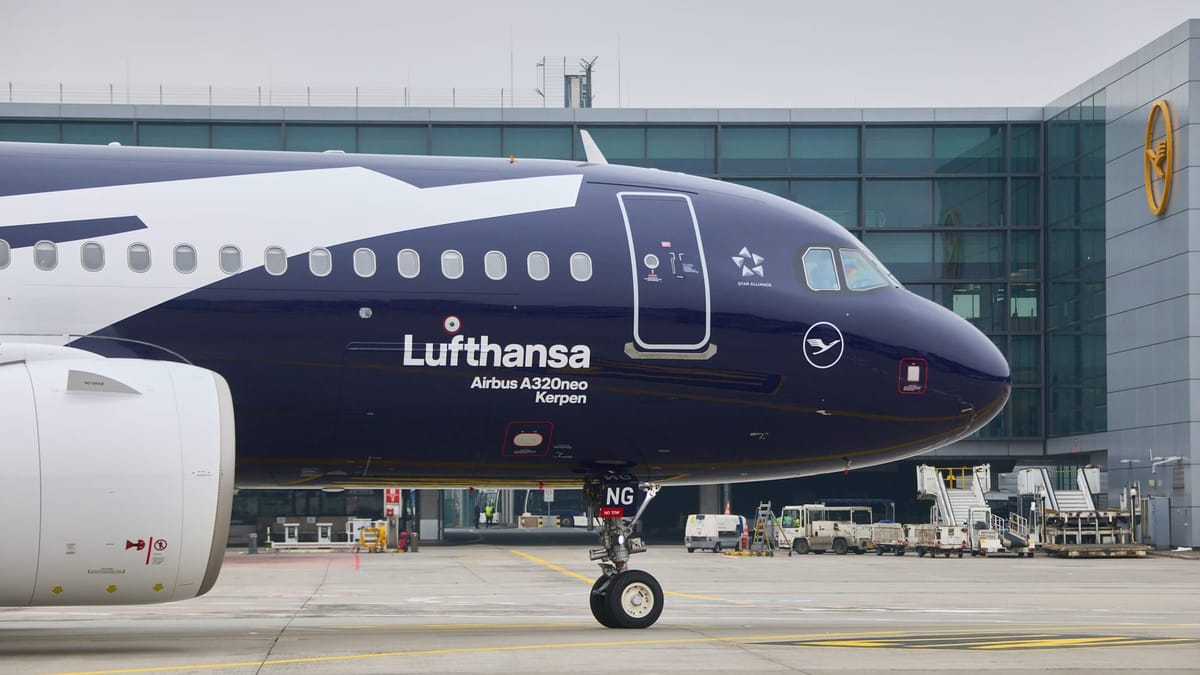
Lufthansa Group’s partner Air India said on March 9 that, in addition to its scheduled services, it will operate 32 ad-hoc flights from India to the United Arab Emirates (UAE) on March 10, “subject to availability of slots and other conditions prevailing at the respective point of departure at the time.”
Air India, and its low-cost subsidiary, Air India Express, will operate the one-off flights to Abu Dhabi Zayed International Airport (AUH), Dubai International Airport (DXB), Ras Al Khaimah International Airport (RKT), and Sharjah International Airport (SHJ).
On March 5, Norse said that it would add additional flights between London Gatwick Airport (LGW) and BKK, departing toward the Thai airport on March 9, March 11, and March 12. “The additional services will help accommodate travelers affected by changing travel patterns and increased demand between Europe and Thailand,” it said.
When Norse unveiled its February results on March 4, the airline’s Chief Executive Officer (CEO), Eivind Roald, stated that it had recently seen a surge in demand for passenger and cargo services from Europe to Thailand and CPT, translating into higher revenues.
Malaysia Airlines announced additional flights from Kuala Lumpur International Airport (KUL) to London Heathrow Airport (LHR) and Paris Charles de Gaulle Airport (CDG) on March 5, scheduling the additional itineraries to depart KUL on March 6, March 7, and March 8.
“By deploying increased widebody capacity between Asia and Europe, Malaysia Airlines aims to help reunite families and support onward journeys.”
Following the outbreak of hostilities in Iran and the resulting airspace restrictions across the Middle East, flights have been severely disrupted, especially those operating to and from the region’s major hubs, such as DXB.
According to Cirium, between February 28 and March 9, over 20,000 flights, or 55.7% of the total scheduled departures, were either canceled or did not depart the region’s airports.
On March 10, Emirates said that it is operating a “reduced flight schedule,” as is Etihad Airways. Qatar Airways’ latest update read that the airline’s “scheduled flight operations remain temporarily suspended due to the closure of Qatari airspace,” and Gulf Air, based at Bahrain International Airport (BAH), has also suspended its operations.
Per Cirium, BAH and Doha Hamad International Airport (DOH) were among the most affected airports in the region, with 100% of flights canceled at BAH and over 96% at DOH on March 9.
 Rytis Beresnevicius