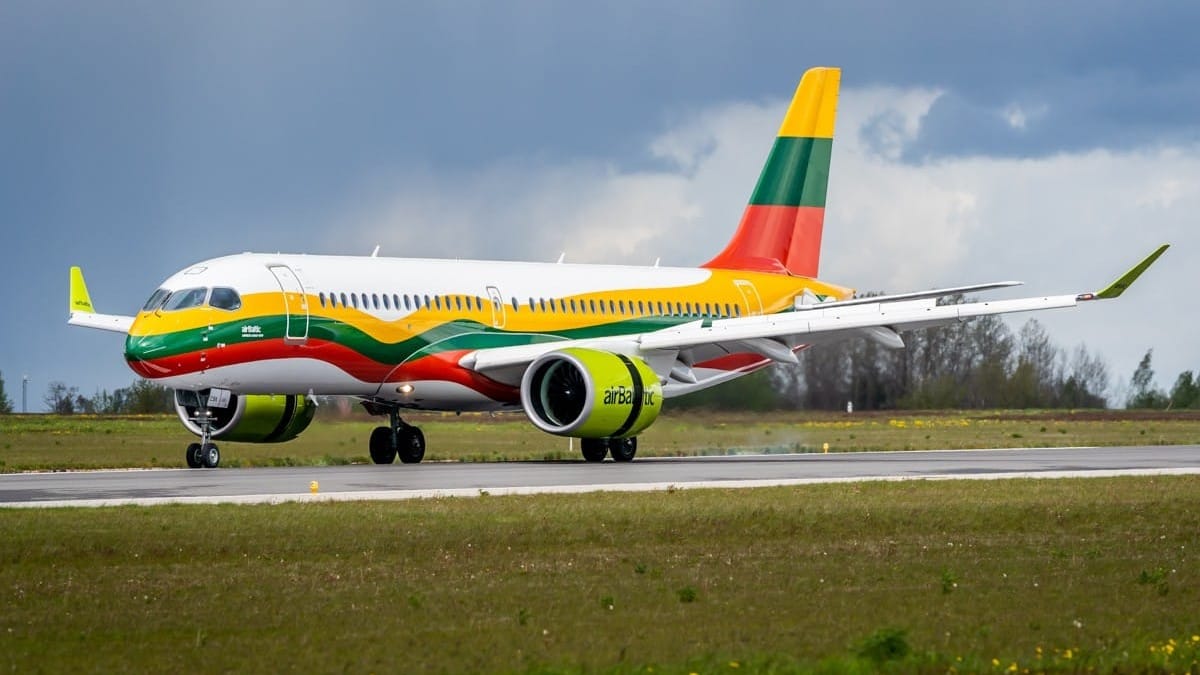


flydubai has launched flights to Vilnius, Lithuania, as it continues expanding its network across Europe, with the flights to the Lithuanian capital complementing its upcoming flights to Riga, Latvia, another Baltic State capital city.
On December 11, 2025, flydubai’s first flight from Dubai International Airport (DXB) to Vilnius Airport (VNO) is scheduled to take off at 18:00 local time (UTC +4) and arrive at VNO at 22:40 local time (UTC +2).
The return flight should depart VNO at 23:40 and arrive at DXB at 08:20 the next day.
The itinerary is set to be operated with a Boeing 737 MAX 8 year-round with three weekly flights, departing on Tuesdays, Thursdays, and Saturdays.
During a press conference in Vilnius, Lithuania, Jeyhun Efendi, the Divisional Senior Vice President of Commercial Operations and E-commerce at flydubai, said that the inaugural flights from DXB and from VNO are full, both in business and economy class cabins.
Efendi stated that Dubai has transformed itself into a great tourist and business destination, with DXB facilitating access to global markets, especially in the East, including Asia and Australia. The flydubai executive noted that since it began flying in 2009, “at least 80% of the routes that we fly were either not served at all, or were extremely underserved.
As such, the airline plays a “pivotal role in developing that movement and connections between cities.” Efendi quipped that the carrier’s job is “easy,” since Dubai is a great place and has grown massively over the years, facilitating the growth of traffic from/to DXB.

While Efendi highlighted that the number of Lithuanians working in Dubai has increased over the years, he admitted that Vilnius, as well as the whole Baltic region, has not been a popular destination for international travelers. “Our priority is demand on flights to Dubai, but our aim is to also make Lithuania and the Baltics in general a popular destination,” he said.
“Unfortunately, this part of the world is not that well known, simply because there has not been much [service].”
Efendi hoped that more and more people in Dubai would discover the Baltic States, since during the summer holidays, when traffic from DXB peaks, “people love to explore new destinations.” The flydubai executive said that the airline has seen demand “explode” on flights to, for example, Poland and its secondary cities, including Poznan Airport (POZ) and Kraków John Paul II International Airport (KRK).
One of the main focal points that Efendi, as well as Simonas Bartkus, the Chief Executive Officer (CEO) of Lithuanian Airports (Lietuvos Oro Uostai, LTOU), pointed out was flydubai’s product on board its aircraft.
Bartkus noted that LTOU is “extremely excited” about flydubai’s newest service, not only because of additional connections to DXB, but also because the airline will bring a “completely new product,” namely, lie-flat business class seats on a single-aisle aircraft.
Efendi continued that not only has flydubai upgraded the onboard product, which includes in-flight entertainment (IFE) screens for all passengers, but the airline will also introduce Starlink-powered WiFi in 2026. The service should be deployed on the majority of flydubai’s aircraft by the end of the summer, Efendi stated.
LTOU’s CEO also highlighted that flights to DXB will enable Lithuanian passengers to fly to even more destinations globally, including, for example, grabbing a one-stop flight to Australia. Similar to flydubai, airBaltic, which also flies from VNO to DXB, is a codeshare partner with Emirates.
However, Cirium’s Diio Mi showed that the only three destinations that have airBaltic’s BT designator code on Emirates’ flights are Bangkok Suvarnabhumi Airport (BKK), Jakarta Soekarno–Hatta International Airport (CGK), and Phuket International Airport (HKT).
In addition, airBaltic only operates the route during the winter season, limiting connections during the summer months.
As such, flydubai’s new itineraries will enable even greater connections for local passengers, considering the vast Emirates-flydubai codeshare network.
“We have seen that the number of travelers flying between VNO and DXB has been growing throughout the years,” Bartkus said, noting that previously, passengers had to connect elsewhere to reach DXB, prolonging their journeys.
In response to a question from The Engine Cowl, Efendi explained that 70% of flydubai’s traffic is point-to-point, mostly focusing on leisure or visiting friends and relatives (VFR) passengers. “In this part of the world, we are seeing similar percentages, where about 30% of our bookings are connections,” Efendi added.
“We expect to see about 15% of that connecting traffic to [continue flying] with Emirates, connecting to all sorts of destinations, including Japan and Australia.”
“That is the mix,” the flydubai executive stated, noting that the airline has always focused on traffic from/to DXB, teasing that “we can definitely see that there is room for quick growth in this market.
“Looking at our bookings at the moment, the flight is quite popular both in business and economy class,” Efendi added, saying that flydubai might need to quickly adjust capacity to cater to the demand.
“One thing flydubai is good at is that we are very agile. We enter markets quickly, […] and we react to demand aggressively, to make sure that the momentum is always kept up.”
The airline announced the flights on May 28, 2025, along with routes from DXB to Chișinău International Airport (RMO), Iași International Airport (IAS), and Riga Airport (RIX). Flights to RMO and IAS have been running since September, while flydubai’s first departure to RIX will be on December 12.
In its May press release, flydubai emphasized that Emirates will codeshare on the quartet of itineraries, “offering passengers more options for connections through Dubai’s international aviation hub.”
The carrier was supposed to launch flights to RIX, VNO, and Tallinn Airport (TLL) in October 2024, with the airline unveiling these routes in May 2024. At the time, flydubai also said that it will fly from DXB to EuroAirport Basel-Mulhouse-Freiburg (BSL) in August 2024, which it had begun on time.
Out of the three routes to the Baltic States’ capitals, none had taken off in October 2024.
Efendi affirmed that the routes were postponed due to 737 MAX aircraft delivery delays, adding that now, the deliveries are in a much better shape than last year, when there were “massive delays in deliveries,” as Boeing battled production quality issues, and in the last months of the year, the machinists’ strike that had affected the type's production.
“We took a hit. […] It is not ideal to cancel routes just before you start, we were forced to [cancel the new routes].”
The flydubai executive was open that the airline had a choice to either cancel new routes, or reduce frequencies on existing itineraries, picking the former, which was “an obvious” choice.
Still, Efendi stated that “we are on track with all of our deliveries,” pointing out that flydubai’s order book, which includes 30 787-9s, as well as the up to 250 A321neo and up to 150 737 MAX aircraft, which it ordered at the Dubai Airshow, will cover the carrier’s needs for the “next 15, 20 years.”
 Rytis Beresnevicius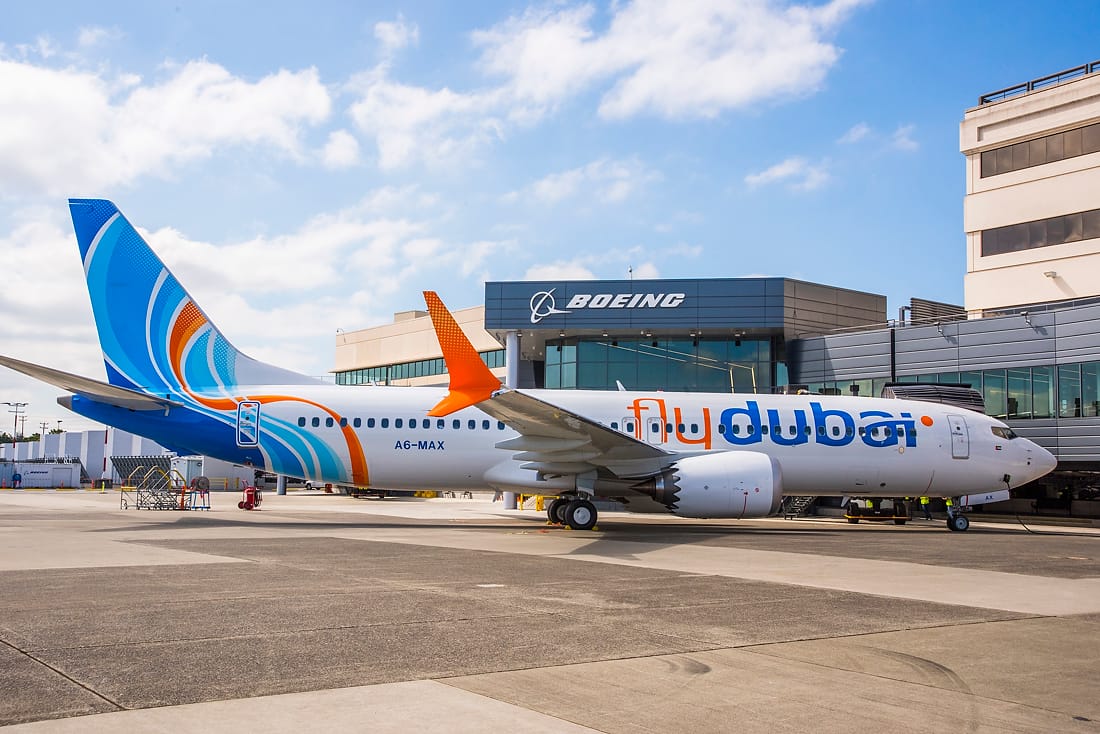
According to Boeing’s orders and deliveries filings, flydubai has 115 unfilled 737 MAX orders.
Efendi also confirmed that flydubai is looking to fly to TLL, which is most likely going to happen soon. The airline’s executive explained that it had to delay the flights to the Estonian capital because it is such a long sector, “you need to commit a big share of the aircraft capacity.”
“We think that by next winter, we will be able to launch flights to [TLL], because it makes sense to operate to all three Baltic States at the same time.
However, there are operational concerns for airlines flying from/to VNO, especially after Belarus has continued its hybrid warfare against its NATO neighbor by using contraband balloons that have halted traffic at the airport more than a dozen times since October.
Efendi pointed out that flydubai already “comes from a very volatile region,” operating to many destinations where it has had to deal with similar crises. “We are constantly maneuvering on a daily basis with these kinds of situations.”
The flydubai executive assured that the airline has “a plan in place,” and while he hoped that the carrier would not have to deal with any balloon-related disruptions, RIX is a potential diversion point, where it will also begin flights on December 12.
“We will be able to sort of try to maneuver [around] these things and try to reaccommodate people out of Riga, or potentially send the aircraft back once the skies are clear.”
At the same time, Efendi reiterated that there are a lot of variables, including the time of the disruptions and where along the route the aircraft is currently flying, as the airspace is closing.
“We will have a crew on the ground to be able to handle the flight as soon as possible.”
“When there is a diversion, we will look at [our] options, and usually, the first option is to transfer passengers by road [on a bus],” he added, asserting that flydubai’s main priority is the well-being of its customers.
Asked whether LTOU is fully ready to support flydubai in case of any operational disruptions, Bartkus said that the short answer is “yes.” The CEO’s long answer, which also affirmed the company’s support for the airline, explained that the airport has been learning how to deal with these disruptions, including continuous work with Lithuania’s air navigation services provider, Oro Navigacija.
“Our operations team is working with airlines’ operations teams on how to adapt to potential disruptions.”
Bartkus repeated that despite all of the disruptions, they have only affected around 5% of the airport’s passengers, “meaning that 95% of passengers are [traveling] without any disruptions.”
The airport company’s CEO hoped that “this will end sooner rather than later.”
 Rytis Beresnevicius