

Icelandair has published its Q4 2025 and full-year results. The Icelandic carrier posted a net loss that was an improvement compared to its 2024 full-year result.
Dollar-driven losses
According to Icelandair, it ended the year with a net loss of $9.5 million, an improvement compared to last year’s net loss of $20.1 million. Its operating loss was $17.2 million, slightly worse than the operating loss of $14.2 million in 2024.

The depreciation of the United States dollar weighed on the airline’s results with a negative impact of over $26.4 million.
Bogi Nils Bogason, the President and Chief Executive Officer (CEO) of Icelandair, said that while Q4 2025 was “strong in many ways,” the full-year result was not what the company had expected at the start of the year.
At the same time, Bogason was positive about the fact that Icelandair was on the right track in 2025, generating record revenue of $1.7 billion, carrying over 5 million passengers, and having record-high load factors of 84.3%.
“We have an exciting year ahead, with continued growth of our route network and compelling new destinations. With our clear operational focus and further transformation initiatives already in the pipeline, we are in a strong position to turn a profit this year and build a stronger Icelandair […].”
RASK and CASK growing equally
Icelandair’s yearly revenue per available seat kilometer (RASK), or unit revenue, grew around 2% YoY, as did its cost per ASK (CASK).
The airline detailed that yields also improved by 1% YoY, despite fare pressure in the transatlantic market stemming from “targeted network optimization and a higher proportion of passengers traveling to and from Iceland.”
However, CASK would have been 1% lower YoY if not for the foreign exchange impact, which increased unit costs by 2.8%. Icelandair’s functional currency is USD, so local expenses incurred in Icelandic Krona (ISK) are more expensive when the dollar weakens.
Bogason stated that geopolitical events resulted in the US dollar’s depreciation, negatively impacting profit margins, demand to Iceland from North America, its biggest market, and negatively impacting revenues in the transatlantic market.
In 2024, 51% of its revenue, or $802.8 million, came from North America, while in 2025, the sum was $831.1 million, or 48%.
Filling PLAY’s void at KEF
In its outlook, Icelandair detailed that its capacity share at Keflavik Reykjavik International Airport (KEF) is forecast to be around 68% in January, compared to around 50% at the beginning of 2024.
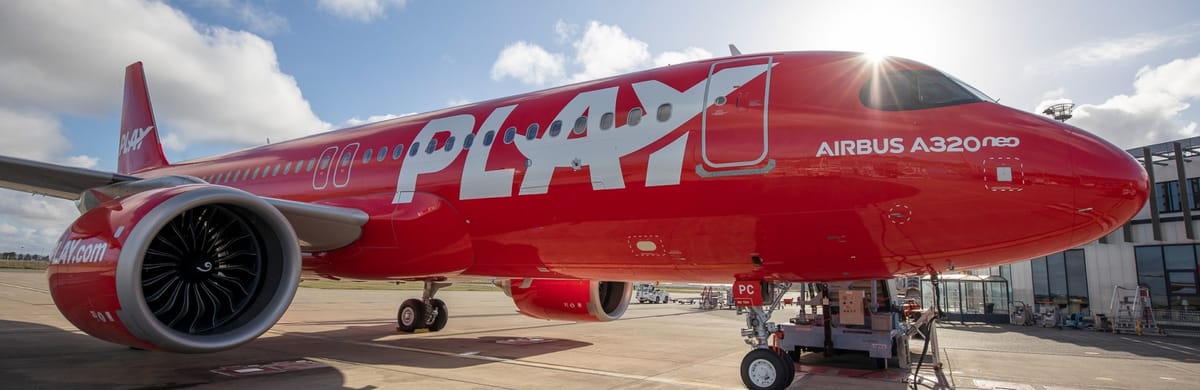
One of the reasons why Icelandair’s market share at the airport increased so much is that PLAY, which first wanted to undercut Icelandair by offering cheaper connecting flights between Europe and North America, and then tried to build its business around direct flights from/to Iceland, collapsed in late September 2025.
Icelandair plans to increase its capacity by 2% YoY in 2026, with the capacity increase being largely driven by European destinations, some of which were also served by PLAY.
The Icelandic airline will introduce flights to Faro International Airport (FAO), Gdansk Lech Walesa Airport (GDN), and Venice Marco Polo Airport (VCE).
PLAY had flown between KEF and FAO during the summer 2025 season, Cirium’s Diio Mi shows.
Bogason concluded that Icelandair’s profitability should improve YoY and that the airline will return to profitability. Meanwhile, RASK should outpace CASK growth, “supported by our strength and hub position” at KEF.
In January, yields are up 7% YoY, Icelandair said.
 Rytis Beresnevicius