


If not many people had been thinking about Lithuanian airports during the first nine months of 2025, that changed over the course of the last three months of the year. On more than a dozen occasions, traffic at the country’s capital airport, Vilnius Airport (VNO), was halted due to balloons carrying contraband from Belarus.
Despite the disruption, Lithuanian Airports (LTOU) had a lot to celebrate in 2025, ending the year with a record number of passengers across its three airports: Kaunas Airport (KUN), Palanga Airport (PLQ), and VNO. In an interview with The Engine Cowl, Simonas Bartkus, the Chief Executive Officer (CEO) of LTOU, talked about balloons, the three airports, and a potential direct link between VNO and New York, the United States.
Balloons over VNO
Bartkus noted that VNO has not been closed temporarily due to balloons since early December 2025, with the airport – barring some weather and taxiway excursion-related disruptions – operating as normal in the past few weeks.
However, the executive admitted that the hybrid attack had been a “big challenge with a lot of stress for the entire organization,” especially LTOU’s operations department. The whole ordeal lasted for “more than two months,” with the first traffic stop at VNO happening on October 4.
“I think during the crisis, we learned a lot about how to deal with it: how to help passengers, how to help airlines, how to cooperate with all of our partners, like ground handling companies and others that work at the airport, and how to ensure that the airport’s operations recover as soon as possible following a disruption.”
Bartkus was happy that, while there were some minor changes to airlines’ schedules, with airBaltic adjusting the flight timings on two routes, LTOU had “managed to keep passengers confident that flying is a safe way to travel.”
The CEO also pointed out that no carriers communicated about the events affecting their bookings, and, according to Bartkus, passenger numbers at VNO were even higher during the month of November 2025, when the balloon-related disruptions had peaked.
During the three-month period, around 5% of VNO’s passengers were impacted by the flight disruptions, Bartkus affirmed.
On November 20, 2025, LTOU announced that it would take legal action against the perpetrators. At the time, the company estimated that its losses from the disruptions were €750,000 ($870,200). The sum has since climbed to €2 million ($2.3 million).
On a positive note, Bartkus said that, despite the whole ordeal, carriers “still see Lithuania as a growth market, and airlines usually want to be where the growth is.”
“Even during this crisis, some airlines joined the party, like flydubai, which started flights to [Dubai International Airport (DXB)] in December 2025.”
Bartkus added that carriers “are moving forward, and so far, the hybrid attack has not affected our relationship with our partner airlines.”
It has not affected LTOU’s passenger numbers either. On January 7, the company confirmed that its three airports ended 2025 with 7.16 million passengers, slightly more than RIX’s 7.11 million travelers. LTOU boasted that its airports now hold the largest market share in the Baltic States.
 Rytis Beresnevicius
VNO’s new terminals
While the main theme surrounding VNO in recent months has been the balloon-related air traffic disruption, the main long-term focus of the capital city’s airport has been the development of new infrastructure, including new arrivals and departures terminals.
Bartkus said that LTOU recently signed a contract with the renowned architecture firm Zaha Hadid Architects to design the new arrivals terminal, with an estimated opening date of late 2028.
Zaha Hadid Architects’ other airport projects include Beijing Daxing International Airport (PKX), Ethiopia’s new airport, Bishoftu International Airport (BIA), scheduled to open its doors in 2030, Navi Mumbai International Airport (NMI), which began welcoming its first flights in December 2025, and Western Sydney International Airport (WSI).
Nevertheless, the airport company’s CEO detailed that while there “is still a lot of work that has to be done,” it was still an exciting project that will fundamentally change the first impression of passengers flying to VNO.
“When you arrive at the airport, the first thing you see is the arrivals terminal.”
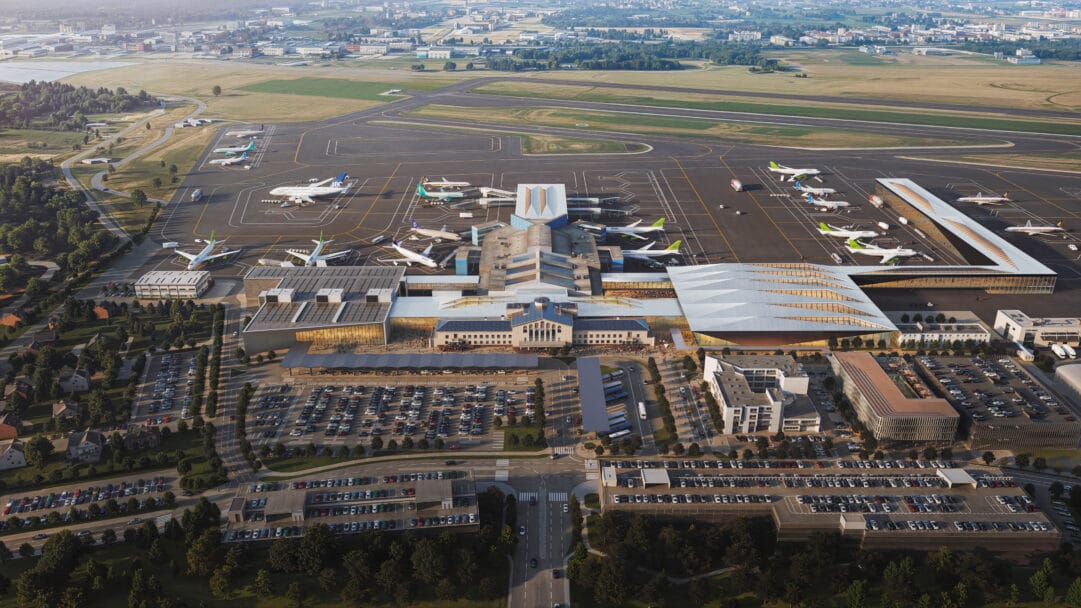
VNO had already – almost completely – redefined the passenger experience for departing travelers. A new departures terminal opened in February 2024, which, according to Bartkus, included a transition that was “really, really smooth.”
While the CEO said that airlines typically value the destination itself, and not the airport, carriers have told LTOU that their passenger satisfaction ratings have climbed since the new departures terminal opened.
By the end of Q2 2026, VNO will also reopen some of the spaces of the old departures terminal.
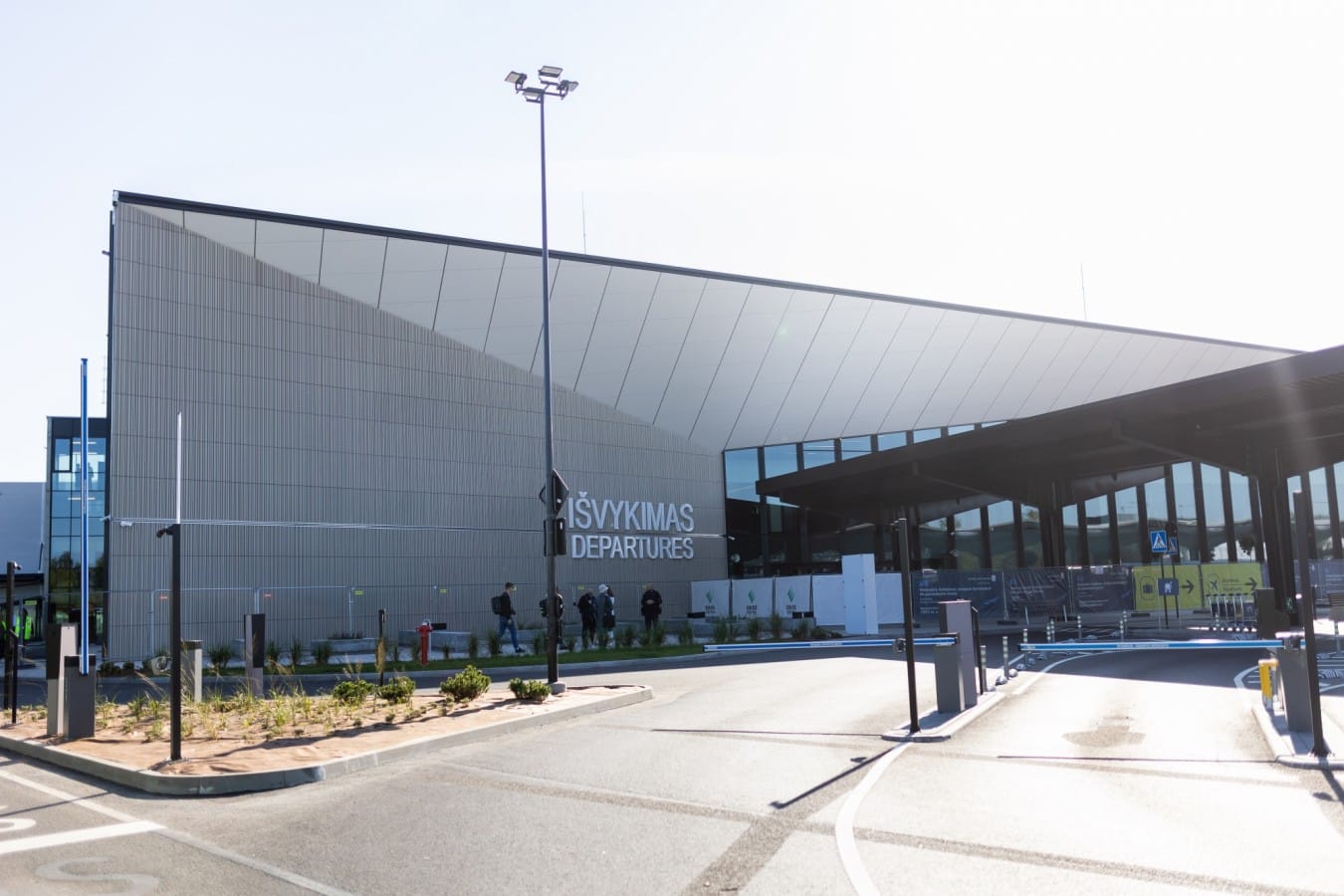
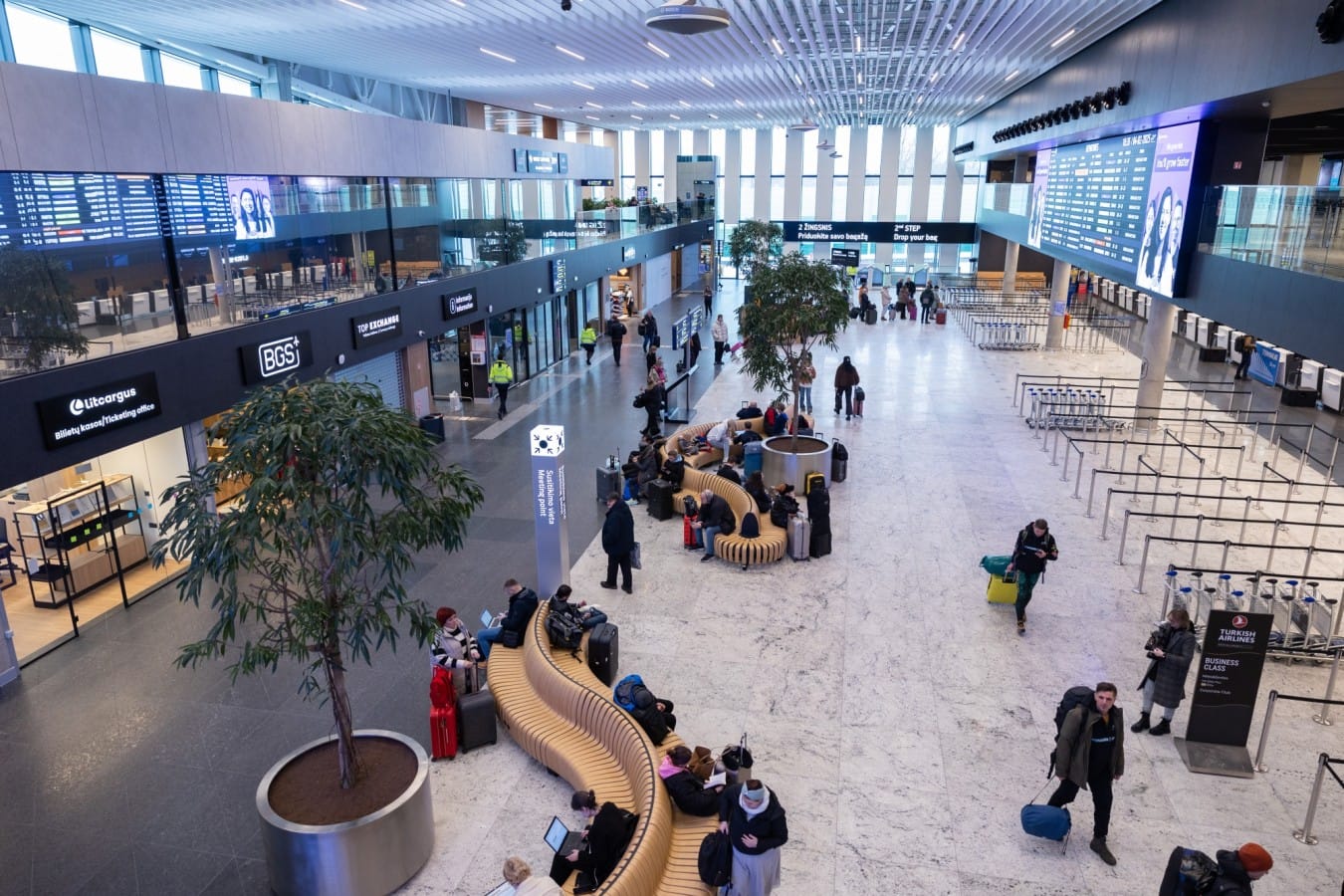

Photo: LTOU
Bartkus explained that a new departures terminal was needed because VNO was limited in capacity. “I think it was designed to welcome up to 3.5 million passengers per year,” he said, adding that in 2025, VNO’s passenger numbers climbed to 5.1 million.
The new terminal was also a must if LTOU wanted to improve the passenger experience at VNO, the chief executive continued, noting that in the old terminal – perhaps hall would be a better fitting word to describe the old security area – there was no space to add new X-ray machines that enable passengers to keep their items – liquids and electronic devices – in their carry-ons.
“Plus, we opened new commercial spaces. […] When we reopen the old departures terminal, it will look completely different with new commercial zones airside.”
The new and/or refreshed buildings will not only improve capacity but also the passenger experience, Bartkus concluded.
Empty dots on VNO’s route map
The past few months have been monumental for the main gateway of Lithuania, including the addition of new airlines and new routes. However, one destination will be lost in 2026, with LOT Polish Airlines announcing that the VNO to London City Airport (LCY) route will end on March 27.
While it had caused an uproar among some in the Lithuanian business community, with some calling it a “serious hit to Lithuania’s investment appeal,” Bartkus said that the route, which began as a Public Service Obligation (PSO) route in 2019 and transformed into a risk-sharing partnership in 2023, failed to meet the expectations of LTOU and the Polish carrier.
“After two years of the risk-sharing partnership with LOT Polish Airlines, we are seeing that load factors are not sufficient for the route to be profitable in the near future,” the CEO noted, sharing that, on average, the cabins on the route were around 67% full.
Bartkus highlighted that LCY has significant operational limitations, including the size of aircraft that can land there. Currently, the largest narrowbody that is allowed to operate at LCY is the Embraer E195-E2, as well as the Airbus A220-100.
“You can say that then, you have fewer seats to fill. But airlines would tell you that the bigger aircraft you operate, the lower the seat cost is, making it easier to compete.”
That matters especially when from Lithuania, Ryanair and Wizz Air offer 35 weekly flights to either London Luton Airport (LTN) or Stansted Airport (STN).
Furthermore, LCY offers no onward connections, Bartkus noted. “If we are able to attract an airline to fly to Heathrow [LHR] or Gatwick [LGW], they would have a significant amount of connecting travelers via London.”
Are there any other airports that Bartkus would like to see appear on VNO’s route map?
According to him, Madrid Barajas Airport (MAD) “is the number one destination we are missing” from VNO. If LTOU manages to convince an airline to operate the route – perhaps Iberia for onward connections to South America? – the capital’s airport would have no more “blind spots” in Europe.
“Sometimes, when airlines announce new flights, I hear questions: Why this route? Why have flights to [Chișinău International Airport, KIV] or [Podgorica Airport, TGD]?”
The simple answer is that “VNO already has flights to other European destinations and airlines are looking for new markets” from the airport.
What about direct flights to New York?
While there have been discussions in Lithuania about potential direct flights to New York, whether John F. Kennedy International Airport (JFK) or Newark Liberty International Airport (EWR), LTOU’s CEO believes that the time will come for a non-stop flight to The Big Apple.
“We almost have all of Europe covered, so the question is: where to next? North America and the United States, specifically, is something we are looking at.”
Bartkus said that, while he cannot predict “when it might happen,” there are a few favorable market forces that could facilitate the launch of a direct VNO-JFK connection. For one, long-range narrowbodies, such as the Airbus A321XLR, enable airlines to operate flights that were previously too thin to support widebodies.
Secondly, “we have had conversations with United States-based carriers, and the number one thing they are looking for is tourism destinations for American travelers.”
“When tourism is booming all around the world, and people have already visited the Caribbean, or Paris, France, several times, they might be looking for more niche destinations.”
Lithuania could become that niche destination, according to Bartkus, and become “an attractive destination for American travelers.”
“I think there is a possibility that we might have these flights in this decade.”
 Rytis Beresnevicius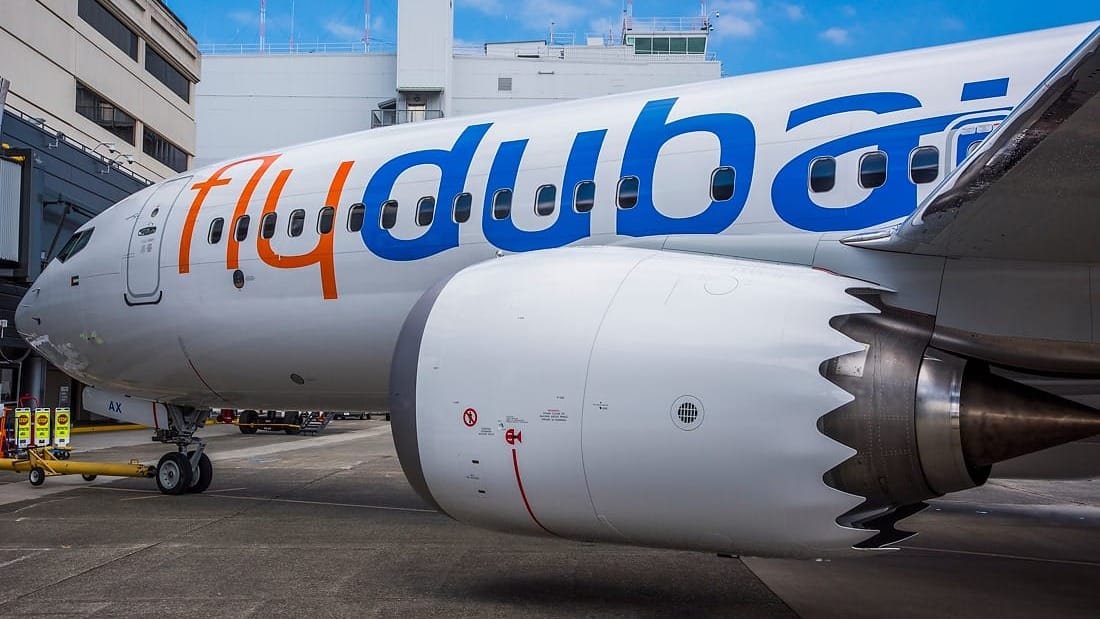
A little bit of everything at PLQ
LTOU also manages two other airports: PLQ and KUN. While VNO and KUN have somewhat clear roles in Lithuania’s connectivity, to some, including myself, PLQ’s role can be unclear.
“PLQ is a regional airport, meaning that it has a little bit of everything, and new routes or new concepts can entirely change the airport.”
Bartkus highlighted that two years ago, LTOU saw an opportunity to begin charter flights from PLQ.
“We clearly saw that demand in western Lithuania and western Latvia could sustain some flights to some of the most popular leisure destinations, and we were able to attract a tour operator who started charter flights.”
Those flights were chartered by Join UP! Baltic.
“Those [charter] flights have been very successful,” Bartkus said, adding that in the long term, the region has a lot of potential to grow. “When looking at the year-on-year (YoY) percentage growth, [PLQ] is the fastest growing airport in Lithuania,” he added. In 2025, the number of passengers at PLQ grew by 18.7% YoY.
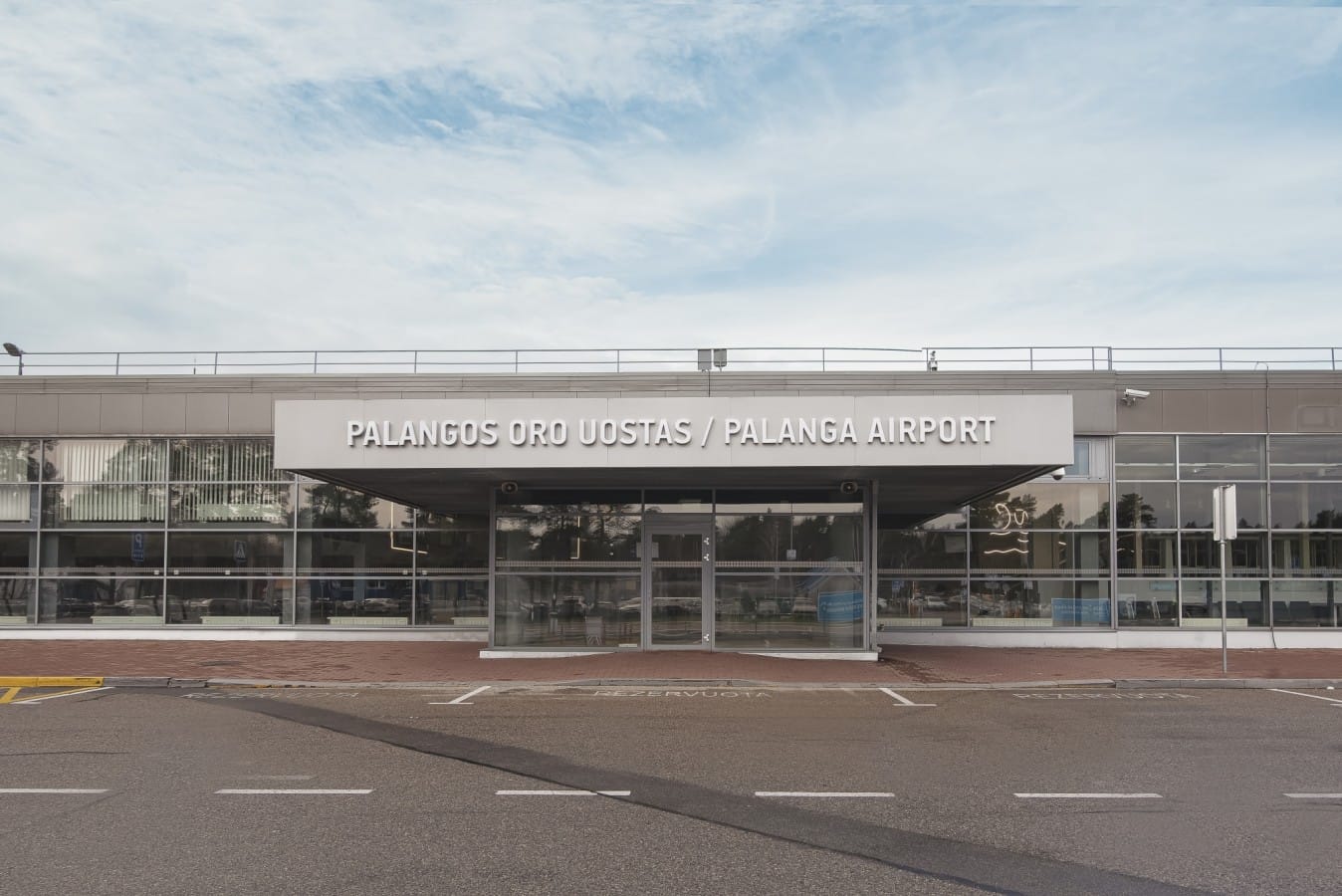
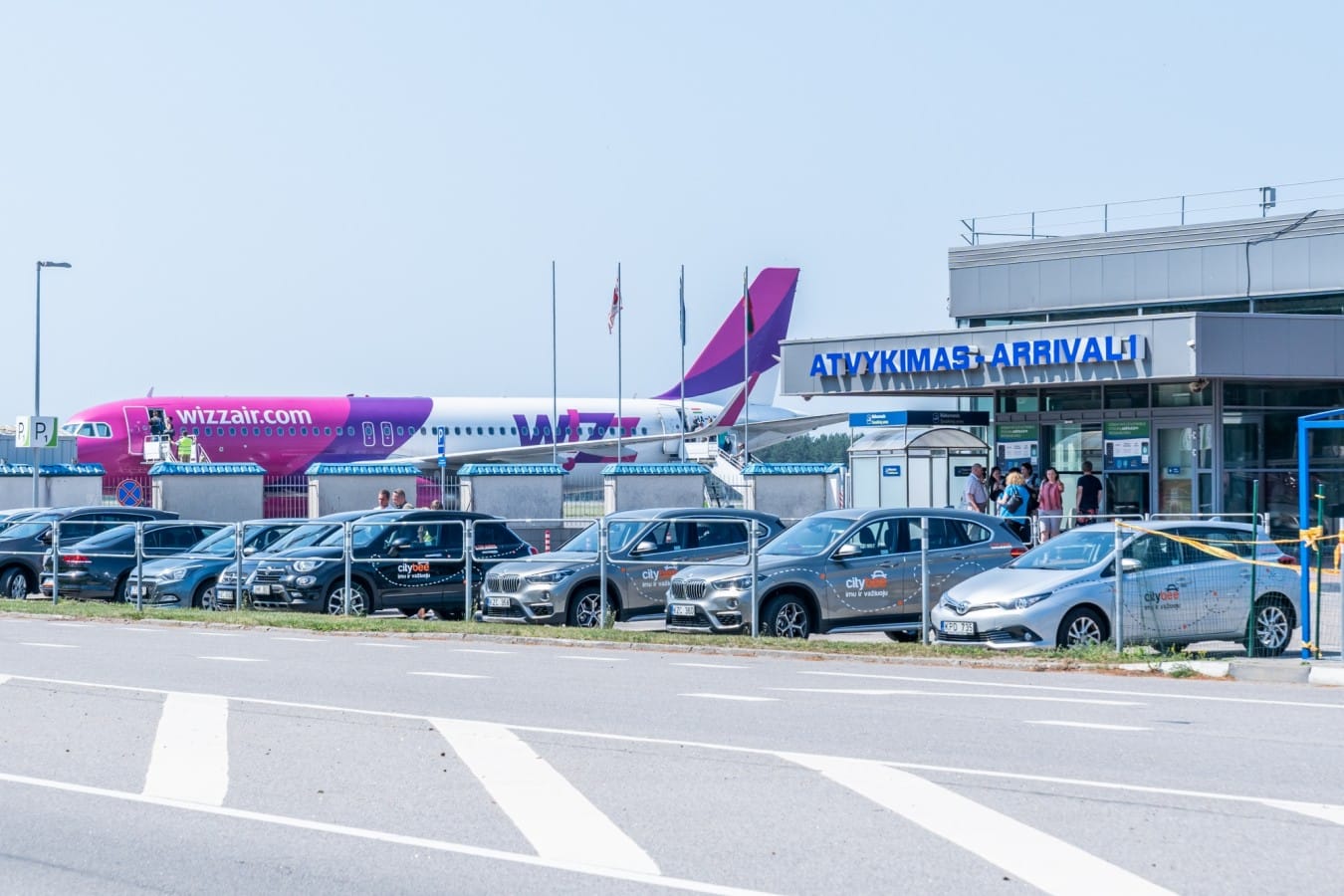

Photo: LTOU
PLQ welcomed around 448,400 passengers in 2025. Will the airport reach the 500,000 passenger mark in 2026?
It is possible, Bartkus answered. “We see interest from airlines to grow at [PLQ],” he stated.
For example, on March 31, Norwegian will resume twice-weekly seasonal flights between PLQ and Bergen Airport (BGO), complementing its services to Oslo Gardermoen Airport (OSL).
Surprisingly, PLQ “has the highest percentage of business travelers compared to our other airports, but it might be because of the small passenger base,” Bartkus pointed out.
“We see businesses in Klaipėda’s port and new manufacturing companies across Western Lithuania developing, which can use [PLQ] just because it is quicker, even if it is not a direct flight.”
LTOU’s CEO highlighted that PLQ is connected to such hubs as Amsterdam Schiphol Airport (AMS), Copenhagen Airport (CPH), or RIX, which offer convenient one-stop connections to other major cities across Europe, or even further away.
“[PLQ] is a regional airport, and in some areas, we can only have basic services, like a coffee shop, and more or less, that is it. On the other hand, we have received a lot of feedback on how quick and how easy it is to get on a flight from the airport.”
Ryanair’s fortress at KUN
If you were to look at KUN’s arrival and departure boards today, one airline’s logo would dominate them: Ryanair. Cirium’s Diio Mi showed that in January, out of the 64 regularly scheduled weekly departures, Ryanair operates 60.
The remaining four are Wizz Air’s flights to LTN.
That will soon change. On March 30, airBaltic will launch five weekly flights from KUN to RIX, feeding its hub in the Latvian capital and offering the region’s travelers the option to connect across its network.
“Ryanair is the big carrier at [KUN], and it will stay as a main carrier at the airport because the airport is really well-suited for its business model,” Bartkus said, adding that in addition to the airport’s design, which favors low-cost carriers, and their airside passenger flows, Ryanair has a huge maintenance, repair, and overhaul (MRO) base at KUN.
While some new entrants “might be possible, and hopefully the [KUN-RIX] flights are successful, and we could attract another network carrier in two to three years, but right now I think Ryanair will remain the main carrier at [KUN],” Bartkus continued.
According to the chief executive, “some airlines see [KUN] as an alternative airport for this part of Lithuania.” At the same time, with Kaunas’ economy growing fast, LTOU gets “more and more feedback that [KUN] is becoming a separate market to feed.”
For the airport, passenger traffic is not the only source of income. The airport is home to several other MROs, which “have a huge impact on Kaunas,” the city. “I think, combined, these MRO activities sustain close to 1,000 jobs around Kaunas,” Bartkus estimated, noting that it is a huge ecosystem for the region.
Meanwhile, KUN gets additional income from maintenance-related landings and departures.
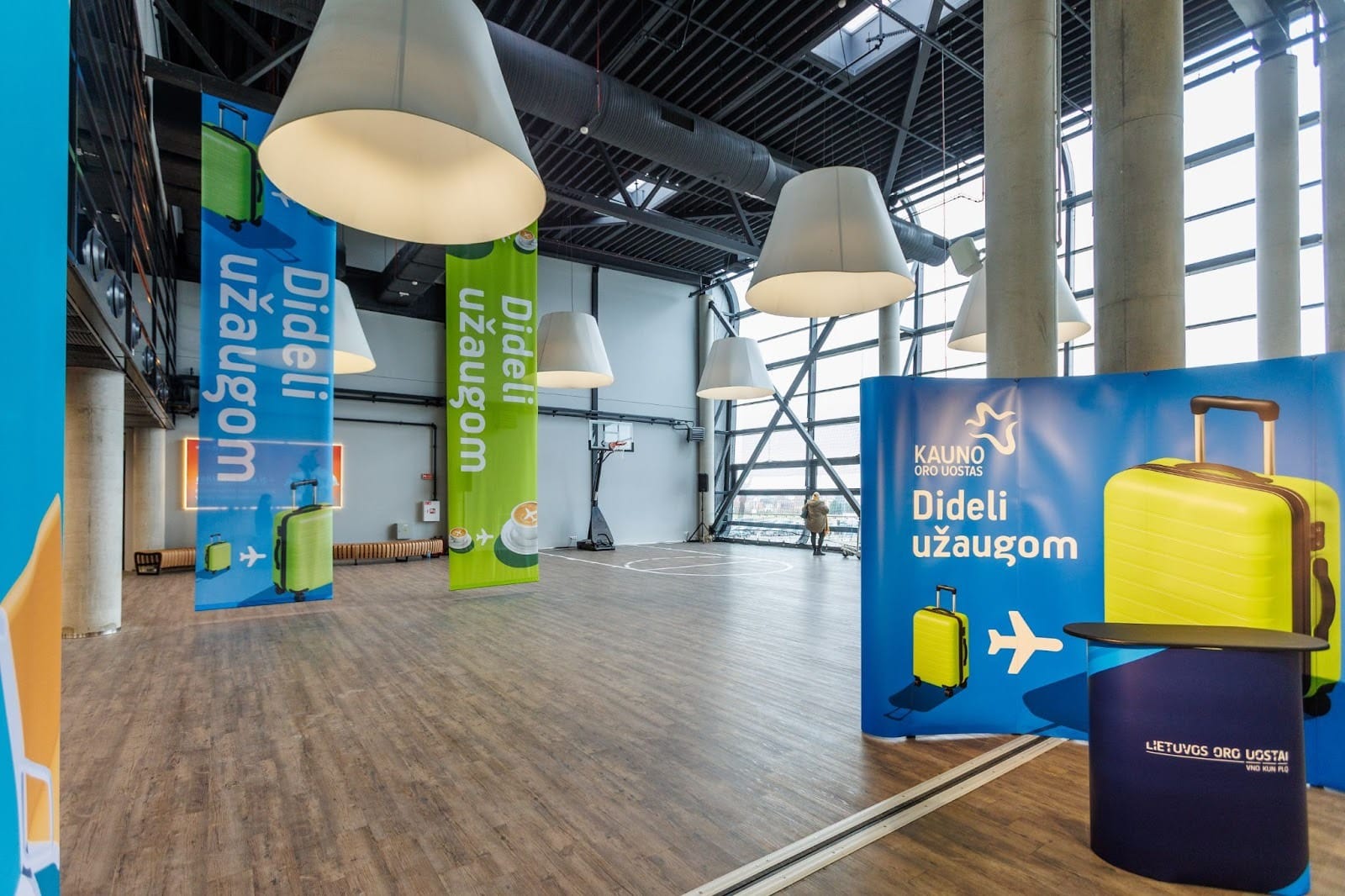
LTOU recently expanded the airport’s terminal, close to doubling KUN’s terminal area. Passengers have already noticed the fact that there is more space and more shops, delivering “higher passenger satisfaction numbers.”
In stereotypical Lithuanian fashion, the airport now also has a basketball court.


New airport between Vilnius and Kaunas?
As governments changed in Lithuania, ministers had proposed different ideas on how to improve Lithuania’s connectivity. One of those ideas was a new airport that would have been situated between Vilnius and Kaunas, near a town called Žasliai.
However, Bartkus is glad that any discussions around a new potential airport have died down, “because it is not a reasonable time to debate” any plans surrounding a potential new airport.
“We have master plans for all three airports and how they can develop, and we are currently working on that.”
LTOU’s results are proof that Lithuania’s approach to having three commercial airports is “working,” and at the same time, Barktus is adamant that all three airports, with their ongoing improvements, can sustain the projected passenger and cargo demand until around 2050.
“When there is no talk about the new airport, it is way easier for us to focus on our existing plans.”
It is not only about LTOU, but it is also about potential investors who, for example, want to add an MRO hangar at one of the airports. “When they hear such discussions, they could question what would happen with their existing investment plans,” Bartkus explained.
Another topic that had reared its head is a flag carrier. Following the collapse of Air Lituanica in 2015 and previously, flyLAL in 2009, the country was left without a national airline. Some politicians, like the former Minister of Transport and Communications, Jaroslav Narkevič, suggested the establishment of a virtual carrier, an airline that would lease aircraft from other carriers to operate its flights.
Bartkus, while no politician, provided a politician’s answer.
“Any airport is happy to have as many airlines as possible, and having a flag carrier would be a great option.”
But LTOU knows that the country does not have one, and as such, has to develop its route network without one. “Our results show that we are successful,” Bartkus said, highlighting that LTOU has “a record number of routes and flights,” and recently, several airlines, like Aegean Airlines, flydubai, and Israir, have launched flights to the country.
“We are able to attract new airlines, while existing carriers have continued to develop new routes.”
In some ways, having no flag carrier is an advantage, according to Bartkus. Lithuania and Latvia, two similar countries, have two very different models for air traffic development. While Lithuania does not have a flag carrier, Latvia does, and airBaltic and RIX have built a different business model, focused on connecting passengers.
“At the same time, Latvia has fewer airlines flying from [RIX] compared to [VNO].”
There have been some talks about Lithuania, as well as Estonia, acquiring shares in airBaltic. In July 2025, LTOU confirmed to Lithuania’s public broadcaster LRT that it had received a detailed offer to acquire a stake in the Latvian carrier.
While so far, nothing has materialized, Bartkus, who was not asked about the potential share acquisition, remarked that airBaltic has kept its promises and continues growing at Lithuania’s three airports.
This includes basing a third Airbus A220-300 at VNO from March. Considering airBaltic’s A220-300 order book, which currently includes firm orders for 90 aircraft of the type, it would not be surprising if more aircraft were to be based in Lithuania in the future.
Currently, the all-A220-300 airBaltic has 52 aircraft in its fleet.


