


A lot has changed since the pandemic in both the world and the airline industry, and SAS, as well as Copenhagen Airport (CPH), are no exception. Both have different owners or changed shareholder structures, with Air France-KLM set to become SAS’ main shareholder with a stake of over 60%, pending regulatory approval.
But CPH’s role within the SAS network has changed since 2019. Unlike before 2020, when SAS ran three hubs located in three Scandinavian capitals, the Danish capital’s has become the airline’s “global hub for seamless international travel to and from Northern Europe.”
The Engine Cowl explores how SAS has increasingly positioned CPH as its global hub while it inches closer to becoming a part of Air France-KLM.
Core operations in Copenhagen, Oslo, and Stockholm
SAS’ 2019 annual report outlined that its core business is “operating passenger flights on an extensive Nordic and international route network,” with three main operational hubs at CPH, Oslo Gardermoen Airport (OSL), and Stockholm Arlanda Airport (ARN).
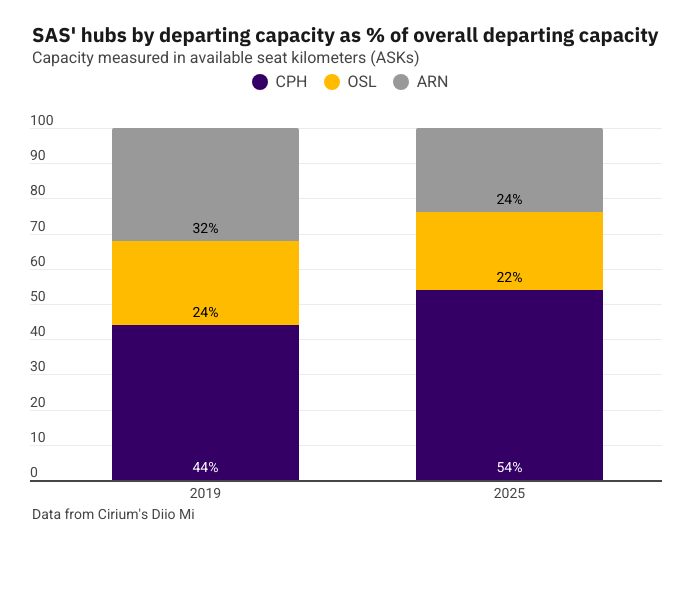
In practice, this meant that in 2019, SAS deployed 44% of its departing capacity, measured in available seat kilometers (ASKs), from CPH, 32% from ARN, and 24% from OSL.
Of the total departing capacity from OSL and ARN, 6.1% and 5.1%, respectively, departed toward CPH, per data from Cirium’s Diio Mi.
The airline’s intercontinental network in 2019 was more limited than today and also more spread out between the hubs. In 2019, SAS operated 17 non-European long-haul routes, seven of which were served from either OSL or ARN.
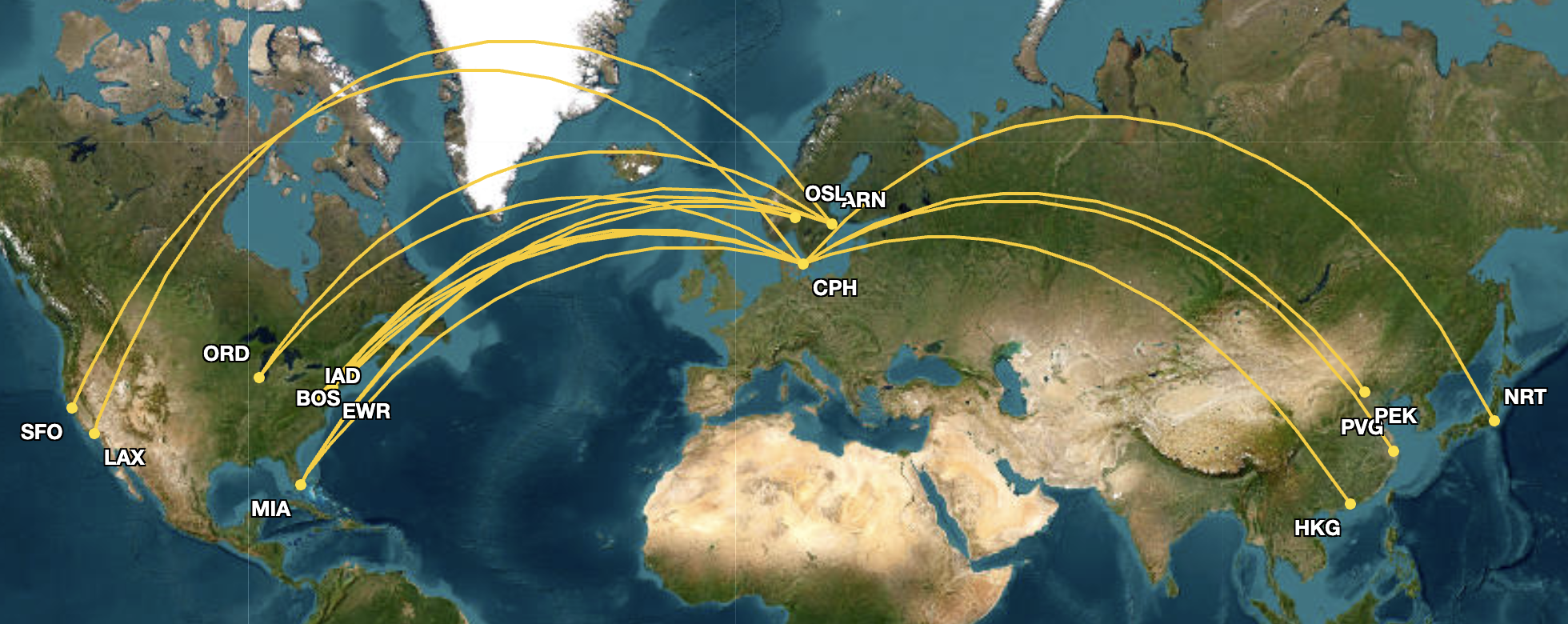
Six of those routes were to United Airlines’ hubs in the United States, as the Scandinavian carrier was still part of Star Alliance. Since its restructuring, which resulted in Air France-KLM acquiring a minority stake in SAS, the airline switched its allegiance to SkyTeam when it joined the alliance on September 1, 2024.
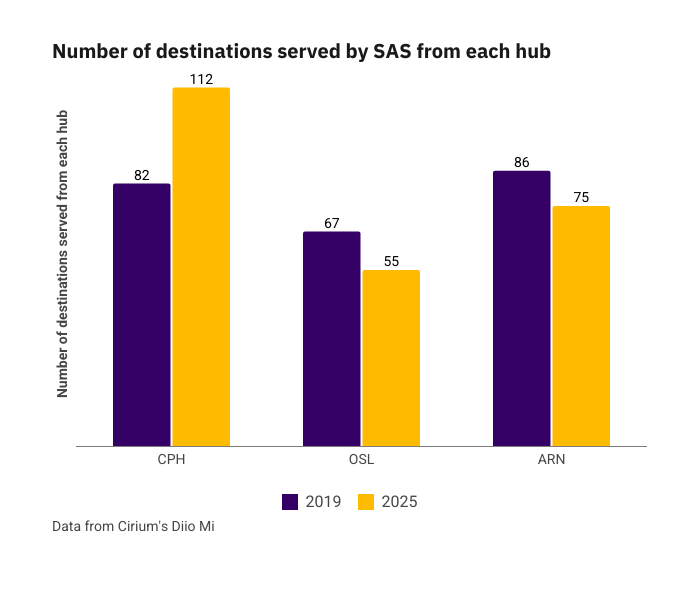
In terms of its European network, SAS operated flights to 82 destinations, which include seasonal flights and one-off operations, from CPH. From OSL and ARN, the number was 67 and 86, respectively.
According to SAS, it ended 2019 with 16 long-haul aircraft, including the Airbus A330, A340, and A350-900, and 142 short-haul aircraft, ranging from the A320neo to the ATR 72, the latter of which it had wet leased to operate domestic flights in Sweden, for example.
Shifting more capacity to CPH
In 2025, the situation has changed. CPH has grown to 54% of SAS' capacity while OSL and ARN have fallen to 22% and 24%, respectively.
That’s a 10% shift of capacity to CPH, of which three-quarters has come from ARN.
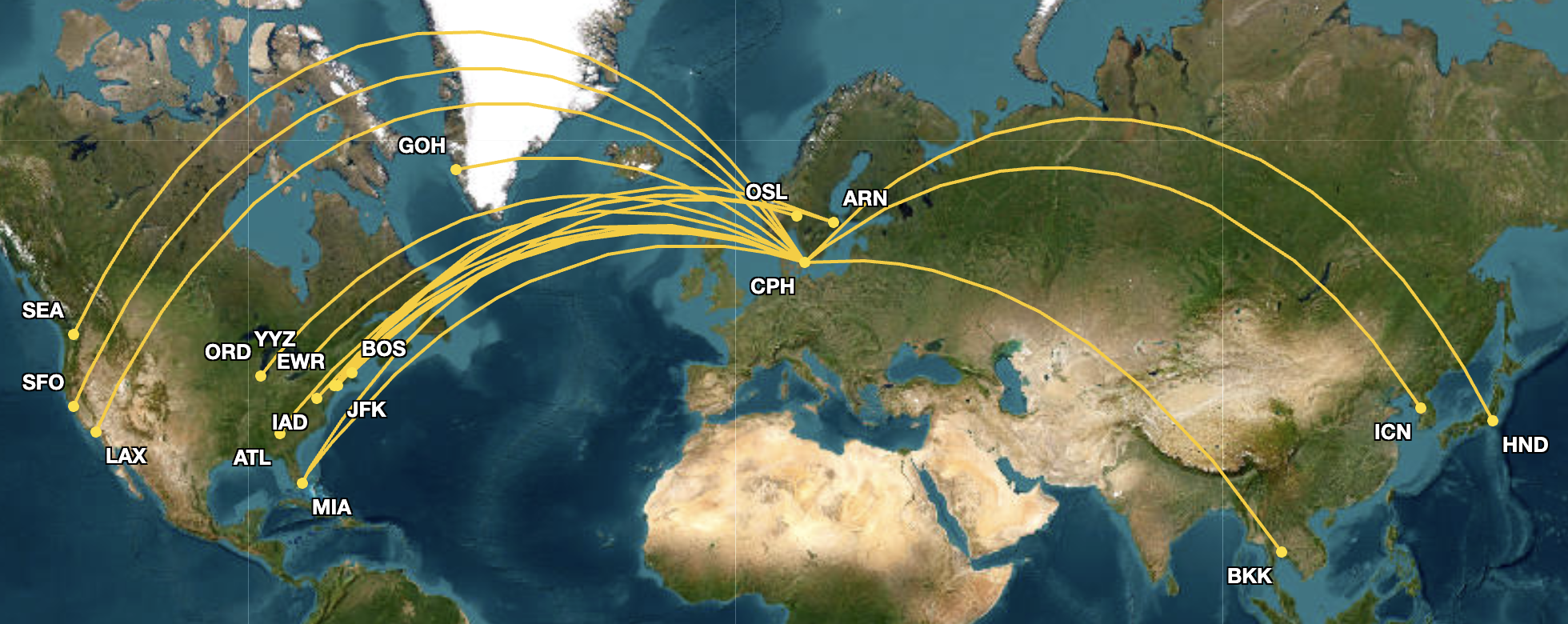
In terms of intercontinental long-haul routes scheduled by SAS, the profile has slightly changed. The airline operated 19 long-haul routes in 2025: 15 from CPH, and just two each from OSL and ARN.
Both flights from OSL to the United States are operated with the A321LR, Cirium’s Diio Mi shows.
Compared to 2019, CPH’s European destination count rose from 82 to 112, while OSL's and ARN’s fell to 55 and 75, respectively.
And increasingly, SAS has been referring to CPH as the hub that will be the “premier global gateway to and from Scandinavia and Northern Europe,” a description the airline used when it issued a statement after the Danish government confirmed that it will acquire a controlling stake in CPH.
When SAS and Air France-KLM announced that the Franco-Dutch airline group would, pending regulatory approval, increase its shareholding in the Scandinavian airline from 19.9% to 60.5%, Anko Van der Werff, the Chief Executive Officer (CEO) of SAS, said,
“As global interest in Scandinavia continues to grow, we believe this consolidation strengthens SAS’ ability to connect Scandinavia with the world – and the world with Scandinavia – by positioning Copenhagen as our global hub for the region, while continuing to uphold strong and strategic operations in both Oslo and Stockholm.”


