


While Singapore Airlines’ net profit took a significant hit in Q3 FY2025/26, the group’s operational performance was still very solid during the three month-period, with operating profit growing by more than 25% year-on-year (YoY).
Strong operating performance, but net profit hit due to a lack of last year’s one-off accounting gain
Singapore Airlines ended Q3 FY2025/2026 with a net profit of S$505 million ($399.2 million), down 68.9% year-on-year (YoY), and an operating profit of S$792 million ($626.1 million), up 25.9% YoY. Total revenue climbed 5.5% YoY to S$5.5 billion ($4.3 billion).

The company explained that the fall in net profit was primarily due to “the absence of the one-off, non-cash accounting gain of $1,098 million recognised in the previous year from the disposal of Vistara following the Air India-Vistara merger in November 2024.”
However, the share of quarterly losses from associated companies grew by S$163 million ($128.8 million) to S$178 million ($140.7 million), with Singapore Airlines recognizing a full quarter’s worth of Air India’s losses compared to a single month in 2024.
 Rytis Beresnevicius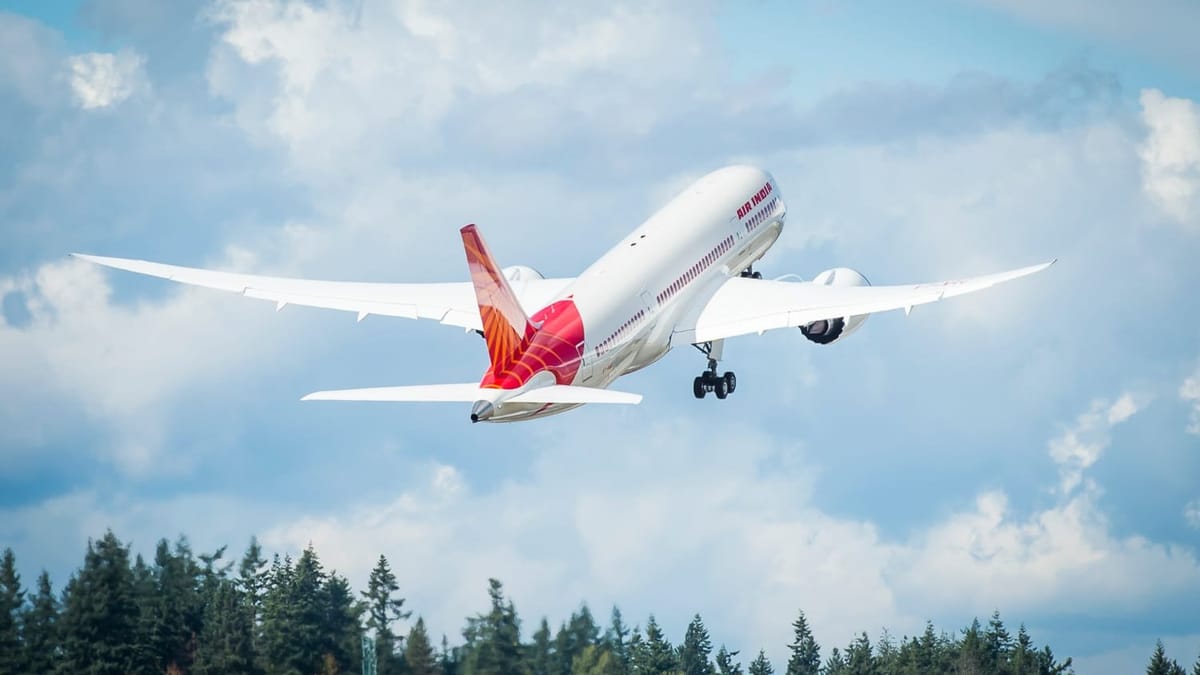
Growing capacity and unit revenues
During the three-month period, Singapore Airlines’ capacity, measured in available seat kilometers (ASKs), grew by 0.8% YoY while revenue per ASK (RASK) grew by 4% YoY. Total cost per ASK was up 5.7%, while cost per ASK excluding fuel (CASK-ex) increased by 6.9%.
Scoot, the group’s low-cost carrier, increased capacity by 10.7% YoY, while RASK rose 6.6%. CASK and CASK-ex were up 3.3% and 4.8%, respectively.
Both airlines carried 10.8 million passengers in Q3 FY2025/26, a 6.3% increase YoY. Group-wide ASKs and RASK were up 2.8% and 3.2%, respectively.
“Passenger demand remained robust in the third quarter,” Singapore Airlines said.
Healthy demand going forward
Singapore Airlines highlighted that it has signed a commercial operational framework with Air India, paving the way for “definitive joint business agreements.”
The airline also received approval from the Malaysian civil aviation authorities to begin a strategic joint business partnership with Malaysia Airlines, which will be implemented “progressively,” and potentially include “revenue sharing flights between the two countries, joint fare products, as well as coordinated flight schedules and joint corporate travel arrangements across both markets.”
The airline stated that demand for air travel remains “healthy,” and that it is positioned to benefit from the demand as it will “remain nimble and agile in its network and capacity deployment to maximise revenue opportunities.”
Singapore Airlines “is well-placed in this operating landscape, thanks to its strong financial position, disciplined cost management, advanced digital capabilities, and a committed, talented workforce,” it said, adding that this enables the company to make strategic investments in its airline portfolio, deeper partnerships with other carriers, and its key brand pillars to “reinforce its industry-leading position.”


