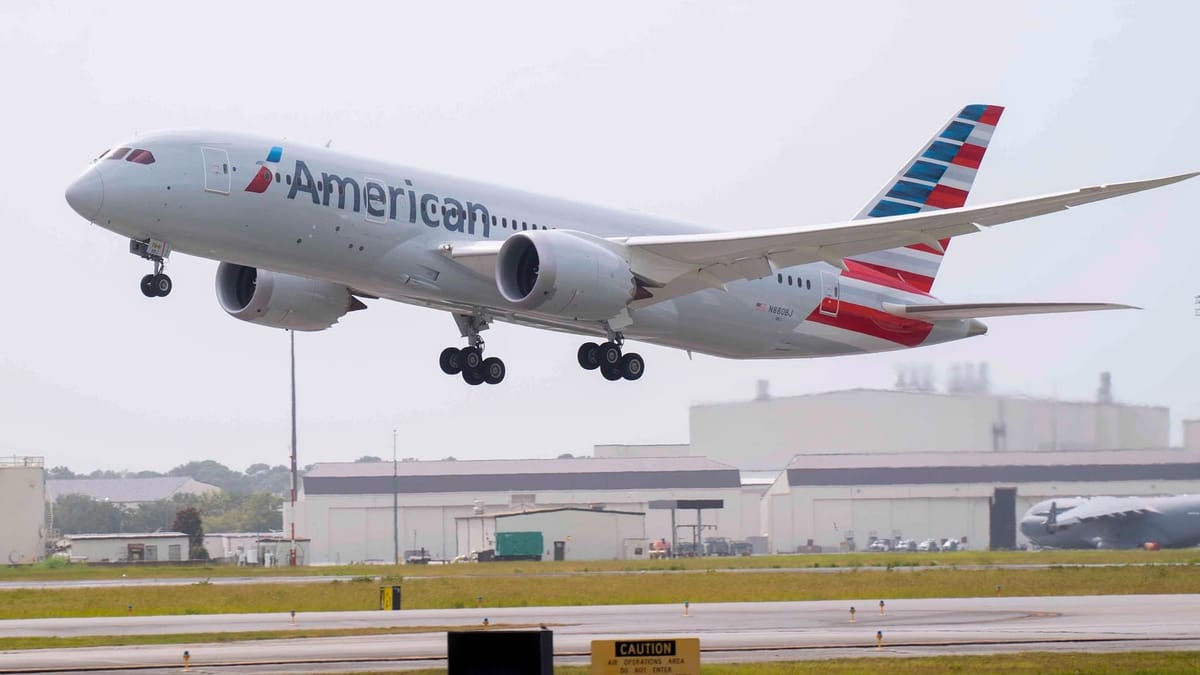


Spirit Airlines has requested the approval of the court, which has been overseeing its second Chapter 11 bankruptcy case, to sell two preferential use gates and associated infrastructure at Chicago O’Hare International Airport (ORD) to United Airlines, having already sold two gates to American Airlines.
United Airlines is currently in the midst of a capacity war with American Airlines at ORD, with the airline seeking to gain dominance at the airport and potentially turn it into a single-airline hub.
Acquiring two gates at ORD
Chip Sandifer, the Vice President for Corporate Real Estate and Airport Administration at Spirit Airlines, supported the motion by saying that before the airline filed for its second court-protected restructuring, together with advisors, it “undertook a comprehensive strategic review of their flight operations in an effort to optimize their route offerings and more efficiently serve their guests.”

As such, it had already sold or ended leases for various infrastructure at airports throughout its network, including the sale of two preferential use gates to American Airlines at ORD for $30 million.
The United States Bankruptcy Court for the Southern District of New York approved the sale to American Airlines on December 15, 2025.
Now, Spirit Airlines wants to sell two preferential use gates, G12 and G14, “including certain space associated” with the gates, to United Airlines, for $30.2 million. The low-cost carrier will use the proceeds to prepay its loans.
“[Spirit Airlines] believes that assignment of the Assigned Premises to United Airlines is both appropriate and in the best interest of [Spirit Airlines], [its] estates, and [its] creditors.”
Sandifer detailed that Spirit Airlines “engaged in a competitive process and ultimately received proposals from United Airlines and another major airline.”
After careful evaluation, it determined that selling the gates and the associated space to United Airlines “will yield the highest and otherwise best offer.”
Sandifer added that the market for the gates is limited since the preferential use gates are “strictly limited to just a few airlines who already operate” at ORD, and who can add additional capacity at the airport. United Airlines and “the other major airline that competed in the process are among the few airlines that fit these criteria,” possibly hinting that the other carrier was American Airlines.
 Rytis Beresnevicius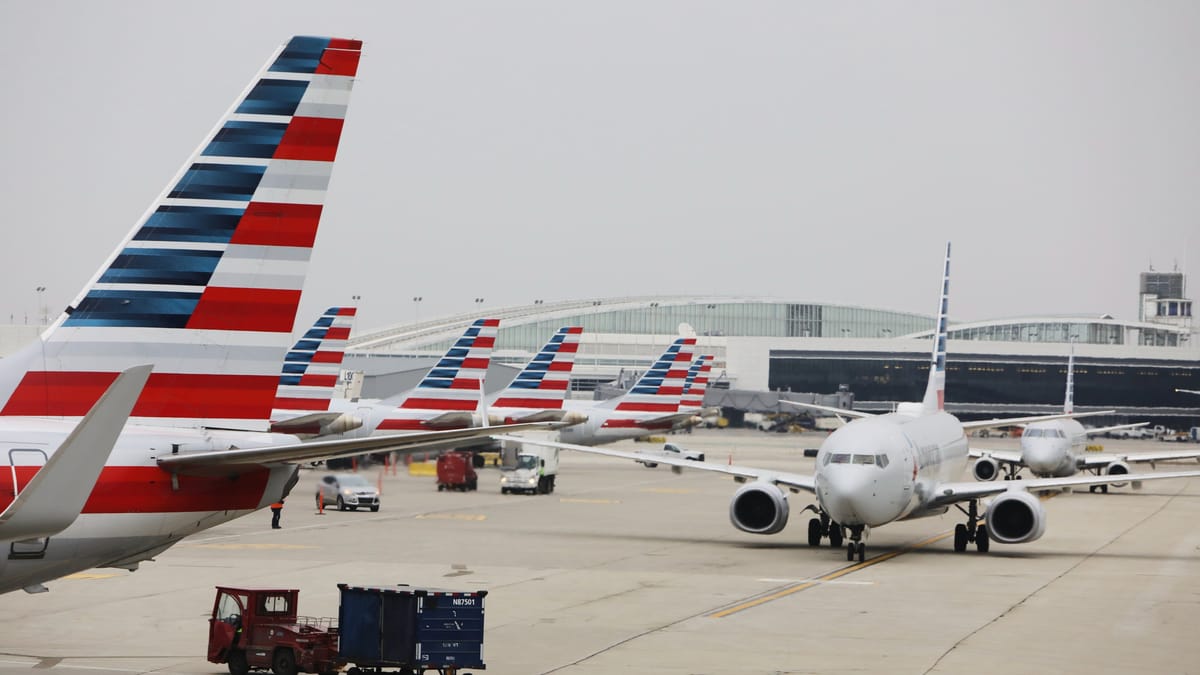
Spirit Airlines to keep flying from ORD
Sandifer’s statement affirmed that Spirit Airlines intends to continue operating from/to ORD, and is not seeking to modify the terms of the Airline Use and Lease Agreement (AULA) with the Chicago Department of Aviation (CDA).
“However, [Spirit Airlines has] also determined, in good faith and using [its] sound business judgment, that [it] no longer requires the use of [its] exclusive or preferential gate access, and that [its] current and projected flight schedule can be adequately supported through the use of common use gates.”
Cirium’s Diio Mi shows that in February, Spirit Airlines will have 105 weekly departures out of ORD, or 10 fewer than in February 2025. In March, the carrier will offer 120 weekly departures from the airport, or 21 fewer than during the same month in 2025.
American Airlines versus United Airlines at ORD
More importantly, the additional gates at ORD will enable United Airlines to add capacity from ORD, where it is waging a capacity war against its main rival at the airport, American Airlines.
On January 27, United Airlines unveiled major growth plans at the airport, estimating that it will reach 750 daily departures from ORD during this summer with new routes and added frequencies on existing routes.
Cirium’s Diio Mi indicated that in June, for example, United Airlines will offer 5,211 weekly departures from ORD, or 31.8% more than in June 2025. The number of weekly departing seats will go up by 26.2% year-on-year (YoY).
During the same month, American Airlines will operate 3,652 weekly departures from ORD, or 9.9% more YoY, albeit 30% less than United Airlines.
Scott Kirby, the Chief Executive Officer (CEO) of United Airlines, told analysts during the airline’s Q4 2025 earnings call on January 21 that, while the airline saw American Airlines’ expanding at ORD in 2025, it chose not to respond.
However, that resulted in American Airlines potentially gaining three preferential use gates at ORD when the CDA will reallocate gate space at the airport. In 2026, United Airlines is “drawing a line in the sand,” and it is not going to allow American Airlines “to win a single gate at our expense in 2026.”
“We are going to have the same level of flights as [is] required to make sure that we keep our gate count the same in Chicago.”
Kirby was not the only chief executive to receive questions from analysts about the situation at ORD during an earnings call. During its own call with stakeholders, the CEO of American Airlines, Robert Isom, received a fair share of inquiries about the situation at the airport.
Isom, who was asked to address comments from Kirby about American Airlines’ estimated losses at ORD, said that when “it comes to Chicago, we would expect that it returns to the average profitability of our hub network.”
“[…] We fully expect that Chicago will return to the profitability levels that had been prior to the pandemic.”
On multiple occasions, Isom reiterated that American Airlines will have between 500 and 550 daily flights from ORD.
During his airline’s call, Kirby estimated that, “and we are pretty good at estimating this,” American Airlines is “likely to push about $1 billion in losses in Chicago.”
 Rytis Beresnevicius