


On October 1, 2025, the United States government shut down, beginning what would turn out to be the longest lapse in federal funding in the history of the country. For air traffic controllers (ATC), not much had changed. Considered ‘excepted’ employees of the federal government, they still had to show up to work.
Except for the fact that they would not be paid for the hours they spent manning towers, ensuring the safety of millions of travelers flying across the US, until the shutdown ended. It eventually did on November 12.
However, speaking to The Engine Cowl under the condition of anonymity because they were not authorized to discuss their work with the media, controllers rang alarm bells over their working conditions, including stagnant pay, and the state of their union, the National Air Traffic Controllers Association (NATCA).
Problems that were apparent even before the shutdown.
“Everyone in the Federal Aviation Administration [FAA] was disgruntled with how Nick Daniels [the President of NATCA – ed. note] handled the shutdown,” one controller, who had resigned before the shutdown due to the FAA refusing their transfer request, told The Engine Cowl. “I still keep in touch with my [former] coworkers,” adding that morale had been at an all-time low even before the lapse in federal funding.
“I was at a lower-level facility, and the manning was so bad that we were still scheduled for mandatory OT shifts every week,” the controller, who worked in the South of the US before resigning, continued. “Morale was low not just because of the awful work schedules, [which resulted in] extra shifts, but because there was no end in sight.”
Then, there was the fact that many controllers had wanted to transfer to other facilities, whether it was for family or other reasons. “They just changed the Employee Requested Reassignment (ERR) rules to make it almost impossible for people to transfer.”
There are facilities where you can transfer regardless of the rule change, including some of the busiest in the US, such as the New York terminal radar approach control (TRACON).
“People do not understand how incredibly difficult it is to certify in those facilities. It is not just difficult, but you are guaranteed to be working six days a week and 10 hours a day, with a constantly rotating schedule.”
Another controller, who is still with the FAA, working in the Northwest of the US, confirmed to The Engine Cowl that before, during, and after the shutdown, morale “had been dropping almost weekly.”
“So many of us are feeling beaten down and just utterly defeated.”
“I have personally been thinking about quitting since the shutdown, and even before, for many different reasons,” they added, noting that the factor that keeps them working as a controller is their ‘golden handcuffs.’ With less than 10 years left before they can retire with a full pension, they “cannot simply start over somewhere else, especially [without] the salary and the benefits I would expect at this point in my life.”
“This is a common reason why many of us do not simply quit. These thoughts have not changed, though I have accepted that I will probably be stuck in this job until I retire.”

The controller, who had resigned before the shutdown and is now a contractor, said that he would have definitely quit if they were forced to work without pay. “Daniels has always said ‘in solidarity,’ yet he was still receiving a paycheck during the shutdown while everyone else was struggling just to be able to pay for gas to go to work.”
During the shutdown, Daniels appeared in at least 3 Department of Transportation (DOT) press conferences that discussed the shutdown’s impact at various airports in the US. From day one, the DOT, led by Sean Duffy, a Trump appointee, politicized the matter, with the first conference where Daniels appeared being streamed on YouTube under the title ‘US Transportation Secretary Sean P. Duffy on Impact of Radical Democrats’ Shutdown on Our Skies.’
During that event on October 6, Daniels said that he would leave “the political discussions for the politicians during the shutdown,” adding that stakeholders do not have time to waste, as the need to upgrade ATCs’ equipment and hire more controllers “is long overdue.” On October 24, Daniels said that every day, controllers “move over 45,000 aircraft, 3 million passengers.”
“[Controllers] are showing up every single day, under immense stress, under uncertainty, having to stay focused on performing the day-in, day-out tasks. Every day that this shutdown drags on with no clear end in sight, it affects their focus.”
On October 28, Daniels reiterated that controllers “keep America safe, keep America moving.” On that day, they showed up to work “to see zero dollars in their paycheck.”
“America’s ATCs are now having to focus on how do they put gas in the car, how do they take care of their children, how do they pay for child care, and as [Duffy] said, that makes the system less safe.”
As close as he seemingly has been to the administration, Daniels admitted that during the shutdown, he did not request Duffy or Bryan Bedford, the Administrator of the FAA, for funds to pay controllers.
Daniels made the admission during a hearing before the US Senate Committee on Commerce, Science, and Transportation’s Subcommittee on Aviation, Space, and Innovation on November 19.
In response, Tammy Duckworth, the US Senator who had asked whether Daniels requested the funds, pointed out that NATCA’s President had praised Duffy and Bedford for keeping the ATC academies going, but “did not actually ask them to pay ATCs.”
Daniels reiterated that he welcomed any chance to pay controllers for their work, and that they “should never go uncompensated for the work that is being done or used as a political pawn in this political dispute.”
Duckworth concluded that this is what is happening today: “You are being used as political pawns.”
 Rytis Beresnevicius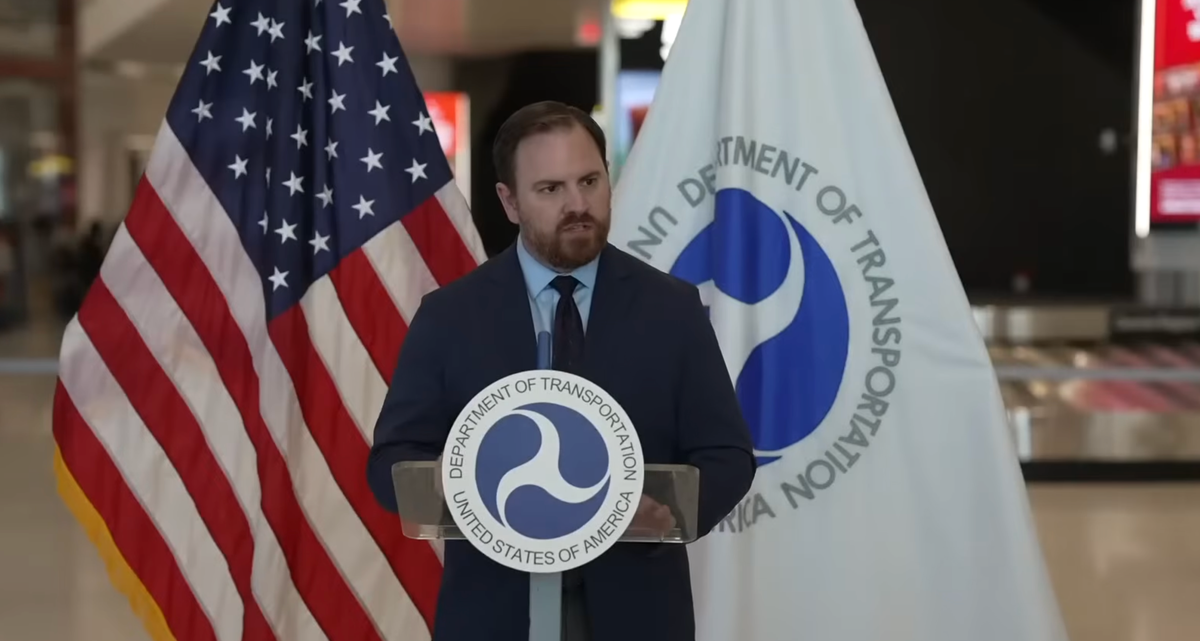
The controller working in the Northwest told The Engine Cowl that they should not be used as political pawns. ATCs are simply “trying to survive, pay our bills, and feed our families like everyone else.”
“Pardon the language, but f••• all of those [who] involve us in their sick political games.”
For ATCs, questions about salaries seem particularly infuriating.
Another controller, who has been working at a facility in the Southeast Coast of the US, said that most ATCs feel that NATCA “is completely tone deaf.” Daniels “campaigned exclusively on improving our pay, and the second he was elected, [he] shifted completely towards equipment.”
Daniels was elected as NATCA’s President on October 4, 2024. To run his campaign, the union executive launched a YouTube channel, called ‘Team NDJH,’ with the acronym standing for Nick Daniels and Jamaal Haltom, who was running alongside Daniels for the union’s Executive Vice President role. In a video they posted on February 8, 2024, Daniels remarked that it has been said many times that the last contract, known as the ‘Slate Book,’ which was signed in July 2016 and later extended to July 24, 2026, “was never meant to be the last contract that we ever had.”
“[…] if we do not improve from where we are, then we are not worth our salt as a union. Taking that and really moving the ball forward is what union leaders must do.”
The controller who had resigned shared that while ATC salaries were “fantastic” in the 2000s and 2010s, “[the career] is absolutely not worth it now.” Trainee pay, according to them, “is insulting,” considering the stress of the job. “Many younger controllers cannot even afford a nice apartment, let alone a house,” they continued. “[…] the vast majority of [controllers] at lower-level facilities need to work [overtime] due to the high cost of living areas that they are located in.”
“There are controllers with over 10 years [of experience] in the federal government who are resigning because of how bad things are in the FAA. Many controllers have left the US for Australia because they care about controllers and give them a chance to actually have a life.”
They highlighted that during the campaign for the union’s presidency, Daniels “told everyone in the union that he would renegotiate a new contract as soon as he was elected and make controller pay his number one priority.”
“Now, he is in front of Congress telling that he never asked about controller pay and his number one priority is new equipment,” they added.
“His statements to Congress felt like a betrayal, and many controllers are going to leave the union come January.”
The controller from the Southeast Coast noted that no one they work with or know “would trade a pay raise for better equipment, and it is not even close,” confirming that pay “has not been negotiated in a better part of a decade, and the cost of living has reduced our buying power almost 50% during that time.”
“ATC pay has stagnated and a lot of controllers would make more money as fast food managers. NATCA has completely lost sight of what its members want, whether that is on purpose or not is uncertain.”
Then came the $10,000 bonus to controllers who showed up to work every day during the shutdown, which seemingly irritated ATCs even more. First touted by Trump on November 10, who also questioned the patriotism of those who took sick leave, the bonus was later supported by Duffy. The Secretary of Transportation parroted Trump’s talking points, including questions about controllers’ patriotism if they had called out sick to work, some of whom did so to take other jobs to have at least some income during the federal funding lapse.
 Rytis Beresnevicius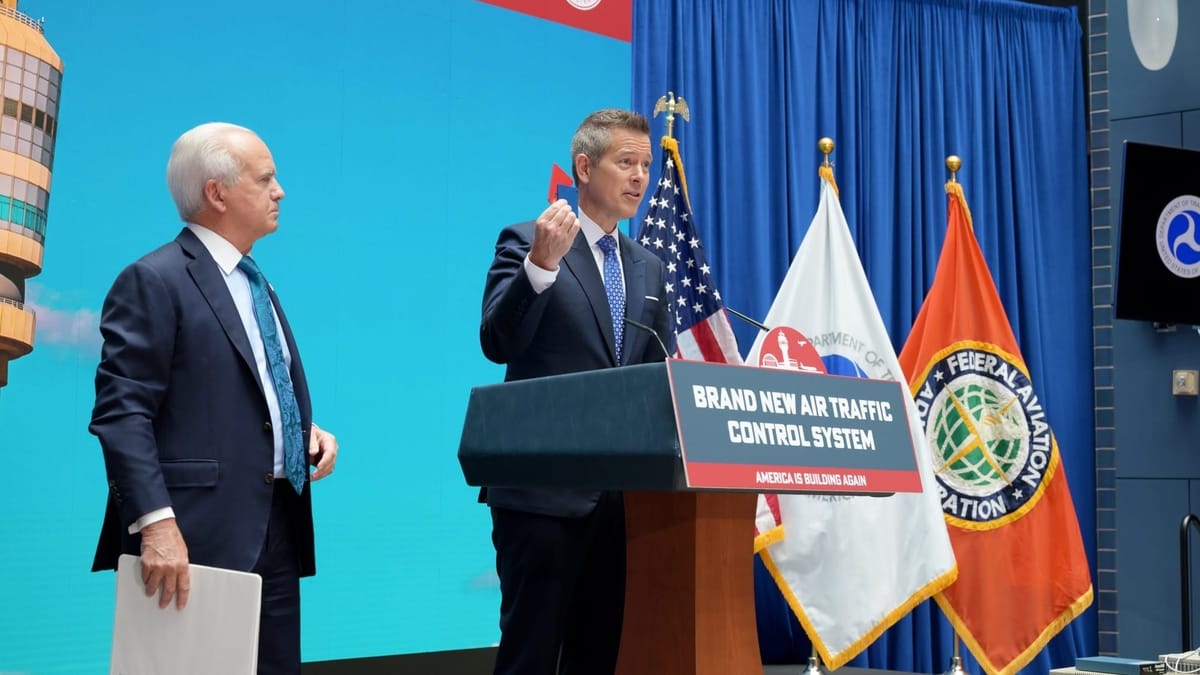
On November 20, the Department of Transportation (DOT) confirmed that 776 ATCs and technicians will receive the $10,000 bonus as an award “for their patriotic work to ensure the safety of the skies during the Democrats’ 44-day government shutdown.”
One of the controllers who spoke to The Engine Cowl questioned Duffy’s definition of patriotism. “I am currently deployed, and according to Secretary Duffy, and the bonus, I was not patriotic enough to show up to work during the shutdown,” they stated.
“Mind you, I am currently on the other side of the world serving in [a US military branch], and that was the reason I was not at work. Kind of a hard pill to swallow that I am actively punished for serving.”
The Engine Cowl asked the controllers whether they would recommend the job to the younger generation, especially as the Trump administration has launched its ‘Air Traffic Controller Hiring Supercharge at the FAA Academy’ campaign in February, aimed to increase the number of controllers being employed by the government agency.
In September, the DOT said that the FAA brought in 2,026 new controllers. The controller from the Northwest expressed skepticism about those numbers.
New ATCs still have to go to the academy in Oklahoma City for training, but what officials are not telling the public is that a “certain percentage washes out from initial training.” Those who make it through the academy, “a certain percentage will wash out from their first facility.” While they do not know the exact numbers, they have heard anecdotal evidence that around 60% of trainees who go through the academy fail to attain Certified Professional Controller (CPC) status.
Nevertheless, the Northwest controller stated that he had been “more than happy to recommend” being an ATC to younger people. “These days, though, I cannot, in good conscience, do that. This job is no longer the cushy, stable career it used to be.”
“It is getting progressively worse as the years go on. The job itself is fun, but the politics and internal bull**** that occurs on a daily, sometimes hourly, basis” have just made the job worse. “If someone asks me, I will give them the good, the bad, and the very ugly and let that person ultimately make their own decision.”
The controller, who had resigned before the shutdown, echoed those statements. “I honestly do not recommend [a career as an] ATC to anyone who asks,” noting that the work-life balance is one of the reasons why. “There was a story of a controller who just resigned because his teenager committed suicide, and he did not even see any signs because the father was always at work.”
According to the controller from the Southeast Coast of the US, he would have recommended the profession to their own kids just a few years ago. “Now, with the lack of pay raise, instability, and poor work conditions, I would not recommend anyone to [pursue] this job.”
“Right now, other countries are actively poaching our talent, offering better pay, work conditions, respect, and stability. A lot of folks are taking those offers, and I am considering accepting one myself.”
The Engine Cowl requested a comment from NATCA with multiple questions on December 8. The union has failed to respond before the date of publication.


