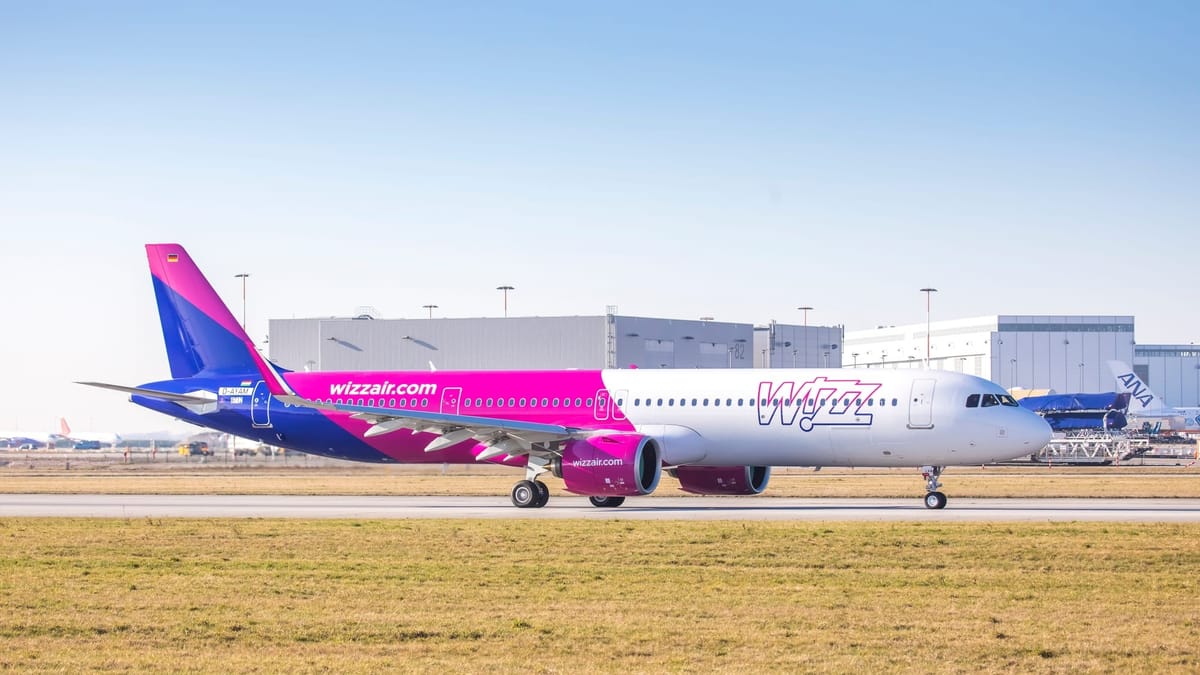


While Wizz Air ended Q3 FY26 with a loss, with cost growth outrunning revenue increases, its executives continue building the case for its (re)focus on Central and Eastern Europe (CEE), the low-cost carrier’s home region.
During the quarter’s earnings call, the airline’s management went through the progress of its strategy that it unveiled together with its Q1 FY26 results, potential return to Ukraine, and “rubbish” comments from an outspoken Irish Chief Executive Officer (CEO) working for its competitor.
Addressing structural issues across its network
Speaking during the call about some of the network adjustments, József Váradi, the CEO of Wizz Air, reminded analysts that the end of its Abu Dhabi joint venture and the upcoming closure of its Vienna Airport (VIE) base are part of the low-cost carrier’s efforts to address “the structural issues we have been having in the network design.”
Ian Malin, the Chief Financial Officer (CFO) of Wizz Air, while addressing rising airport, handling, and en-route costs, explained that while the handling part is something that the company is “starting to get a handle on” – not sure whether the pun was intended or not – airport and en-route expenses are still elevated due to higher pricing around navigation charges across its network.
“I think many airlines are frustrated with those costs. We certainly are.”
Malin detailed that, to some extent, that is a “network design issue.” According to the CFO, this is something that the airline will take into account “in our decision making.”
Regarding airport-related costs, Wizz Air did a deep dive into its cost base from FY20 to today, concluding that as it was growing, “we were able to keep airport costs under control,” resulting in “some efficiency coming through there.”
However, the point where it all went awry was the grounding of some of its A320neo family aircraft due to the powder metal issue related to the Pratt & Whitney PW1100G engines.
“Our growth went from 10% to 12% to zero; we lost the benefit of the incentives that we had negotiated, we lost the benefit of the rebates that we were expecting to generate, and we are now in the process of having to redeploy capacity in a way that we can get those back.”
It is a timing issue, Malin added. “We have to demonstrate the growth, we have to deliver the growth, we have to commit to the growth, and we have to measure it,” he continued, noting that these things take time.
“But that is the gift that we have now with capacity growth coming back.”
 Rytis Beresnevicius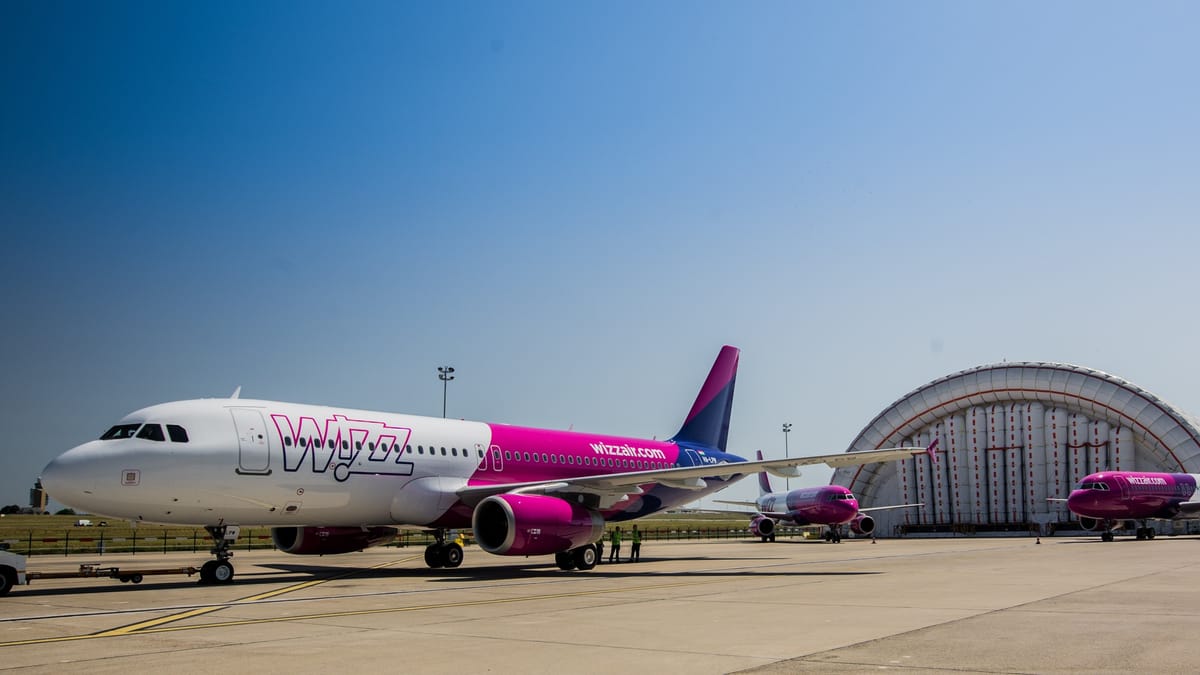
Growing capacity with minimal deliveries
In the short term, Wizz Air’s growth will hinge on first, ungrounding its A321neos, which should happen by the end of 2027; second, upgauging, as it takes delivery of more A321neo aircraft that will replace older-technology and smaller A320ceo family jets, and third, “aircraft and sector productivity,” Váradi explained.
The CEO noted that in the next four years, its compound annual growth rate (CAGR) forecast suggests that the carrier’s fleet will grow by around 7%, while capacity will increase by around 12%.
“That is the kind of level of efficiency that will be derived from the fleet program.”
During the call, Váradi detailed that the current order book makes financial sense and, in terms of the airline enhancing its market positions, delivering “competitive advantages with regard to cost performance.”
According to the current delivery plan, Wizz Air, which ended FY25 with 231 aircraft, including 153 A320neo family aircraft – six A320neo, 147 A321neo – should end FY30 with 334 aircraft, including six A320neo, 315 A321neo, and 11 A321XLRs.
The CEO stated that the extra capacity, whether it would be through ungroundings or increased productivity, will be used to fortify “some of the best-performing markets.”
“We are not opening [flights to] Uzbekistan [...] [or] Nigeria. We are enhancing strongholds [that] we have already created.”
Váradi continued that in addition to growing its route network, Wizz Air will be increasing frequencies on existing itineraries, enabling the airline to tap into “higher-quality demand,” including business travelers.
 Rytis Beresnevicius
Exploiting network opportunities
Váradi highlighted that Wizz Air continues to reshape its network, fortifying its strongholds and exploiting opportunities, which are “pretty much across the board.”
“They are not down to one or two areas, […] we are seeing consistent performance, improvements, and very consistent prospective opportunities [to] deploy more capacity.”
This includes Israel, where discussions are “ongoing,” and Ukraine, where Wizz Air will be proactive. While Váradi noted that he does not have a “crystal ball,” Russia’s invasion of Ukraine is “coming to an end,” and the low-cost carrier is “ready” to fly from the war-ravaged country.
Wizz Air can get back to Ukraine as an inbound carrier quickly, yet warned that “it is probably going to take around six to eight weeks to reset Ukraine’s air traffic control,” which will enable airlines to return to the country.
“We have an initial plan to launch 30 inbound routes immediately when the system opens up.”
Váradi also promised to reinstate Wizz Air’s bases at Kyiv International Airport (IEV) and Lviv Danylo Halytskyi International Airport (LWO), providing the carrier with “another layer of growth opportunities.”
Within three years, Wizz Air could base 30 aircraft in the country, offering 15 million seats from Ukraine.
“That plan is on the shelf and may be activated immediately when we have an opportunity to do so. We used to be the hometown airline of Ukraine, we will be the hometown airline of Ukraine.”
When asked about statements from a fellow CEO, Ryanair’s Michael O’Leary, who said that Ukrainian airports want to keep their pre-war charges, Váradi first said that he was happy that O’Leary went and returned from Ukraine safely.
“We have been in negotiations with Ukraine and its airports for probably 2 years. […] We are committed to Ukraine,” Váradi reiterated, saying that airlines do try to negotiate in an attempt to get the “best deal.”
Network churn
Malin added that Wizz Air has created additional growth “by churning our network,” which also creates what the CFO described as “immature” capacity that the low-cost carrier has to manage.
“We did some analysis and some benchmarking, and in the last 12 months, we churned our network nine times more than the industry average.”
As a result, Wizz Air becomes limited in terms of what it can do regarding price stimulation, but it also “plays havoc” with costs.
“Just looking at airports [point of view], why would you incentivize Wizz Air to bring a new route, if [you] know that after the incentives expire, we are going to disappear and move on, right?”
Malin concluded that Wizz Air needs to ensure that it is creating a “more stable, reliable network.”
The low-cost carrier has been facing capacity constraints at several of its airports. Váradi reminisced that when the airline began flying from CEE, “no one was thinking about slot and capacity scarcity, now you are seeing it” at Bucharest Henri Coandă International Airport (OTP), Budapest Ferenc Liszt International Airport (BUD), Warsaw Chopin Airport (WAW), and in other places, including the UK, and, for example, London Luton Airport (LTN), where capacity growth is “stuck at the moment.”
Those capacity constraints can put pressure on airport costs, Váradi noted.
At the same time, Wizz Air’s growth has to be measured in the context of its competition, which is “pretty much benign” and “doing nothing,” according to Váradi.
“We have been discussing Albania due to the other guys [Ryanair – ed. note] […]. But the fact of the matter is that we are three times the size of Ryanair in Tirana, and our financial performance is improving.”
 Rytis Beresnevicius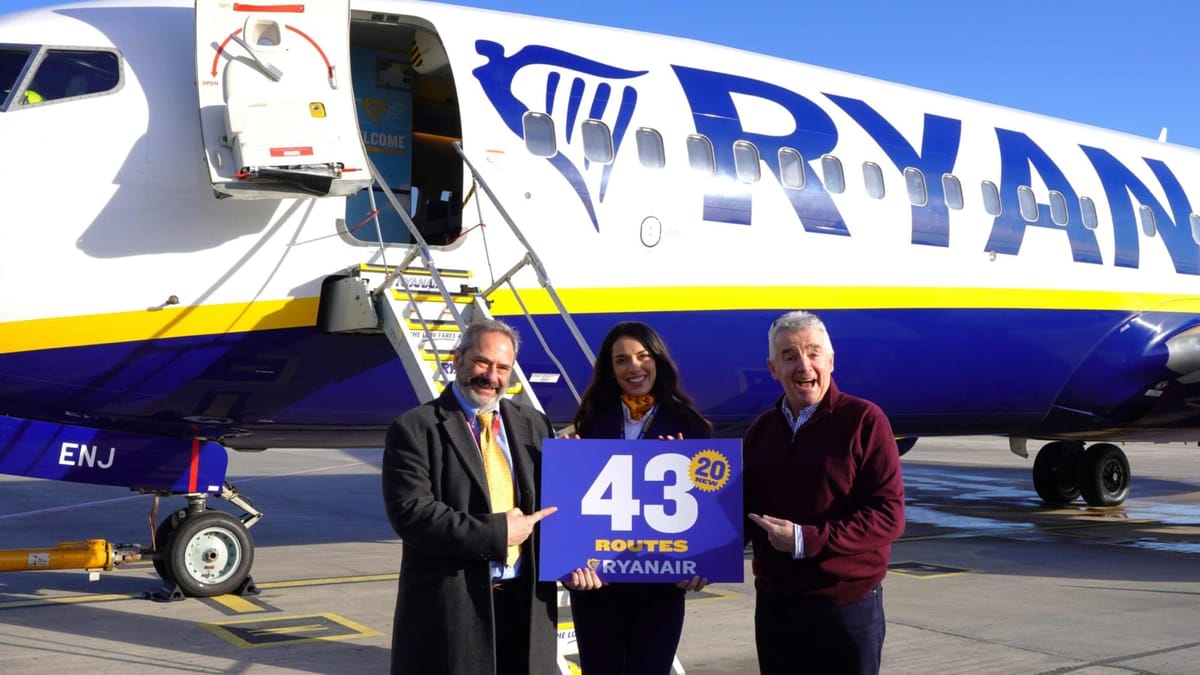
Wizz Air is very comfortable with its redesigned network that focuses on CEE, “and the way we are allocating new capacity against the competitive backdrop.”
The CEO noted that its market share across CEE is up to 26%, a nearly 2% improvement. Váradi was adamant that O’Leary – referred to as “this guy” – “is talking a lot of rubbish, which is not simply true.”
“I know that the whole media nowadays is checking the facts on what Trump [the President of the United States – ed. note] is saying, maybe someone should be checking the facts of [what] the other guys are saying.”
Váradi said that Wizz Air is gaining a foothold in CEE at the detriment of all others, including Ryanair. In Poland, Ryanair had a double-digit advantage in the country, but Wizz Air has managed to close that gap to single digits following its capacity deployments in the country.
In Romania, the carrier already has 50% of the market share, and it has been growing.
“Maybe we do not bark like a dog, but we have been doing a lot in both of those markets in particular.”
Váradi concluded that “we feel very good about the competitive strengths of Wizz Air in [CEE],” while also growing in Italy, for example, “picking up pace in some of the markets.”
 Rytis Beresnevicius