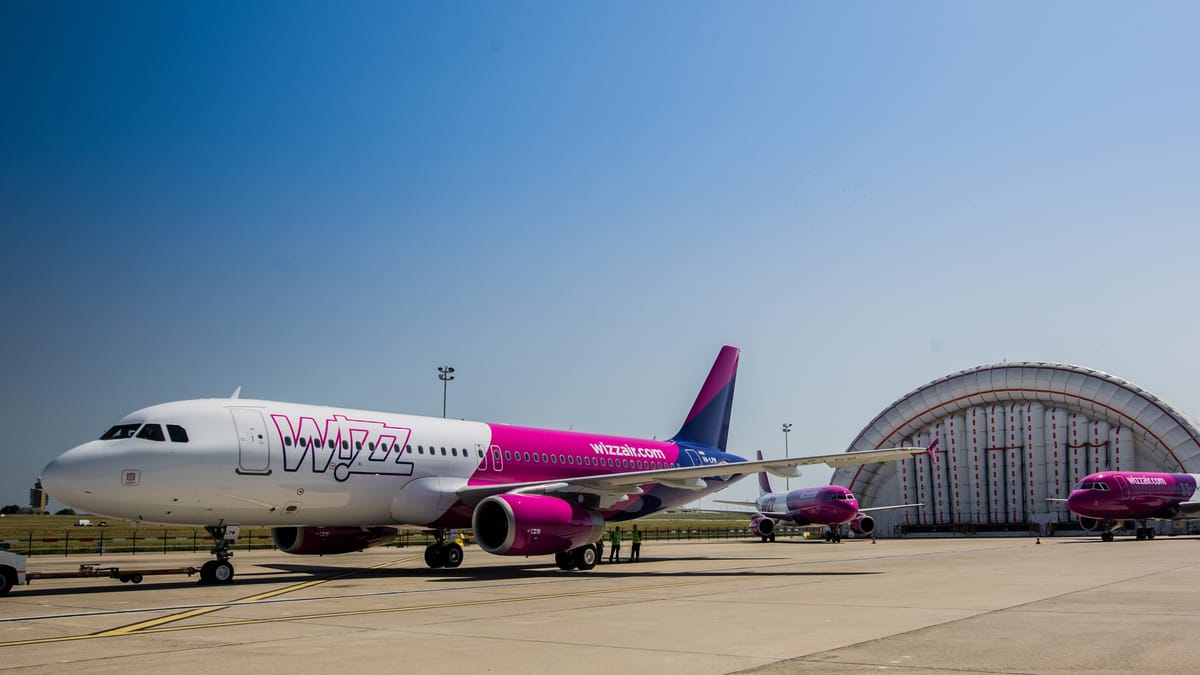


Wizz Air has announced that, in partnership with Immfly and gateretail, the low-cost carrier will not only roll out Bluetooth-powered in-seat ordering across its fleet, but will also hold a limited trial of in-flight connectivity to evaluate solutions that could include in-flight messaging.

On March 25, 2026, Wizz Air said that together with Immfly and gaterail, it has launched a new digital cabin ecosystem that will bring onboard retail, passenger, and crew connectivity, and operational data, into a single integrated platform.
The airline outlined that after extensive testing, it has deployed Bluetooth-enabled in-seat ordering across its fleet. Passengers who download the low-cost carrier’s mobile app before a flight can “browse and purchase food, beverages, and boutique products directly from their own devices, even without internet access.”
Flight attendants receive the orders via Bluetooth, which will help reduce waiting times, improve order accuracy, and streamline onboard services.
Wizz Air emphasized that the system will support “ancillary performance while improving crew sales efficiency.”
Ian Malin, the Chief Commercial Officer (CCO) of Wizz Air, said that the in-seat ordering system is “about rethinking what the onboard experience looks like in a low-cost environment,” with the airline investing “in smart, scalable technology that gives customers more control and more choice, from ordering at their seat to staying connected in the air.”
Wizz Air will also undertake a limited, six-month in-flight connectivity trial on five United Kingdom-based aircraft to evaluate connectivity solutions.
The airline’s choice is a combination of Immfly’s Equilux server and Iridium’s global satellite network, which will offer, for example, in-flight WhatsApp messaging services and in-seat ordering that is supported by live payment authorizations to reduce costs and declined payments.
The in-flight connectivity solution will also offer passengers the opportunity to purchase in-flight entertainment (IFE), including movies, TV shows, podcasts, music, games, and children's content.
Much like the new in-seat ordering system, if expanded throughout its fleet, the connectivity solution would improve Wizz Air’s ancillary revenues. During Q3 FY26, Wizz Air’s unit revenue, or revenue per available seat kilometer (RASK), declined by 0.8% year-on-year (YoY), with the airline detailing that ancillary RASK was down 2% compared to the same quarter a year prior, while ticket unit revenue improved by 0.2%.
 Rytis Beresnevicius