


Wizz Air has announced that it has created a new committee within the board of directors, which will oversee the low-cost carrier’s operational and financial planning, asset financing, and metrics related to its financial performance.
On December 31, 2025, Wizz Air unveiled that it had created a new Board committee, called the Financial Performance Committee, which has been in effect since December 22. Chaired by Andrew Broderick, a Managing Partner of Indigo Partners, which has stakes in Cebu Pacific Air, Frontier Airlines, JetSMART, Volaris, and Wizz Air, the committee will “assume oversight of the Company's operational and financial planning, asset financing, capital structure, and performance-related financial and productivity metrics.”
In addition to Broderick, Enrique Dupuy de Lome Chavarri, an ex-Chief Financial Officer (CFO) of International Airlines Group (IAG), and Stephen Johnson, the current Chief Strategy Officer (CSO) of American Airlines, were nominated to be on the committee, with Johnson being an observer.
The low-cost carrier has five other committees, namely Nomination and Governance, Audit and Risk, Remuneration, Sustainability and Culture, Safety, Security, and Operational Compliance. Broderick is a member of three other committees – as an observer at the Audit and Risk committee – while Chavarri is on two other committees, including being the chair of the Audit and Risk committee.
Johnson is also an observer of the Nomination and Governance, Audit and Risk, and Remuneration committees.

While Wizz Air has been profitable so far this fiscal year, with the airline ending H1 F26 with a net profit of €323.5 million ($379.6 million), the net profit figure is only 2.6% higher year-on-year (YoY).
Facing external challenges, including the accelerated removals and inspections of the Pratt & Whitney PW1100G engines powering its Airbus A320neo family aircraft, as well as an ambitious growth strategy that had backfired, which included the now-closed Abu Dhabi joint venture, the airline has retrenched.
 Rytis Beresnevicius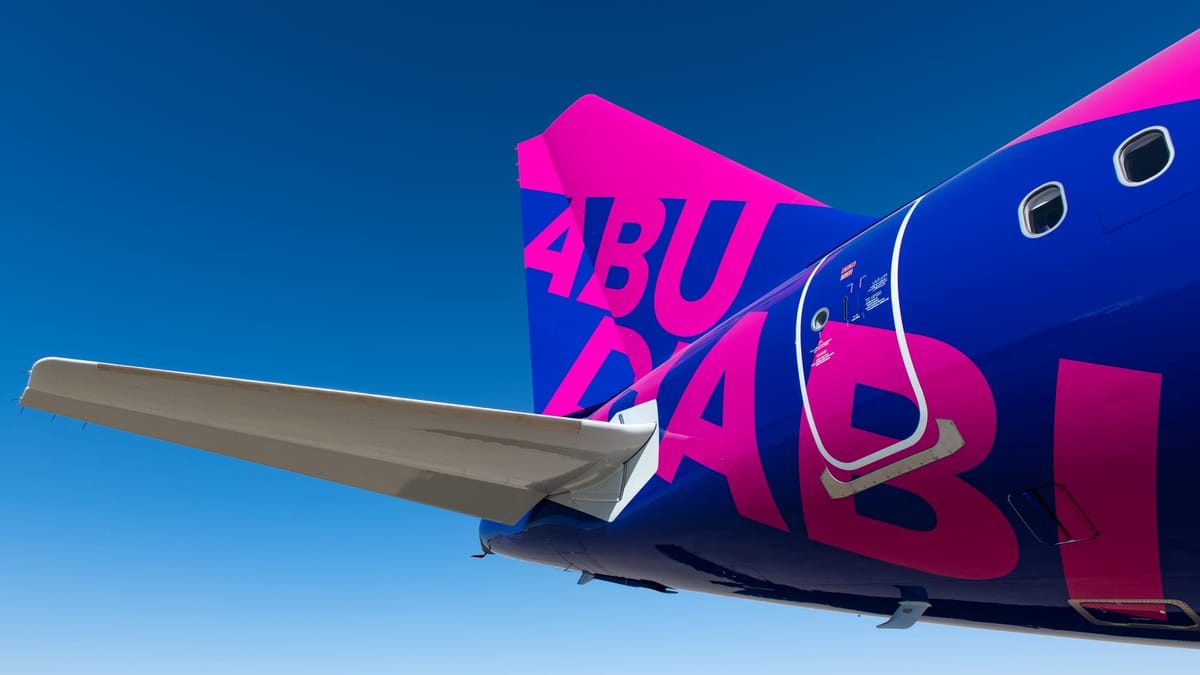
When it announced its H1 F26 results on November 13, József Váradi, the Chief Executive Officer (CEO) of Wizz Air, said that during the fiscal period, the airline’s management had “made a number of significant business decisions supporting our longer-term strategic objectives,” which include the aforementioned closure of its Abu Dhabi Zayed International Airport (AUH) base and the wind-down of its base at Vienna Airport (VIE).
“These actions reflect our pivot away from high-cost locations to the opening of new bases at lower cost airports, including at Bratislava, Tuzla, Podgorica, Yerevan, and Warsaw (Modlin), which will deliver operational cost savings going forward.”
A few days before it unveiled its H1 F26 results, Wizz Air confirmed that it had amended its Airbus delivery schedule. It shifted the delivery dates of 88 A320neo family aircraft from deliveries by F30 to by F33 and reduced the number of A321XLR commitments from 47 to 11, which included five – now six – aircraft that Airbus had already delivered to the low-cost carrier at the time.
According to Váradi, the airline moved its aircraft deliveries to “target medium-term capacity growth at a more sustainable 10-12 per cent per annum,” with Wizz Air (re)pivoting toward its key markets in Central and Eastern Europe (CEE).
Will the new committee oversee Wizz Air’s more grounded growth plans? I can only assume so.


